Cultural event photography: capturing authentic moments
April 4, 2026 11 min read Admin
Key Takeaways
Authentic cultural event photography demands deep cultural understanding, not just technical skill.
Anticipation and observation are crucial for capturing genuine, unscripted emotions and pivotal cultural moments.
Building strong rapport and trust with guests and hosts is key to making them comfortable in front of the lens.
Technical aspects like lighting and composition must serve the narrative, highlighting cultural details without distraction.
Post-production should enhance, not alter, the authenticity and cultural integrity of the captured moments.
Selecting a photographer with proven experience in diverse cultural events is paramount for success.
Capturing the vibrant energy and profound significance of cultural events goes far beyond merely pointing a camera. It's about seeing, understanding, and anticipating the nuances that make each celebration unique, especially within African American and Afro-Caribbean communities. From the joyous second line of a New Orleans wedding to the intricate garb of a Kente cloth ceremony or the spirited dance at a family reunion, authentic cultural event photography tells a story that resonates deeply with the community it serves.
Beyond the Shot: Understanding Cultural Nuance in Photography
True cultural event photography transcends technical skill; it requires a profound understanding and respect for the traditions, rituals, and unspoken protocols inherent in each celebration. For African American and Afro-Caribbean events, this means recognizing the significance of elements like ancestral libations, the symbolic jumping of the broom, specific dance styles like the electric slide or reggae two-step, or the reverence for elders during family gatherings. A photographer who understands these layers can anticipate key moments, frame them with respect, and avoid misinterpretations that might strip the authenticity from the visual narrative.
Before even lifting the camera, a skilled cultural photographer invests time in learning. This might involve researching specific cultural practices, speaking with the event hosts about particular customs they wish to highlight, or even attending rehearsals for traditional performances. For instance, documenting a Jamaican wedding requires familiarity with customs like the 'cake cutting' tradition, which is often a grand, communal affair. Without this groundwork, a photographer might miss the emotional depth or cultural weight of certain interactions, reducing them to mere photo opportunities rather than cherished memories.
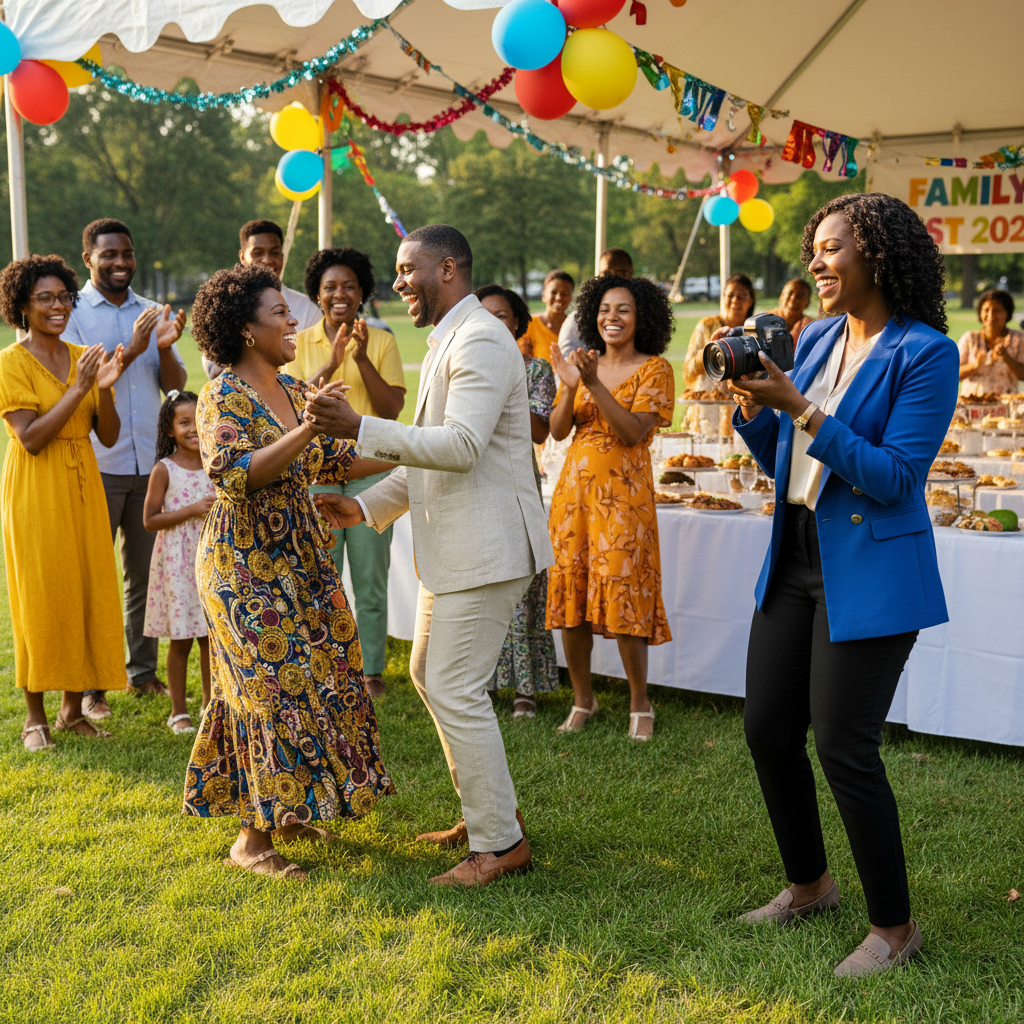
A Black female photographer, dressed professionally but discreetly, discreetly captures a tender moment between an elderly African American woman in a colorful headwrap and a young girl at a lively family reunion, shot on Canon EOS R5, 35mm lens, natural lighting, editorial photography.
This deep understanding also extends to the subtle expressions and interactions that define family and community bonds. It's in the shared glance between cousins, the knowing smile between a parent and child during a special dance, or the solemn moment of reflection during a memorial tribute. These are the moments that truly encapsulate the spirit of the event, and they are often fleeting, requiring not just a quick trigger finger but an attuned cultural eye.
The Art of Anticipation: Capturing Unscripted Emotions
Capturing unscripted emotions and pivotal cultural moments is the hallmark of truly authentic event photography, demanding keen observation and strategic positioning. It's about predicting where the energy will shift, who will likely react, and when a significant tradition is about to unfold, ensuring the photographer is ready to freeze that fleeting sentiment without disrupting the flow of the event.
Seasoned cultural photographers don't just react; they anticipate. This involves more than simply having a fast shutter speed. It means understanding the rhythm of a celebration. During a wedding reception, for example, knowing when the DJ is about to drop a classic R&B track that will get everyone on the dance floor means being ready for those explosive moments of joy and movement. Similarly, during a naming ceremony, anticipating the exact moment of blessing or presentation ensures the reverence of the occasion is perfectly preserved. This skill is honed through experience and a genuine connection to the event's purpose.
Reading the Room: Beyond the Shot List
While a shot list is essential for covering key formal moments, the magic of cultural events often lies in the spontaneous. A photographer must be able to 'read the room'—to feel the energy, understand the dynamics, and predict where authentic interactions will occur. This might be a proud grandparent watching their grandchild perform, a group of friends erupting in laughter, or a quiet moment of reflection amidst the festivities. These are the candid shots that often become the most treasured, offering a true window into the soul of the event.
Effective anticipation also means being discreet. A photographer who can blend into the background becomes less of an observer and more of an integrated part of the experience, allowing subjects to relax and express themselves naturally. This non-intrusive approach is vital for capturing genuine emotion, ensuring that the camera doesn't become a barrier to authentic interaction.
Building Bridges: Rapport and Trust with Your Subjects
Establishing strong rapport and trust with both the event hosts and their guests is fundamental to capturing truly authentic and comfortable photographs. When subjects feel at ease with their photographer, their guard drops, allowing genuine expressions and interactions to shine through, which is paramount in culturally significant gatherings.
Before the event, a good photographer makes an effort to connect with the hosts. This goes beyond discussing logistics; it's about understanding their vision, their family dynamics, and any sensitivities they might have. During the event, a friendly, respectful demeanor, coupled with a genuine interest in the celebration, can quickly put guests at ease. A simple smile, a polite greeting, or even a brief, positive comment can transform a wary subject into someone comfortable enough to be themselves in front of the lens. This is particularly important in close-knit communities where trust is earned, not given.
Communicating Respect and Intent
Clear and respectful communication is another cornerstone of building trust. Photographers should explain their approach, especially when dealing with potentially sensitive or intimate moments. For instance, during traditional ceremonies, asking permission before getting too close, or explaining why a particular angle is needed, shows respect for the participants and their traditions. This transparency fosters an environment where people feel seen and honored, rather than merely photographed.
Moreover, understanding local customs regarding personal space and interaction can significantly impact rapport. Some communities may prefer a more formal distance, while others embrace a closer, more communal feel. A photographer's ability to adapt their social approach demonstrates cultural competence and respect, paving the way for more natural and heartfelt images. When selecting your event professionals, whether it's a DJ, caterer, or photographer, always prioritize those who demonstrate cultural sensitivity, which you can often discern during initial consultations or by reviewing their past work on platforms like Ajola.
Technical Mastery: Lighting, Composition, and Storytelling
Technical mastery in lighting, composition, and storytelling is not merely about creating pretty pictures; it's about utilizing these elements to powerfully convey the narrative and emotional depth of cultural events. Each technical choice must serve the purpose of highlighting cultural significance and authentic moments without overshadowing them.
Lighting: Often, cultural events take place in diverse settings, from dimly lit community halls to bright outdoor ceremonies. A skilled photographer knows how to harness natural light, use flash subtly, or even introduce artificial lighting to enhance the scene without making it look artificial. The goal is to illuminate faces, textures, and details—like the intricate patterns on traditional attire or the glow of celebratory candles—in a way that feels organic and authentic. Proper lighting can transform a simple portrait into a striking depiction of heritage, emphasizing features and expressions that tell a deeper story.
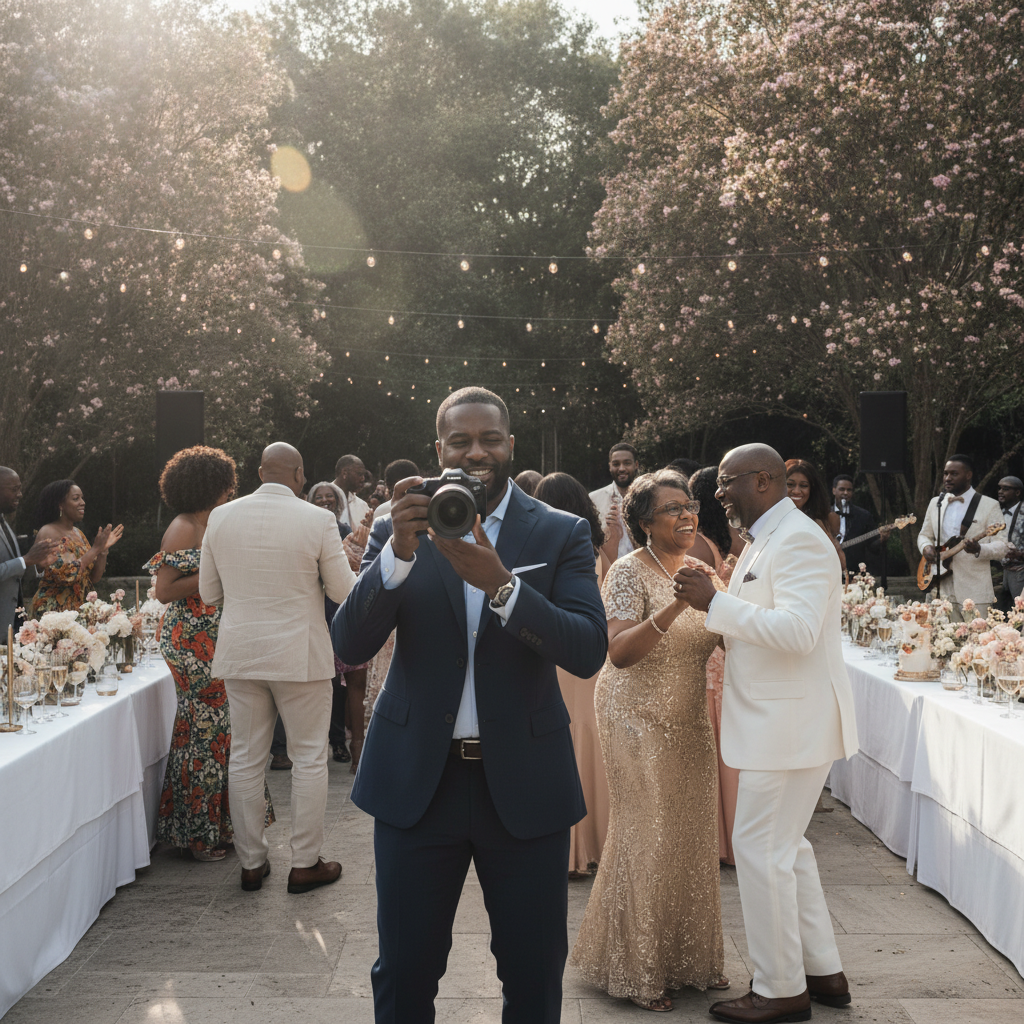
A vibrant outdoor Afro-Caribbean street festival scene with diverse Black families dancing and laughing, captured with dynamic composition and warm, natural light, shot on Canon EOS R5, 35mm lens, natural lighting, editorial photography.
Composition: Composition is where the photographer frames the story. For cultural events, this means more than just applying the rule of thirds. It involves knowing when to zoom in on a significant ritual object, when to capture the wide shot of a bustling family reunion, or how to frame a moment to emphasize the connection between generations. A photographer might use leading lines to draw the viewer's eye to the bride and groom during a traditional entrance or employ negative space to highlight a moment of quiet contemplation. The aim is always to direct attention to the most meaningful elements of the cultural narrative.
Crafting a Visual Narrative
Ultimately, technical prowess in lighting and composition culminates in effective storytelling. A cultural event photographer isn't just taking individual photos; they are building a visual narrative that flows seamlessly from beginning to end. This narrative should reflect the emotional arc of the event, from anticipation to joy, solemnity, and celebration. Each image should contribute to the larger story, creating a collection that isn't just a record of what happened, but a feeling of what it was like to be there, celebrating a shared heritage.
Post-Production with Purpose: Enhancing Authenticity
Post-production in cultural event photography is a delicate art, focused on enhancing the captured moments while rigorously preserving their authenticity and cultural integrity. This stage is not about altering reality but about refining the visual story to make it as impactful and true to the original experience as possible.
A skilled editor understands that the goal is to bring out the best in the images without making them look overly processed or artificial. This means careful adjustments to color balance to reflect skin tones accurately and vibrantly, subtle exposure corrections to ensure details are visible in both shadows and highlights, and thoughtful cropping to strengthen composition. Over-filtering or heavy manipulation can strip an image of its genuine feel, especially when capturing deeply personal and cultural moments. The aim is for the final images to feel natural, as if seen with the naked eye, but with an elevated quality.
Respecting Cultural Context in Editing
Beyond technical adjustments, post-production also involves a cultural sensitivity check. For instance, ensuring that traditional attire colors are true to life, or that specific cultural symbols are not inadvertently cropped out or obscured. The editing process should respect the historical and communal context of the event, ensuring that the final gallery accurately represents the celebration in all its richness. A good photographer will often consult with clients about their preferences for color grading or specific image aesthetics, particularly for events with strong cultural significance, ensuring the final output resonates with their vision and heritage.
It's also crucial to manage expectations and ensure timely delivery of edited photos. Event planners understand the importance of clear communication regarding timelines, especially when dealing with multiple vendors. If a photographer foresees delays, they should communicate proactively, much like how you'd expect a vendor to act if you needed to know what to do when your event vendor cancels last minute.
Vendor Spotlight: Finding the Right Cultural Photographer
Finding the right cultural photographer for your event is paramount; it means securing someone whose portfolio demonstrates not just technical prowess but also a deep appreciation for diverse cultural expressions. This ensures your precious moments are captured with authenticity and respect, reflecting the true spirit of your celebration.
When you're searching for a photographer, begin by reviewing their portfolio specifically for cultural events similar to yours. Look for consistency in quality, candid moments, and an understanding of cultural details. Do their images tell a story? Do the people in the photos look natural and at ease? These are crucial indicators. Many talented photographers specializing in cultural events list their services on Ajola, making it easier to browse portfolios and read reviews from other event planners and hosts within the community.
Key Questions for Your Consultation
Once you've shortlisted potential candidates, schedule a consultation. This is your opportunity to gauge their cultural competence and personality. Ask questions like:
"What is your experience photographing [specific cultural event, e.g., a Nigerian traditional engagement, a Caribbean christening]?"
"How do you prepare to understand the cultural nuances of an event you haven't covered before?"
"Can you share examples of how you've captured candid, emotional moments at cultural celebrations?"
"What is your approach to interacting with guests and ensuring they feel comfortable?"
"How do you ensure accurate representation of skin tones and traditional attire in your post-production?"
A photographer who genuinely cares about cultural authenticity will be eager to discuss these points and demonstrate their dedication. They might even offer suggestions based on their past experiences, showing their expertise beyond just taking pictures. Remember, a photographer is not just a service provider but a storyteller who will preserve your memories for generations. Choosing one who aligns with your cultural values and vision is an investment in the legacy of your event. For photographers looking to grow their reach and connect with a diverse clientele, consider signing up on Ajola to showcase your specialized skills.