Social media-ready photos: what to tell your event photographer
April 6, 2026 8 min read Admin
Key Takeaways
Communicate your social media strategy and specific platforms to your photographer early.
Provide a detailed shot list focusing on engaging moments, decor, and diverse guest interactions.
Discuss technical requirements like aspect ratios, file sizes, and desired editing styles for social platforms.
Establish clear timelines for photo delivery and understand usage rights, especially for guest photos.
Leverage platforms like Ajola to find photographers skilled in producing social media-ready content.
In today's visually-driven digital landscape, event photos aren't just keepsakes; they're powerful marketing tools. For event planners and hosts, especially within the vibrant African American and Afro-Caribbean communities, social media is where your event's magic lives on, attracting future clients and celebrating your unique cultural aesthetic. But getting those truly 'shareable' and 'like-worthy' images isn't just about hiring a good photographer — it's about clear, strategic communication with them long before the first guest arrives. Your event photographer is an artist, but they're also a critical partner in your social media strategy. Don't leave your online visual impact to chance.
Understanding Your Social Media Goals for Event Photography
Communicating your social media objectives to your event photographer is the first, non-negotiable step to securing photos that truly resonate online. Your photographer needs to understand why these images are important for your brand, your guests, or your vendors. Are you aiming for viral guest shares on Instagram and TikTok? Do you need polished, branded content for your LinkedIn page or a professional portfolio? Perhaps you're looking to provide high-quality visuals for vendors to promote their services, like an amazing DJ or a stunning decorations team, crediting them effectively. Each of these goals dictates a different approach to framing, lighting, and even the number of photos delivered. For instance, a bridal shower might prioritize candid, shareable moments, while a corporate gala requires more formal, brand-aligned imagery. Discuss the specific platforms you'll be using — Instagram Stories, Reels, LinkedIn, Facebook, your blog — and the type of content that performs best there. This upfront conversation saves countless hours of post-event frustration.
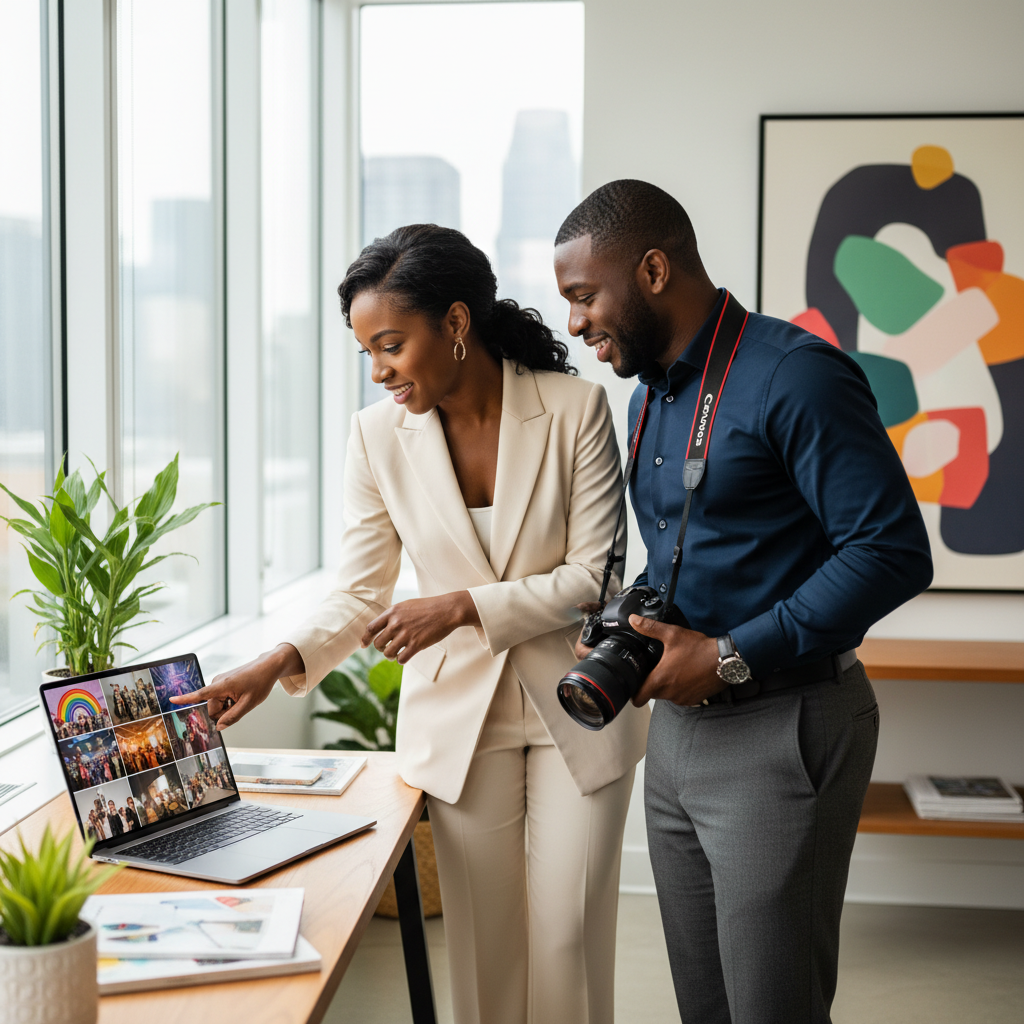
A Black event planner discusses shot lists with a Black female photographer, both looking at a tablet in a beautifully decorated event venue, natural light.
Crafting Your Essential Social Media Shot List
A well-defined shot list is your blueprint for social media success, guiding your photographer to capture the moments and details that truly shine online. Beyond the standard event coverage, think about specific angles, vignettes, and interactions that tell a compelling story in a short scroll. Focus on capturing dynamic guest interactions: laughter, dancing, genuine embraces. Highlight key decor elements — a meticulously arranged tablescape, an elaborate floral arch, or unique lighting — from multiple angles. For Afro-Caribbean and African American events, this often includes vibrant attire, specific cultural rituals, and traditional decor like those discussed in "How to incorporate African fabric and decor into your wedding." Don't forget the "behind-the-scenes" moments if appropriate for your brand, such as a caterer plating a dish or a musician setting up. Ensure your list includes wide shots to establish the scene, medium shots for group dynamics, and tight detail shots that make for great close-ups or story snippets. Consider a mix of horizontal and vertical framing to accommodate different platforms; vertical shots, for example, are crucial for Instagram Stories and Reels. Engage with your photographer to refine this list, leveraging their experience in what truly pops on social feeds. Ajola's network of event photographers often have portfolios rich with examples of social media-ready content, making it easier to visualize your needs.
Candid Guest Moments: Laughter, dancing, interactions, group selfies.
Vendor Spotlights: Catering team in action, DJ spinning, event planner overseeing.
Technical Specifications and Desired Editing Style
The technical aspects of your social media photos are just as crucial as the content itself; poor resolution or an inconsistent aesthetic can undermine even the most beautiful shot. Before the event, discuss desired aspect ratios. While 16:9 (landscape) is common for general photography, Instagram's feed often favors 4:5 or 1:1, and Reels/Stories demand 9:16 (portrait). Ask your photographer to consider these crops during shooting, or at least ensure there's enough negative space to crop effectively without losing key elements. File size is another factor: while you want high-resolution files for print and archiving, social media platforms often compress images, which can degrade quality. Request web-optimized JPEGs (around 1000-2000 pixels on the longest side) in addition to full-resolution files.
Beyond technicalities, define your desired editing style. Do you prefer bright and airy, moody and dramatic, or a vibrant, true-to-life look? Share examples of photos whose aesthetic you admire, perhaps from your own branding guidelines or other events. This helps your photographer align their post-production with your vision. Many African American and Afro-Caribbean events embrace rich colors and bold statements, so ensure your photographer understands how to enhance these elements without over-editing. A clear understanding here ensures your event photos seamlessly integrate into your existing brand presence. A skilled event vendor, especially a photographer, will appreciate this level of detail.
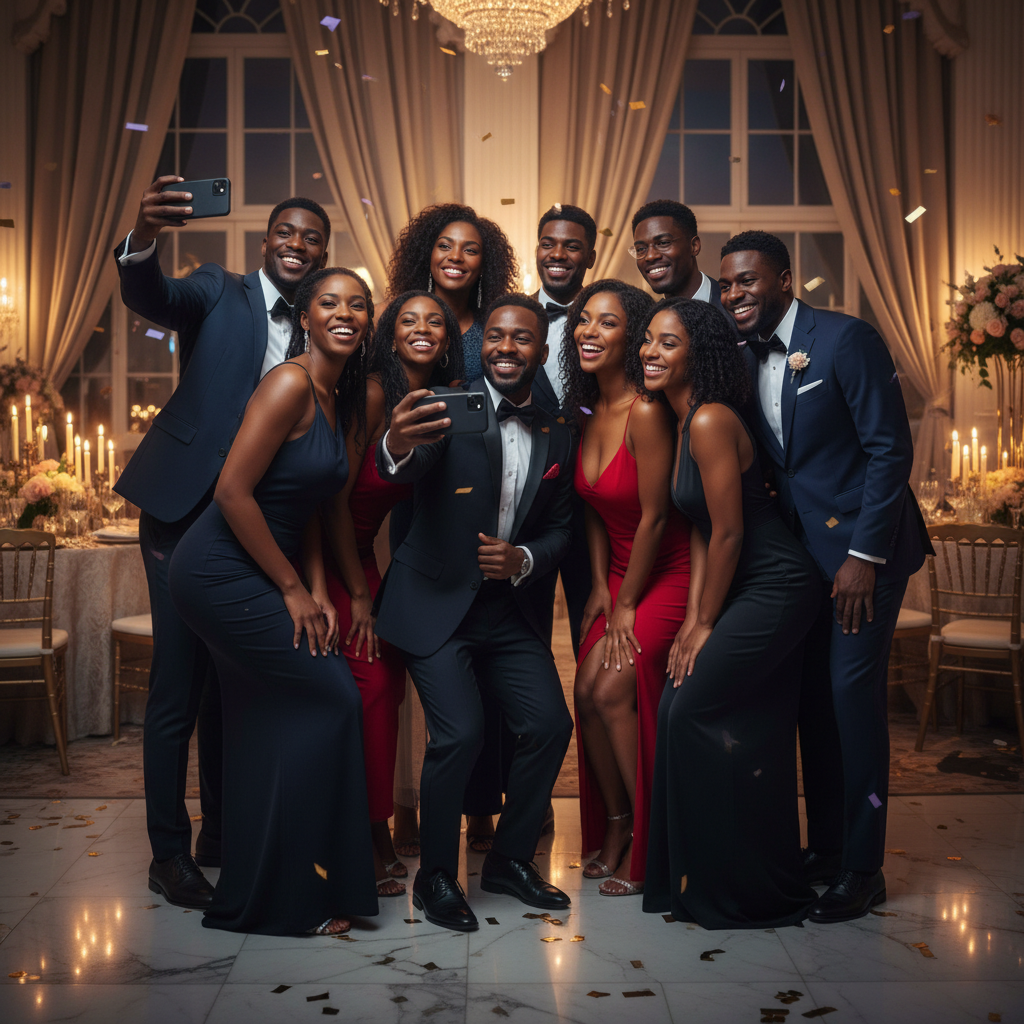
A Black woman event planner reviews a gallery of vibrant, social media-ready event photos on a laptop with a Black male photographer, pointing to specific images, in a modern office space.
Setting Timelines and Delivery Expectations
One of the most common points of friction between event planners and photographers revolves around delivery timelines and methods. For social media, speed is often paramount — you want to capitalize on the immediate buzz. Establish a clear expectation for a "social media sneak peek" delivery, ideally within 24-48 hours post-event. This initial batch, perhaps 10-20 curated highlights, allows you to start sharing while the event is still fresh in everyone's minds. For the full gallery, discuss a realistic timeframe, typically 2-4 weeks for smaller events and 4-8 weeks for larger celebrations, depending on the photographer's workload. Be explicit about the number of edited photos you expect and how they will be delivered — a private online gallery, a cloud storage link, or a USB drive. For vendors looking to promote their services on platforms like Ajola, swift access to high-quality images is critical for updating their portfolios and attracting new clients. If you're a vendor, consider how a blog post like "How to stand out as a vendor on marketplace platforms" emphasizes the importance of current, engaging visuals.
"A well-communicated timeline for photo delivery is not just a courtesy; it's a strategic advantage, allowing you to maintain event momentum and immediately leverage your visual assets across social channels."
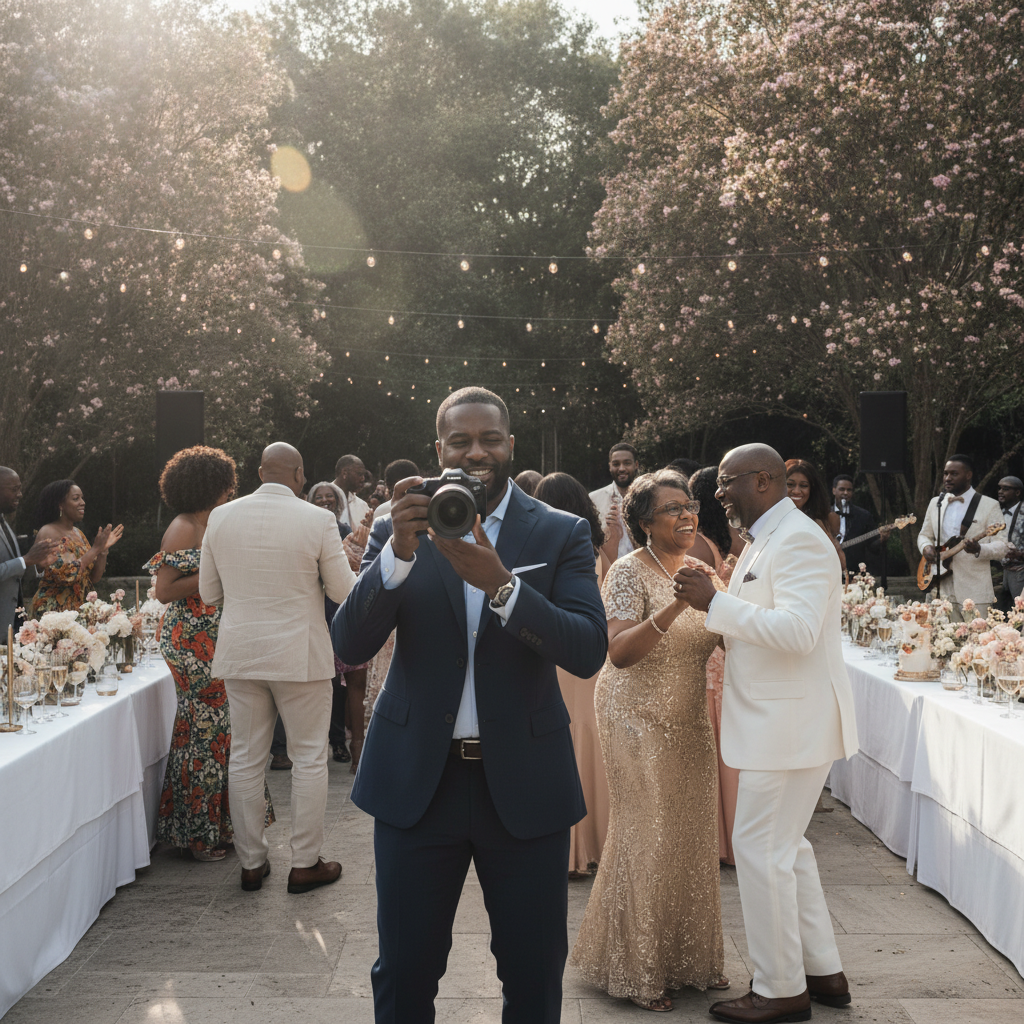
A diverse group of Black guests happily posing for a photo at an elegant evening event, holding up their phones to capture the moment, soft ambient lighting.
Navigating Permissions and Usage Rights
In the age of ubiquitous social media, understanding and communicating photo permissions and usage rights is more critical than ever. This isn't just about legality; it's about respecting privacy and maintaining trust with your guests and partners. Clarify with your photographer who owns the copyright to the images. Typically, the photographer retains copyright, granting you a license for specific uses. Ensure your contract explicitly states that you have the right to use the photos for your event promotion, marketing, and social media channels. If you plan to allow vendors (like the caterer or entertainment) to use the photos, this should also be outlined.
Furthermore, address guest privacy. For public events, a general assumption of photography often applies, but for more private gatherings, or if you plan to feature specific guests prominently, consider implementing a photo release waiver or a clear notice at the event entrance. This is particularly important for children. For event planners, clearly communicate to guests at registration or via signage that photos will be taken and potentially used for social media. This transparency ensures everyone is comfortable and avoids potential issues down the line. Remember, while you want engaging social content, respecting individual privacy is paramount. If managing guest lists is a concern, you might find tips in "Guest list management: tips for keeping numbers in check" helpful.
Cultivating a Collaborative Relationship with Your Photographer
Ultimately, securing social media-ready photos boils down to effective collaboration and open communication with your photographer. They are your visual storyteller, and the more context and guidance you provide, the better equipped they'll be to deliver on your vision. Don't treat them as merely a button-pusher; engage them as a creative partner. Share your mood board, your brand guidelines, and even your social media content calendar if it helps them understand the bigger picture. Be open to their suggestions; a seasoned professional often has valuable insights into what photographs well and what translates effectively to various digital platforms. Review their portfolio specifically for social media examples when you're initially looking to find a photographer on Ajola. Ask them about their experience delivering content optimized for Instagram Reels or TikTok. A strong, communicative relationship ensures that your event's visual narrative is not only captured beautifully but also perfectly poised to make an impact online.
For photographers looking to attract more clients like these, understanding these client needs is key. Consider signing up on Ajola as a vendor to connect with event planners seeking your specific expertise.