Establish a clear vision, purpose, and specific cultural theme early to guide all planning decisions.
Prioritize authentic representation by sourcing vendors specializing in African cuisine, music, dance, and artisanal crafts.
Budget meticulously, allocating funds for venue, talent, catering, decor, and a contingency, while actively seeking community sponsorships.
Select a venue that aligns with your event's size, ambiance, and technical needs, considering accessibility and local permits.
Develop a robust marketing strategy to engage your target audience, leveraging community networks and digital platforms.
Plan for seamless day-of execution and gather post-event feedback to refine future African Heritage Night celebrations.
An African Heritage Night isn't just an event; it's a vibrant celebration, a powerful educational platform, and a cherished community gathering. It’s an opportunity to honor the rich tapestry of African cultures, traditions, and contributions that have profoundly shaped the global landscape, particularly within the African American and Afro-Caribbean diaspora. To truly resonate, these events demand thoughtful planning, authentic representation, and a deep understanding of the cultural nuances involved.
Defining Your Vision & Theme for an Unforgettable Night
The foundation of a truly impactful African Heritage Night lies in a clearly articulated vision and a cohesive theme. Before booking a single vendor or scouting a venue, determine the core purpose of your event: Is it primarily educational, celebratory, a fundraiser, or a combination? This clarity will inform every subsequent decision, from the specific African regions or countries you highlight to the style of entertainment and cuisine.
Consider your target audience: Are you aiming for an intergenerational family event, a sophisticated cultural gala, or a youth-focused educational program? For instance, a theme like "Echoes of West Africa: A Culinary & Rhythmic Journey" might focus on Ghanaian jollof rice, Nigerian afrobeats, and Senegalese dance, while "Spirit of the Nile: Ancient Traditions, Modern Expressions" could explore Egyptian art, Ethiopian coffee ceremonies, and Sudanese storytelling. A well-defined theme ensures a cohesive experience for attendees and makes vendor selection much more straightforward. It’s about creating an immersive atmosphere, not just a collection of activities.
Curating Authentic Cultural Experiences: Vendors & Entertainment
Authenticity is paramount for an African Heritage Night. This means going beyond surface-level representations and truly engaging with vendors who understand and embody the cultures you wish to showcase. Your choices in catering, entertainment, and decor will dictate the event's cultural integrity.
For culinary delights, seek out caterers specializing in authentic African and Afro-Caribbean cuisines. This could range from Ethiopian injera and stews to South African braai, or a fusion that respectfully blends these traditions. When looking for exceptional culinary partners, you can find caterers near you on Ajola who are passionate about bringing traditional flavors to life. Don't shy away from asking about their cultural expertise and experience with specific dishes. For something unique, consider a tasting station featuring various regional beverages like bissap or palm wine (where legal and appropriate).
Entertainment is the heartbeat of any celebration. Live music, traditional dance troupes, spoken word artists, and griots (storytellers) can transport your audience. Imagine the vibrant energy of a Congolese Rumba band, the intricate footwork of a Gumboot dance ensemble, or the compelling narratives shared by an elder. When searching for performers, browse DJs and entertainers on Ajola who specialize in African and diaspora music. You might also consider linking to resources like our guide on How to Create a Juneteenth Celebration Playlist for inspiration on diverse musical selections that resonate with cultural heritage.
Beyond food and performance, consider incorporating interactive elements. A marketplace featuring local African artisans selling textiles, jewelry, and art not only supports small businesses but also provides guests with a tangible piece of culture. Workshops on drumming, headwrapping, or traditional craft making can be incredibly engaging. For decor, resist generic tropes. Instead, research specific patterns, colors, and artifacts relevant to your chosen theme. If you're weighing whether to handle decor internally or hire an expert, our post on DIY vs Professional Decor offers valuable insights.
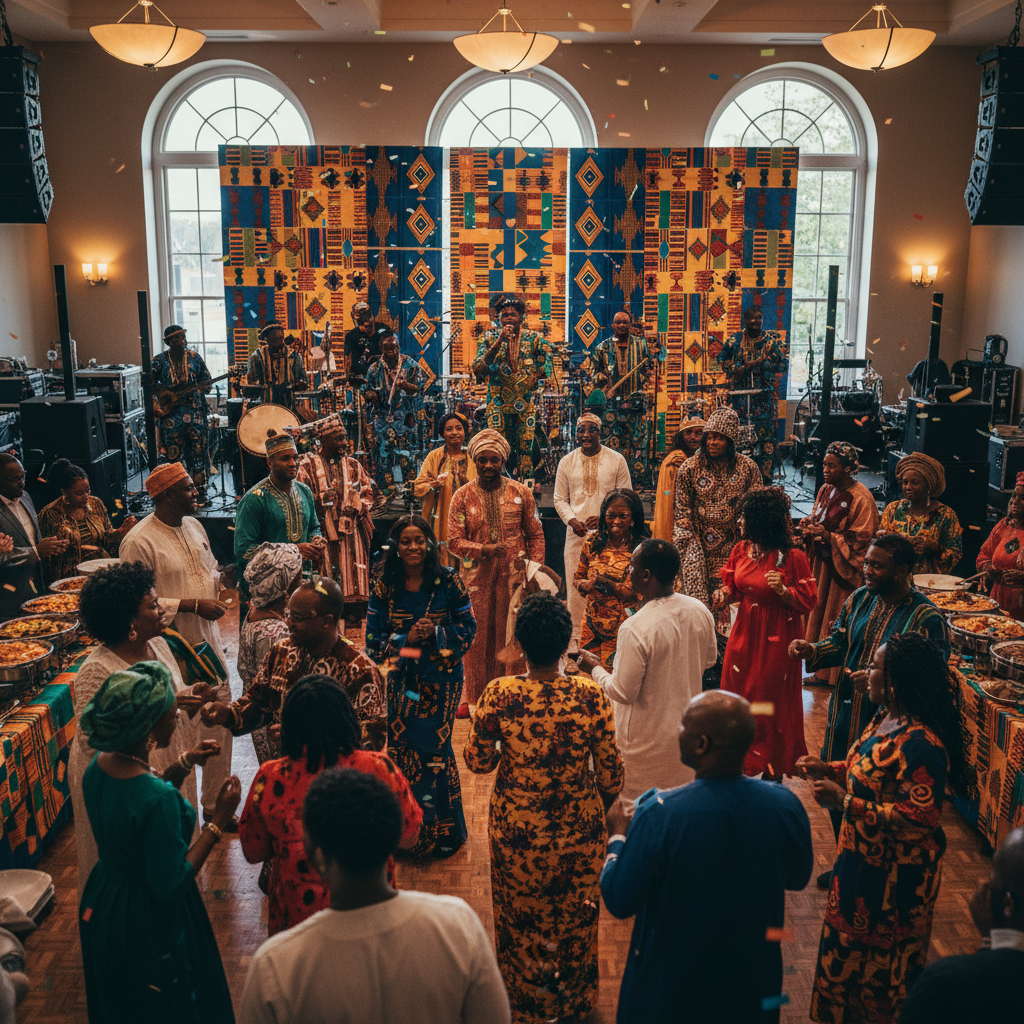
A vibrant indoor African Heritage Night event, with African American and Afro-Caribbean attendees dressed in colorful traditional attire, dancing to live music performed by a band on a stage decorated with kente cloth patterns. Shot on Canon EOS R5, 35mm lens, natural lighting, editorial photography.
Logistics & Venue Selection: Setting the Stage
Choosing the right venue is critical for an African Heritage Night. The space must not only accommodate your guest count but also align with the event's cultural aesthetic and functional needs. Consider factors like capacity, accessibility, parking, and whether the venue allows external catering if you’re bringing in specialized cultural food vendors.
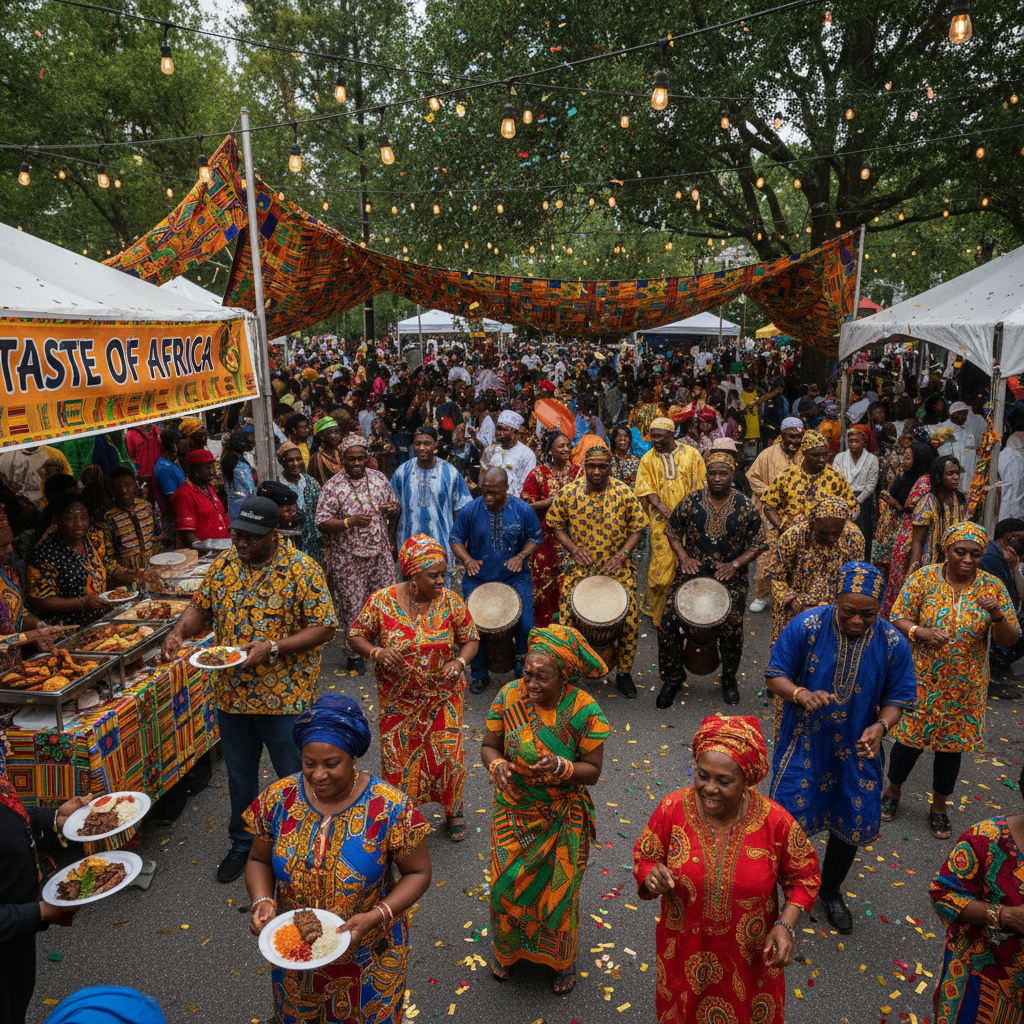
For community-focused events, local church halls and community centers can be excellent, cost-effective options, often providing a warm, welcoming atmosphere. For a more formal gala, a ballroom or event space with robust AV capabilities might be necessary. Outdoor venues offer unique opportunities for vibrant marketplaces and larger performances, but come with weather-related considerations and often require more extensive permitting. Always inquire about sound systems, lighting, stage setup, and any restrictions on decor or open flame. Proximity to public transportation and ample parking are also key for guest convenience.
Permits, Insurance, and Safety Considerations
Depending on your chosen venue and activities, you may need various permits for food service, alcohol, amplified sound, or large gatherings. Event insurance is non-negotiable to protect against unforeseen circumstances, from cancellations to liability claims. Work closely with your venue coordinator and local authorities to ensure all regulations are met. A detailed safety plan, including first-aid provisions and emergency exits, is essential for every event, regardless of size.
Budgeting & Sponsorship: Funding Your Vision
Event planning, especially for cultural celebrations of this scale, requires a robust financial plan. A realistic budget acts as your roadmap, preventing overspending and ensuring all essential elements are covered. Start by outlining all potential costs: venue rental, catering, entertainment (performers, DJs, sound engineers), decor, marketing materials, staffing (ushers, security), permits, insurance, and a crucial 10-15% contingency fund for unexpected expenses.
Typical Cost Breakdown (Estimates for a medium-sized event, 150-200 guests):
Venue: $1,500 - $10,000 (depending on location and amenities)
Catering: $30 - $75 per person (African cuisine can be specialized, affecting cost)
Entertainment: $1,000 - $8,000 (for multiple acts or high-demand performers)
Decor & Rentals: $500 - $3,000
Marketing & Promotion: $300 - $1,500
Staffing & Security: $500 - $2,000
Miscellaneous & Contingency: $1,000 - $5,000+
Securing sponsorships is often vital for covering costs and enhancing the event. Identify local businesses, cultural organizations, and community leaders who align with your event's mission. Develop tiered sponsorship packages offering various benefits, such as logo placement, speaking opportunities, or branded activations at the event. Clearly articulate the value proposition: exposure to a diverse audience, community goodwill, and association with a meaningful cultural initiative. Don't forget grant opportunities from arts councils or cultural foundations. For vendors looking to expand their reach and find more event opportunities, consider checking out Ajola's vendor sign-up process.
An African American event planner reviewing a detailed budget spreadsheet on a laptop, with cultural textiles and a framed event poster in the background, depicting thoughtful financial management. Shot on Canon EOS R5, 35mm lens, natural lighting, editorial photography.
Marketing & Engagement: Inviting Your Community
Even the most meticulously planned African Heritage Night won't succeed without an effective strategy to reach and engage your target audience. Begin crafting your marketing message early, highlighting the unique cultural experiences attendees can expect. Focus on the stories, the flavors, the rhythms, and the educational value.
Digital Presence: Create a dedicated event page or website with all essential details, including your vision, theme, featured performers, menu highlights, and ticketing information. Utilize social media platforms like Instagram, Facebook, and TikTok with culturally relevant hashtags (#AfricanHeritageNight #BlackCultureCelebration #[YourCity]Events). Share captivating visuals of past events or sneak peeks of upcoming performances.
Community Outreach: Partner with local community centers, cultural organizations, churches, and historically Black colleges and universities (HBCUs). Distribute flyers and posters in high-traffic areas. Engage local media outlets – Black newspapers, radio stations, and online publications – to get the word out.
Influencer Marketing: Collaborate with local cultural influencers or community leaders who can authentically promote your event to their followers.
Early Bird Incentives: Offer discounted tickets for early registrants to generate initial buzz and commitment. Consider group discounts for families or organizations.
Remember, your marketing should reflect the same authenticity and vibrancy as the event itself. Use compelling imagery and language that evokes the richness of African heritage.
Seamless Execution & Post-Event Reflection
The success of your African Heritage Night ultimately hinges on flawless execution on event day. This requires meticulous planning, a strong team, and a flexible mindset to handle inevitable last-minute adjustments. Develop a detailed timeline for the day, assigning clear roles and responsibilities to every team member and volunteer. Conduct a thorough walk-through of the venue with key personnel to visualize flow, identify potential bottlenecks, and confirm all technical requirements.
Brief all staff and volunteers on their duties, emergency procedures, and the overall event vision. Ensure clear communication channels are established, whether through two-way radios or a dedicated messaging app. Have a contingency plan for everything: inclement weather (if outdoors), technical glitches, performer delays, or unexpected guest needs. A calm, prepared event planner can navigate any challenge with grace.
Once the last guest has departed, the work isn't over. Post-event, it's crucial to gather feedback from attendees, vendors, and your team. Distribute surveys, conduct debrief meetings, and analyze what went well and what could be improved. Thank your sponsors, partners, and volunteers promptly. Share event highlights and photos on your digital platforms to maintain momentum and build anticipation for future events. This reflective process is invaluable for refining your approach and ensuring your next African Heritage Night is even more spectacular. By consistently learning and improving, you can solidify your reputation as a go-to organizer for meaningful cultural celebrations.