Juneteenth playlists should blend reflection, celebration, and education, showcasing the richness of Black musical traditions.
Incorporate genres like Gospel, Jazz, R&B, Neo-Soul, Hip-Hop, Afrobeats, and traditional African sounds to create a dynamic flow.
Structure your playlist with distinct phases: solemn reflection, uplifting transition, vibrant celebration, and a thoughtful cool-down.
Consider hiring a professional DJ or live musicians to elevate the sonic experience and manage transitions seamlessly.
Leverage platforms like Ajola to discover talented Black DJs and musicians who understand the cultural nuances of Juneteenth.
Crafting a truly impactful Juneteenth celebration playlist goes beyond simply picking popular songs; it's about curating an auditory journey that honors history, celebrates freedom, and uplifts community. For event planners and hosts in the African American and Afro-Caribbean communities, the music sets the tone, evoking emotions from solemn remembrance to unbridled joy. This isn't just background noise; it's the heartbeat of the celebration, a sonic tapestry woven with threads of resilience, heritage, and hope.
Understanding the Spirit of Juneteenth Music
The spirit of Juneteenth music is a powerful blend of remembrance, liberation, and cultural pride, reflecting the journey from emancipation to ongoing empowerment. It serves as a narrative tool, connecting attendees to the historical significance of June 19, 1865, while simultaneously fostering a vibrant atmosphere of contemporary Black celebration. A well-curated playlist acknowledges the past struggles and triumphs, providing a foundation for collective joy and introspection.
Think of the music as a storyteller. It should first acknowledge the solemnity of the occasion, perhaps with songs that speak to perseverance and faith. Then, it transitions into a celebration of hard-won freedom and the vibrant culture that flourished despite adversity. This flow is crucial. It’s not just about what songs you play, but the order in which you play them. Consider the emotional arc you want to create for your guests. Are you starting with a moment of reflection before moving into joyous celebration, or are you aiming for an immediate uplift? Understanding this will inform your entire selection process.
The Narrative Arc: From Reflection to Rejoicing
A successful Juneteenth playlist often follows a narrative arc, beginning with songs that evoke reflection and gratitude, transitioning into uplifting anthems, and culminating in joyous celebration. This journey mirrors the historical progression from the news of emancipation to the ongoing celebration of Black freedom and cultural identity. It's about building an emotional crescendo that resonates with every attendee.
Start with pieces that invite contemplation. Gospel hymns, spirituals, or soulful jazz instrumentals can set a respectful, commemorative tone. Artists like Mahalia Jackson, Nina Simone, or John Coltrane provide excellent starting points. As the event progresses, introduce songs that speak to resilience and hope, moving into genres like R&B and Neo-Soul. Think artists such as Stevie Wonder, Bill Withers, or Erykah Badu. Finally, unleash the full power of celebration with upbeat Afrobeats, Highlife, Hip-Hop, and contemporary R&B. This progression ensures that the deeper meaning of Juneteenth is honored before the festivities fully take hold.
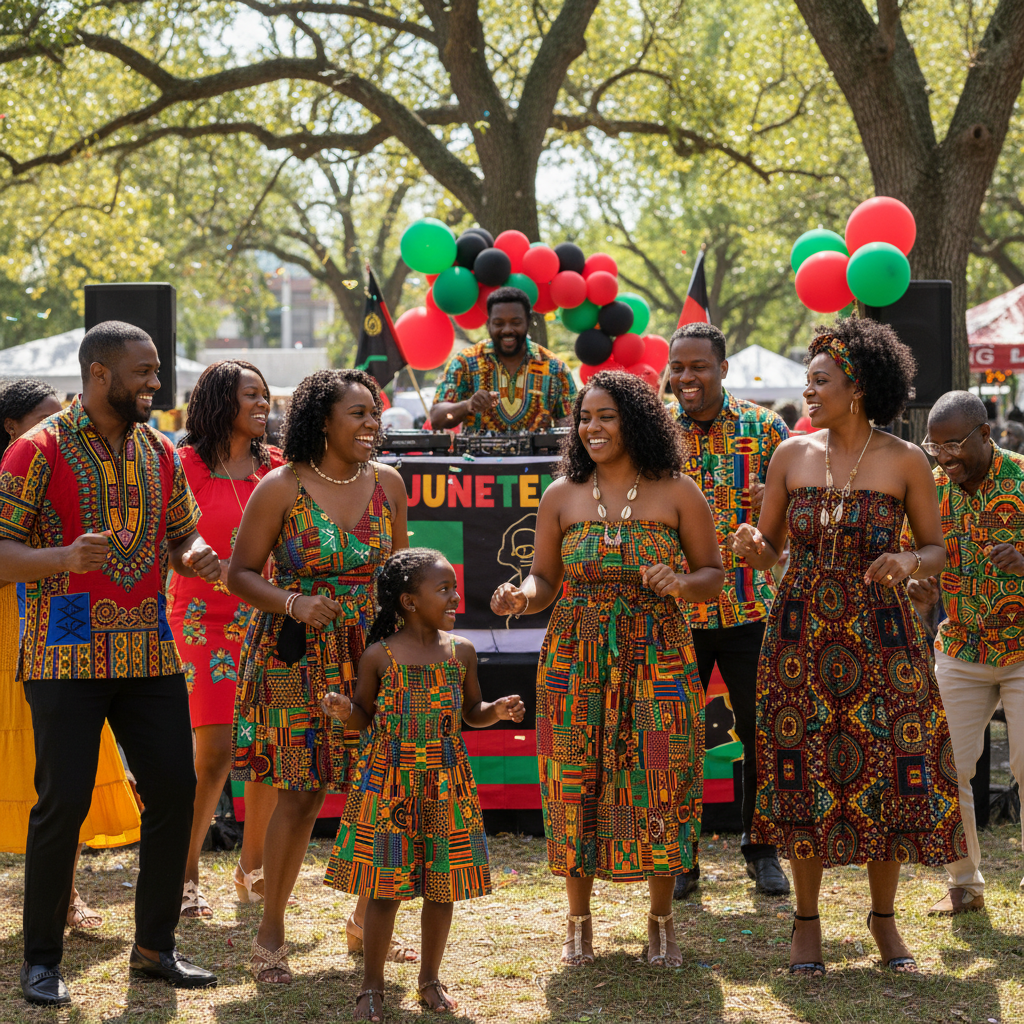
A vibrant outdoor Juneteenth celebration with Black families and friends dancing and laughing under colorful decorations, a DJ booth subtly in the background. shot on Canon EOS R5, 35mm lens, natural lighting, editorial photography.
Key Genres and Artists for Your Juneteenth Playlist
To create a truly authentic and engaging Juneteenth playlist, focus on a diverse range of genres that represent the breadth and depth of Black musical heritage, from the foundational sounds of spirituals and jazz to the contemporary rhythms of hip-hop and Afrobeats. Incorporating a mix of these styles ensures that the playlist appeals to various tastes and generations, while collectively telling the story of Black resilience and joy. This approach creates a rich auditory experience that honors tradition while embracing modern expressions of Black culture.
Here’s a breakdown of essential genres and artists to consider:
Gospel & Spirituals: The bedrock of Black American music, these songs carry profound messages of faith, endurance, and hope. Artists like Shirley Caesar, The Clark Sisters, and Kirk Franklin are staples. Don't forget traditional spirituals like "Wade in the Water" or "Swing Low, Sweet Chariot" for moments of reflection.
Blues & Jazz: Born from the experiences of Black Americans, these genres are rich with storytelling and improvisation. Think legends like B.B. King, Ella Fitzgerald, Louis Armstrong, and Miles Davis. Contemporary jazz artists like Robert Glasper or Kamasi Washington can add a modern flair.
Rhythm & Blues (R&B) & Soul: From Motown classics to modern R&B, this genre is synonymous with Black celebration and expression. Include artists like Aretha Franklin, Marvin Gaye, Sam Cooke, Al Green, and more recent icons like Beyoncé, Maxwell, or H.E.R. Neo-Soul artists like D'Angelo and Jill Scott are perfect for that smooth, conscious vibe.
Funk & Disco: For pure, unadulterated joy and dancing, funk and disco are indispensable. James Brown, Earth, Wind & Fire, Parliament-Funkadelic, and Chaka Khan will get everyone moving.
Hip-Hop: A powerful voice for Black culture and social commentary, hip-hop has a place in any celebration. Incorporate uplifting tracks from artists like Common, A Tribe Called Quest, Kendrick Lamar, or Lizzo. Be mindful of lyrical content to ensure it fits the celebratory tone.
Afrobeats & Caribbean Rhythms: To acknowledge the broader African diaspora, include vibrant Afrobeats from Nigeria and Ghana (e.g., Burna Boy, Wizkid, Davido) and Caribbean sounds like Reggae, Dancehall, and Soca (e.g., Bob Marley, Chronixx, Machel Montano). If you're planning an event with an Afro-Caribbean flair, you might even consider hiring dancers, as discussed in our article on Hiring Dancers for an Afro-Caribbean Themed Event.
Curating for Different Moods and Moments
Segmenting your playlist to match different phases of your event, such as arrival, dining, dancing, and a thoughtful cool-down, is crucial for maintaining an appropriate atmosphere throughout. This strategic approach ensures that the music seamlessly transitions, supporting the event's flow and emotional resonance. A well-timed track can amplify a moment, while a mismatched song can disrupt it.
For instance, during guest arrival and cocktail hour, opt for smoother, more conversational tunes – perhaps instrumental jazz or laid-back Neo-Soul. As dinner service begins, maintain a pleasant background with classic R&B or soulful grooves. When it's time for the main celebration, unleash the dance tracks. Finally, wind down with reflective, perhaps slightly slower, soulful tunes as guests prepare to depart. This careful curation enhances the overall guest experience, ensuring the music always complements the moment. Our guide on How to Create an Event Timeline That Keeps Everything on Track offers great insights into planning these transitions.
Incorporating Live Music and DJs for an Authentic Vibe
Hiring a professional DJ or live musicians can significantly elevate your Juneteenth celebration, providing a dynamic and interactive musical experience that a static playlist cannot fully replicate. These professionals bring not only their expertise in mixing and performance but also a deep understanding of cultural nuances, ensuring the music perfectly aligns with the spirit of the event. Their ability to read the crowd and adapt the musical flow in real-time is invaluable for maintaining an engaging atmosphere.
A skilled DJ, especially one specializing in Black music genres, can effortlessly blend different eras and styles, keeping the energy high and the dance floor packed. They understand the art of the transition, moving from a soulful classic to a modern Afrobeats hit without missing a beat. Live musicians, whether a gospel choir, a jazz ensemble, or a spoken word artist, add an incomparable layer of authenticity and emotional depth. Imagine a live saxophonist playing smooth jazz as guests arrive, or a vibrant drum circle to kick off the dance portion of the evening. When searching for talent, browse DJs on Ajola or find entertainers near you on Ajola to discover professionals who specialize in cultural events and have a proven track record. Typical rates for professional DJs in major cities like Atlanta or Houston can range from $150-$300 per hour, depending on their experience, equipment, and the duration of your event, while live bands or ensembles can range from $500 to several thousand, based on size and reputation.
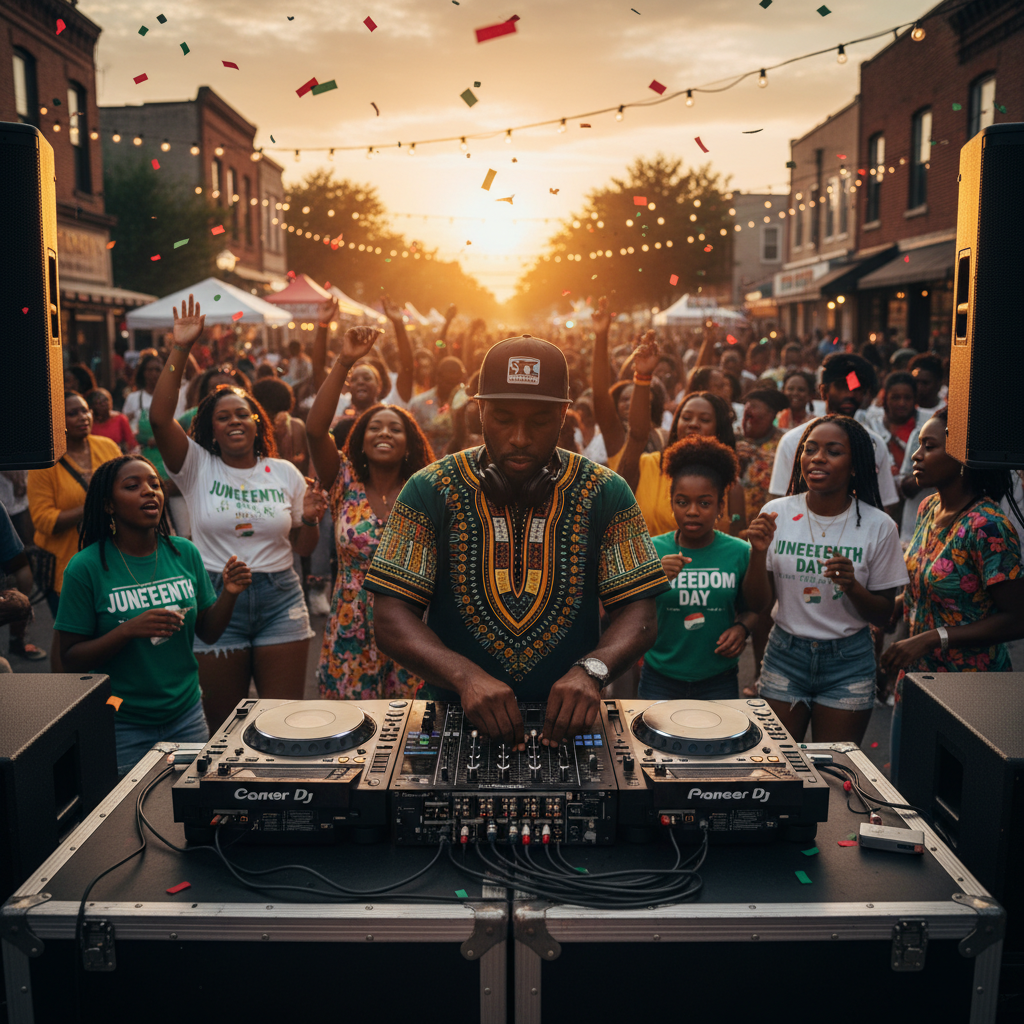
A Black DJ skillfully mixing tracks on a turntable at an outdoor Juneteenth block party, surrounded by joyful dancers. The sun is setting, casting a warm glow. shot on Canon EOS R5, 35mm lens, natural lighting, editorial photography.
Beyond the Playlist: Enhancing the Juneteenth Soundscape
Enhancing your Juneteenth soundscape goes beyond mere song selection; it involves creating an immersive auditory environment that complements the music and reinforces the celebration's cultural significance. This can include integrating spoken word, historical excerpts, or intentional sound design elements that add layers of meaning and engagement to the overall experience. Consider how every sound contributes to the narrative of freedom and cultural pride.
Think about incorporating short, impactful spoken word pieces or poetry readings between musical sets. These can be original works or excerpts from historical speeches and writings by Black leaders and artists. Audio snippets from influential speeches by figures like Dr. Martin Luther King Jr., Maya Angelou, or Frederick Douglass, strategically placed, can serve as powerful reminders of the journey to freedom. For a more interactive element, consider inviting local poets or spoken word artists to perform live. This not only supports local talent but also adds a unique, thought-provoking dimension to your event. Furthermore, ensure your sound system is top-notch. Clear, well-distributed sound is paramount to appreciating the nuances of the music and spoken elements. Investing in quality audio equipment or hiring a sound technician can make a significant difference. You can find event production vendors on Ajola who can help with sound and lighting to ensure your event sounds as good as it looks. For vendors looking to expand their reach, consider signing up on Ajola to connect with event planners seeking specialized services.
"Music is the soul of the universe. It evokes emotions, memories, and connects us to our shared humanity. For Juneteenth, it's a profound reminder of where we've been, how far we've come, and the joy in our collective future." — A seasoned Atlanta event planner.
Navigating Music Licensing and Public Performance Rights
Understanding and complying with music licensing and public performance rights is a critical, yet often overlooked, aspect of planning any event that features copyrighted music. Failure to secure the necessary licenses can lead to legal issues and significant fines, making it imperative for event planners to address this early in the planning process. This ensures that artists and creators are fairly compensated for their work while your event remains compliant with copyright law.
If you're hosting a private, intimate gathering in a personal residence, licensing is generally not a concern. However, for public events, even if entry is free, or for events held in venues that don't already cover blanket licenses, you will likely need to obtain performance licenses from performing rights organizations (PROs) such as ASCAP, BMI, and SESAC. Most professional venues, hotels, and established event spaces often hold blanket licenses that cover a wide range of music. Always confirm with your venue what their licensing covers. If you're using a DJ, many professional DJs also hold their own PRO licenses, but it's always wise to clarify this with them directly. It’s a small but vital detail that ensures your celebration is not only joyous but also legally sound.