Building a portfolio that wins clients as an event vendor
March 19, 2026 10 min read Ajola Team
Key Takeaways
Your portfolio is a strategic narrative, not just a collection of images; it showcases your unique value and problem-solving skills.
Prioritize quality over quantity, curating only your absolute best work that resonates with your target demographic.
Leverage a professional website, optimized Ajola profile, and engaging social media to create a powerful online showroom.
Integrate authentic testimonials, reviews, and detailed case studies to build crucial trust and credibility.
Explicitly highlight your cultural competency to attract and serve African American and Afro-Caribbean clients effectively.
In the fiercely competitive event industry, your portfolio isn't merely a visual scrapbook of past projects; it's your most potent sales tool. For event vendors serving the vibrant African American and Afro-Caribbean communities, a portfolio must do more than just display talent—it needs to tell a story, resonate culturally, and ultimately, win over discerning clients. A stellar portfolio transforms curious browsers into confirmed bookings, demonstrating not only your skill but also your understanding of unique cultural nuances and expectations. It's about showcasing your brand's essence and proving you're the ideal partner for their most cherished celebrations.
Crafting Your Narrative: More Than Just Pictures
Your portfolio isn't just a collection of pretty pictures; it's a strategic narrative that tells potential clients who you are, what you specialize in, and the unique value you bring to their events. It should evoke emotion, demonstrate problem-solving, and highlight your distinct artistic or logistical approach.
Think of each project within your portfolio as a mini-case study. Beyond the stunning final shots, what story can you tell? Did you overcome a logistical challenge with grace? Did you transform a client's vague vision into a breathtaking reality? For a DJ, this might mean including short video clips of a packed dance floor at an Afro-Caribbean fête, showcasing your ability to read the room and keep the energy high. A caterer might feature not just plated dishes, but also candid shots of guests enjoying the food, or even a behind-the-scenes glimpse of the team in action, emphasizing professionalism and passion. Each entry should describe the client's initial brief, the specific challenges, your creative solutions, and the successful outcome. Use descriptive captions that go beyond surface-level details, explaining the inspiration, the process, and the client's delighted reaction.
Consider adding details that speak to your versatility. Perhaps you've planned an intimate baby shower with intricate details, or a large-scale family reunion that required meticulous coordination. Highlighting these diverse experiences not only showcases your range but also positions you as a flexible and capable vendor, ready for any occasion. For instance, if you've done exceptional work on a baby shower, linking to a resource like Baby shower planning tips for 2026 could subtly reinforce your expertise in that niche.
A confident African American female event planner in a chic blazer and tailored pants, animatedly discussing design concepts with a Black couple at a modern coffee shop. She points to a vibrant mood board on a large tablet, showcasing elegant table settings and floral arrangements, while the couple nods in agreement.
When curating your portfolio, remember that clients are looking for a connection. They want to envision their own event coming to life through your work. This means selecting projects that not only look good but also resonate with the type of client you want to attract. If your ideal client values luxury, ensure your portfolio reflects high-end finishes and sophisticated details. If they prioritize cultural authenticity, showcase events where you’ve seamlessly integrated traditional elements. This mindful selection is crucial for attracting the right inquiries and converting them into clients.
Curating for Impact: Quality Over Volume
A powerful portfolio prioritizes showcasing your absolute best work, not every project you've ever completed, ensuring that each piece exemplifies your skill, style, and ability to meet client expectations. Discerning clients are looking for consistency and excellence, which means a tightly curated selection will always outperform a sprawling, uneven collection.
Resist the urge to include every event you've ever worked on. Instead, meticulously select 10-15 standout projects that truly represent your capabilities and your desired niche. For a decorator, this might mean showcasing a breathtaking balloon arch from a Juneteenth celebration or an elegant tablescape from a milestone birthday. If you specialize in decor, staying updated on trends like those in Balloon decor trends for events in 2026 can help you create cutting-edge designs to feature. Ensure that the imagery is of the highest possible resolution, professionally shot, and consistently reflects your brand's aesthetic. Blurry photos or inconsistent lighting can instantly diminish the perceived value of your work, regardless of how stunning the event actually was.
Diversity in your curated selection is also key, especially when serving a broad community. Show your ability to handle different event types—from elegant weddings and corporate galas to vibrant family reunions and cultural celebrations. For example, if you're a photographer, feature a mix of posed portraits, candid moments, and venue shots. If you're a planner, highlight projects that demonstrate your logistical prowess, creative design, and seamless execution across various scales and themes. Regularly review and update your portfolio, removing older, less impactful work and replacing it with fresh, exciting projects that align with your current brand direction and skills. This ensures your portfolio remains dynamic and relevant.
Leveraging Digital Platforms: Your Online Showroom
In today's event industry, a robust online presence is non-negotiable, acting as your primary showroom where potential clients first discover and evaluate your services. This involves not just a professional website but also optimized profiles on vendor marketplaces and active, engaging social media channels.
Your professional website should be the cornerstone of your digital presence. It needs to be easy to navigate, mobile-friendly, and feature a dedicated, prominent portfolio section. Each portfolio entry should include high-quality images or video, detailed descriptions, and perhaps even a client testimonial. Beyond your website, optimize your profile on vendor marketplaces like Ajola. An Ajola profile is more than just a listing; it's an extension of your brand. Ensure you use high-resolution images, write compelling descriptions of your services, and clearly outline your specialties. Clients frequently browse vendors on Ajola, and a well-optimized profile significantly increases your visibility. If you're a vendor looking to expand your reach, consider creating your profile on Ajola to connect with clients specifically looking for your expertise.
Social media platforms like Instagram and Pinterest are invaluable for visual industries. Use them to showcase behind-the-scenes glimpses, client interactions, and snippets of your finished work. Hashtags, engaging reels, and consistent posting can dramatically expand your reach. Don't underestimate the power of platforms like Ajola, where clients specifically search for services. For instance, if you're a photography business, make sure your Ajola photography profile is brimming with your best work. Similarly, caterers should ensure their Ajola catering profile highlights their diverse menus and stunning presentations. Remember, your digital showroom is open 24/7, so make sure it's always presenting your absolute best.
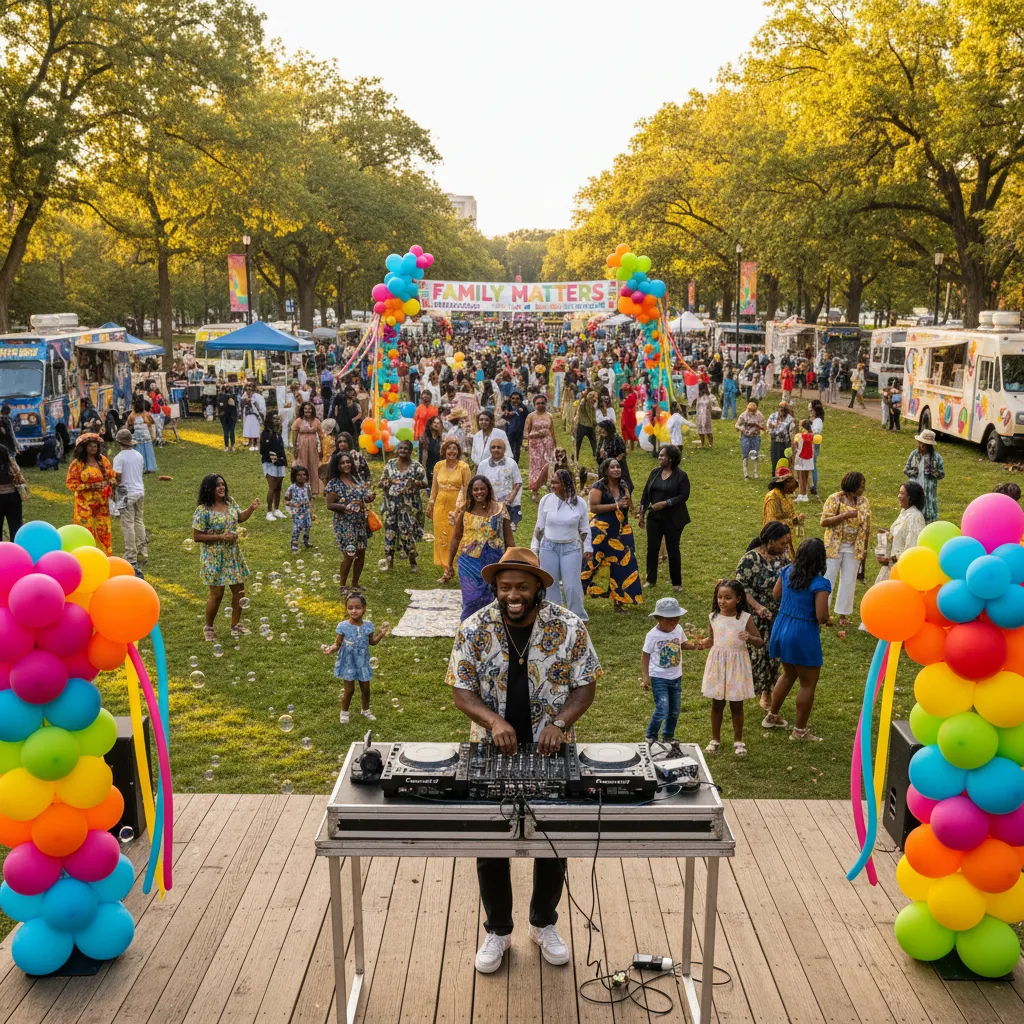
A vibrant, outdoor family reunion event in a park, with an African American DJ skillfully mixing music on a stage, surrounded by colorful balloon decorations and joyful guests dancing and mingling. The scene captures lively energy and professional event execution.
For optimal visibility, consider the importance of SEO for both your website and your Ajola profile. Using relevant keywords that potential clients are searching for—such as "African American wedding planner Atlanta" or "Afro-Caribbean caterer Miami"—will help you rank higher in search results. Think about the specific services you offer and the locations you serve. This targeted approach ensures that when clients are actively looking for a vendor like you, they find you first.
The Power of Social Proof: Testimonials & Case Studies
Nothing builds trust and credibility faster than authentic social proof, which comes in the form of glowing testimonials, detailed case studies, and positive reviews from satisfied clients. These narratives provide invaluable third-party validation, assuring new prospects that you consistently deliver exceptional results.
Collecting testimonials should be a standard part of your post-event process. After every successful event, send a polite request to your clients for a review or testimonial. Make it easy for them by providing a direct link to your Ajola profile, Google My Business, or a simple form. Video testimonials, while harder to obtain, are gold. A client speaking genuinely about their positive experience can be incredibly impactful. According to recent industry data, approximately 88% of consumers trust online reviews as much as personal recommendations, underscoring their critical role in client acquisition.
Case studies take testimonials a step further. They delve into the specific problem a client faced, the solution you provided, and the measurable results. For example, a planner might detail how they orchestrated a last-minute venue change for an important family reunion, saving the day and exceeding expectations. Including direct quotes from the client within these case studies adds authenticity. Display these testimonials and case studies prominently on your website, Ajola profile, and even in your initial client proposals. Seeing that others have had a positive experience with your services significantly reduces perceived risk for new clients and builds confidence in your abilities.
A Black event planner, impeccably dressed, sits at a sleek desk in her modern office, confidently presenting a physical portfolio book filled with stunning event photographs to an engaged African American couple, who are smiling and nodding in approval.
Remember to actively monitor and respond to reviews across all platforms. Acknowledging positive feedback and professionally addressing any constructive criticism shows that you are engaged, customer-focused, and committed to excellence. This level of responsiveness further enhances your reputation and signals to potential clients that they can expect a high level of professionalism from your brand.
Showcasing Cultural Expertise: Connecting with Your Niche
For event planners, hosts, and vendors serving African American and Afro-Caribbean communities, explicitly showcasing your cultural competency and experience with specific traditions is paramount to attracting and retaining your ideal clientele. This demonstrates not just technical skill, but a deep understanding and respect for the unique nuances of their celebrations.
Your portfolio should actively reflect your understanding and appreciation of cultural celebrations. This means featuring events like Juneteenth commemorations, Kwanzaa celebrations, traditional African weddings with specific rites, vibrant Caribbean carnivals, or meticulously planned family reunions. Use imagery that authentically represents these events, showing diverse attendees, cultural attire, specific decor elements, and traditional foods. For instance, if you’re a caterer, highlight dishes that resonate with Afro-Caribbean palates, perhaps a jerk chicken station or a spread of traditional West African cuisine. If you're a DJ, showcase how you seamlessly blend Afrobeats, Soca, R&B, and Gospel to create an unforgettable atmosphere.
Beyond imagery, use your descriptions to articulate how you integrate cultural elements. Did you source specific African textiles for the decor? Did you coordinate a traditional pour-out ceremony? Did you ensure the entertainment roster included artists who understood the diverse musical tastes of a Black family reunion? You could even link to relevant articles such as How to plan a Black family reunion in Atlanta or How to plan entertainment for a family reunion in Chicago to demonstrate your broader understanding of these events. This level of detail assures clients that you not only understand their vision but can also execute it with cultural sensitivity and authenticity. For clients seeking specific services, they often browse entertainment on Ajola, and seeing vendors who explicitly cater to their cultural needs makes a significant difference.
Understanding the common expectations and even budget ranges within these communities can also be a powerful differentiator. For example, knowing that a large Black family reunion might involve a budget ranging from $5,000 to $20,000+ depending on the scope, or that specific event dates like Memorial Day or Labor Day weekends are popular, allows you to tailor your offerings and communication. By demonstrating this deep cultural fluency, you build immediate rapport and trust, positioning yourself not just as a vendor, but as a valued partner who truly understands and respects their heritage. This connection is invaluable for securing bookings and fostering long-term client relationships within the African American and Afro-Caribbean event market.