How Black-owned event vendors can leverage community partnerships
April 18, 2026 8 min read Ajola Team
Key Takeaways
Community partnerships are crucial for Black-owned event vendors to gain referrals, share resources, and amplify marketing efforts within and beyond their immediate networks.
Successful partnerships stem from identifying complementary businesses, cultural organizations, and community leaders who share your values and target audience.
Formalizing agreements, whether through shared contracts or clear MOUs, helps define roles, responsibilities, and revenue-sharing models, ensuring mutual benefit.
Leveraging digital platforms for joint promotions, cross-marketing campaigns, and shared content significantly expands reach and client acquisition.
Consistent communication, regular performance reviews, and adaptability are key to sustaining long-term, fruitful community relationships that drive business growth.
Why Community Partnerships are Non-Negotiable for Black-Owned Businesses
Community partnerships are absolutely essential for Black-owned event businesses because they provide a vital pathway to expanded reach, trusted referrals, and shared resources in an often competitive industry. For many Black entrepreneurs, traditional marketing channels can be costly or less effective in reaching their specific target demographic. Building alliances within the community creates a strong referral network, fostering client trust and significantly reducing customer acquisition costs. For instance, a caterer partnering with a local Black-owned venue or a DJ working closely with an event planner can create a seamless service offering that is highly attractive to clients seeking culturally relevant and high-quality experiences.
Beyond just referrals, these partnerships offer opportunities for collective bargaining, shared marketing budgets, and even combined service packages. Imagine a Black-owned photography studio teaming up with a décor specialist: they can offer a bundled service at a competitive rate, attracting more clients while splitting marketing expenses. This collaborative approach not only strengthens individual businesses but also elevates the entire ecosystem of Black-owned enterprises within the event sector, creating a powerful economic ripple effect. This strategy is particularly effective in major U.S. cities with vibrant Black communities, where word-of-mouth and community endorsements hold significant weight.
Identifying the Right Partners: More Than Just a Referral
Identifying the right community partners requires a strategic approach that goes beyond simply exchanging business cards; it involves seeking out businesses and organizations whose services complement yours, share your target audience, and align with your values. Look for entities that serve the same clientele but offer non-competing services, such as a bakery specializing in custom cakes for weddings and a florist, or a photo booth rental company and a DJ service. Think about cultural organizations, local churches, HBCU alumni associations, or even popular community event spaces that regularly host gatherings.
Consider partners who have a strong presence in the community and a reputation for excellence. For example, a planner specializing in Martin Luther King Jr. Day community event planning might seek out local non-profits or community centers as partners. When you browse vendors on Ajola, pay attention to those with strong reviews and a clear niche that could complement your own. A shared vision for serving the African American and Afro-Caribbean community is paramount, ensuring that any collaboration feels authentic and beneficial to all parties involved. A good partner isn't just someone who sends you business; it's someone whose success contributes to your own, and vice-versa.
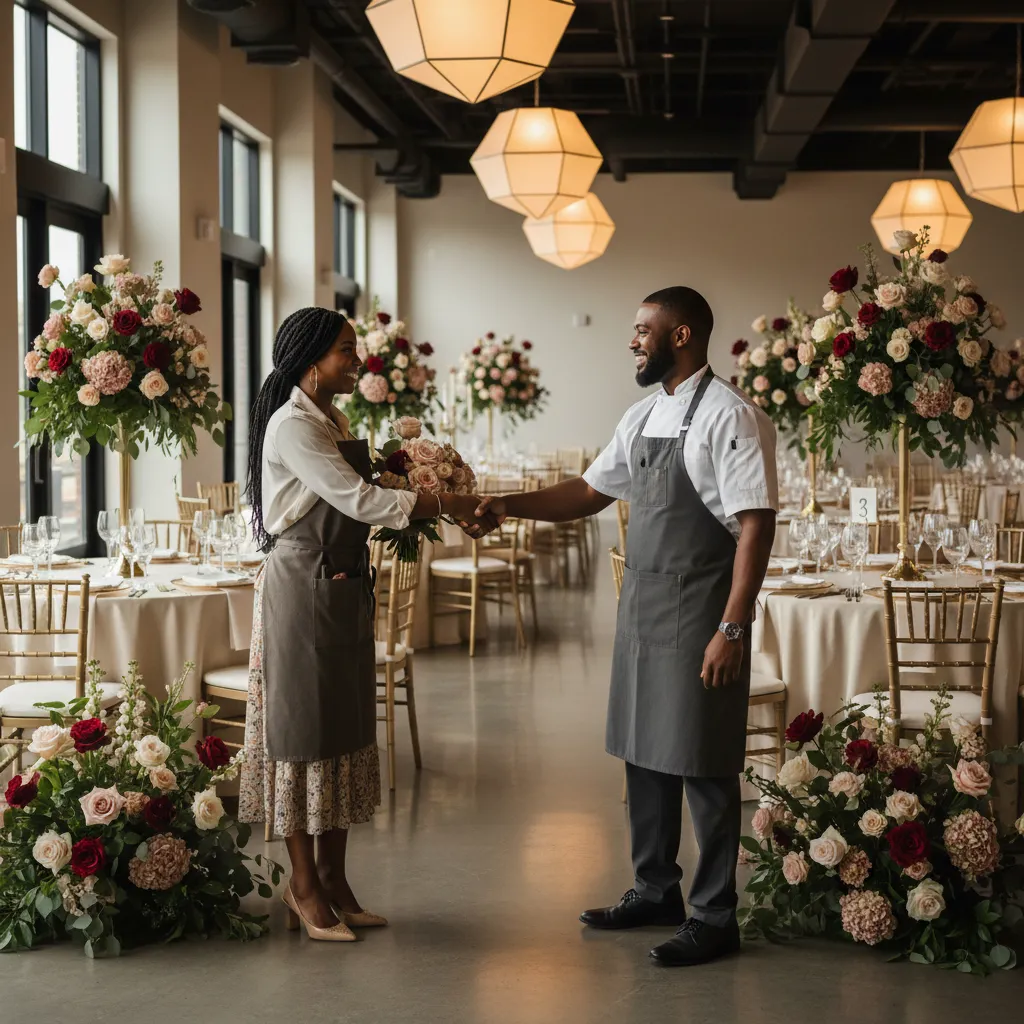
An African American event planner, a Black caterer, and a Black florist smiling and shaking hands warmly in a modern event space.
Crafting Mutually Beneficial Agreements
Crafting mutually beneficial agreements is crucial for successful community partnerships, ensuring that all parties clearly understand their roles, responsibilities, and the expected outcomes of the collaboration. These agreements don't always need to be legally binding contracts for every single referral, but a clear understanding, often formalized through a simple Memorandum of Understanding (MOU) or a written partnership proposal, prevents misunderstandings and fosters trust. Key elements to include are specific referral fees or commission structures (e.g., 10-15% of booked services), co-marketing responsibilities, resource sharing protocols, and a defined duration for the partnership.
For larger collaborations, like co-hosting a community event or creating a bundled service package, a more detailed contract is advisable. This should outline revenue splits, service delivery standards, client communication protocols, and dispute resolution mechanisms. For instance, if a venue partners with an exclusive caterer found on Ajola, the agreement would specify minimum booking requirements, kitchen access, and insurance liabilities. Transparency from the outset builds a solid foundation, ensuring that both parties feel valued and that the partnership remains equitable, driving sustainable growth for everyone involved.
Leveraging Digital & Social Channels for Joint Promotion
Leveraging digital and social channels for joint promotion is a powerful, cost-effective way to amplify reach and generate leads by tapping into each partner's existing audience. This involves strategic cross-promotion across Instagram, Facebook, TikTok, and even LinkedIn, where partners share each other's content, tag one another in posts, and collaborate on live sessions or joint giveaways. For example, a DJ could go live with a photographer listed on Ajola to discuss wedding trends, showcasing both their expertise and services simultaneously. This not only introduces your business to a new, engaged audience but also provides social proof through endorsement.
Consider developing shared content, such as blog posts (e.g., an article co-written by a decorator and a planner on how to match decor to your cultural theme), video testimonials, or joint email marketing campaigns that highlight the seamless experience clients can expect when booking both services. Utilize shared hashtags and run targeted ad campaigns where the cost is split, maximizing impact while minimizing individual expenditure. Encourage partners to include links to each other's Ajola profiles or websites, making it easy for interested clients to explore further. This integrated digital strategy significantly boosts visibility and credibility, converting shared audiences into loyal clients.
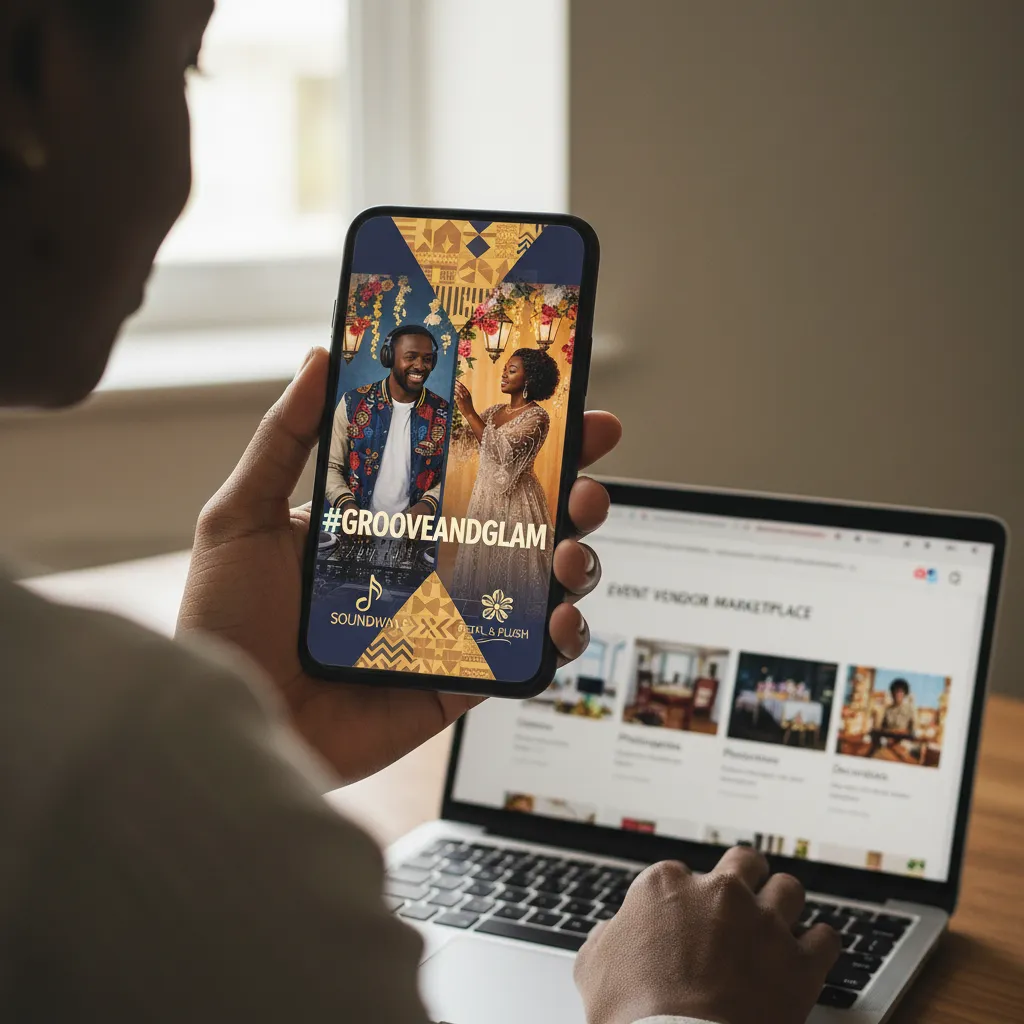
A vibrant social media graphic on a phone screen. In the background, a person is scrolling through event vendor listings on a laptop.
Measuring Success and Sustaining Relationships
Measuring success and sustaining relationships are critical for ensuring that community partnerships continue to deliver tangible benefits and evolve into long-term assets for your Black-owned event business. Start by establishing clear Key Performance Indicators (KPIs) at the outset of each partnership, such as the number of referrals received and sent, conversion rates from those referrals, revenue generated from joint projects, and engagement metrics on co-promoted digital content. Regularly review these KPIs—perhaps quarterly or semi-annually—to assess the partnership's effectiveness and identify areas for improvement. This data-driven approach allows you to justify continued investment in the relationship and demonstrate mutual value.
Sustaining these relationships requires consistent, proactive communication, not just when there's a new lead. Schedule regular check-ins to discuss market trends, client feedback, and potential new collaborative ventures. Perhaps a cultural dance performance vendor on Ajola could partner with a planner on a new themed event series. Offering genuine support to your partners, celebrating their successes, and being a reliable resource will strengthen the bond. Remember, partnerships are a two-way street; actively refer business to your partners and promote their services whenever appropriate. Consider creating exclusive offers for clients referred through your partners or offering reciprocal discounts. This reciprocal generosity and commitment to shared growth will ensure your community partnerships flourish, creating a robust network that continuously feeds your business.
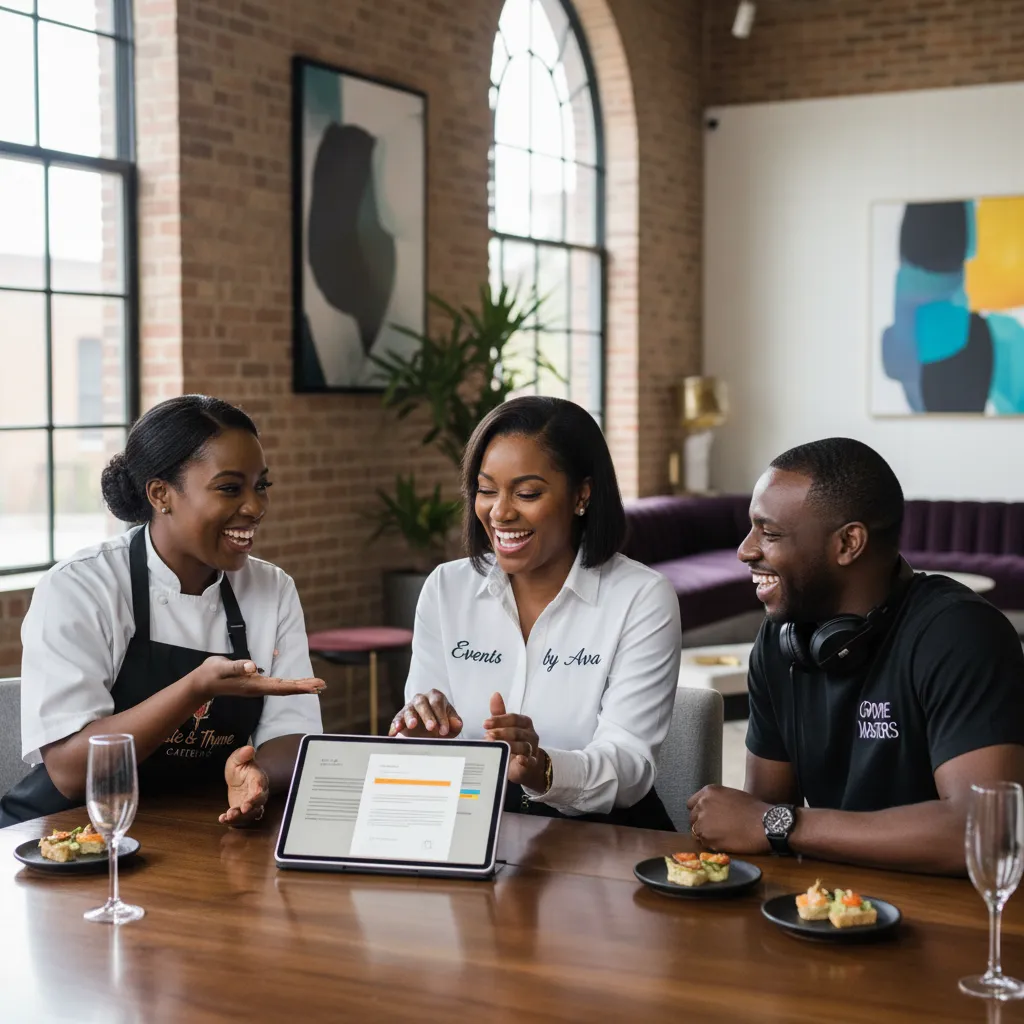
Two African American business owners, one a catering manager and the other a venue owner.
Expanding Your Network with Ajola
Beyond direct partnerships, platforms like Ajola are instrumental in expanding your network and showcasing your services to a broader audience of event planners and hosts seeking Black-owned businesses. By creating a detailed vendor profile on Ajola, you position yourself to be discovered by clients actively looking for specific services, from venues to decorations and everything in between. This visibility is a form of indirect partnership, as Ajola connects you with a curated community dedicated to supporting Black excellence in the event industry.
For Black-owned businesses looking to grow, remember that Ajola isn't just a directory; it's a community hub. Engage with other vendors, explore potential collaborators, and even find opportunities to specialize further. For instance, if you offer cultural dance performances for weddings, connecting with planners who specialize in culturally rich events through Ajola can open new doors. Vendors can also learn more about optimizing their profile and business strategies by visiting the Ajola blog, which offers insights on topics like day-of event coordination. If you haven't yet, consider signing up your business at Ajola's vendor registration page to unlock these powerful networking and growth opportunities within the community.