Nigerian naming ceremonies, known as Ìsomolórúkọ among Yorubas, are vibrant cultural celebrations deeply rooted in tradition, usually held seven days after birth.
Successful planning hinges on early venue selection, securing key vendors like caterers and photographers, and understanding the core rituals.
Budgeting for cultural elements, traditional attire, and a diverse menu is crucial for an authentic and memorable event.
Leverage platforms like Ajola to connect with culturally experienced vendors who understand the nuances of Nigerian celebrations.
Post-ceremony follow-ups, including thank-you notes and sharing professional photos, extend the joyous experience for guests and family.
A Nigerian naming ceremony is far more than just giving a child a name; it’s a profound cultural declaration, a spiritual dedication, and a joyous community gathering. For African American and Afro-Caribbean families looking to honor their heritage or introduce their newest member into a rich tradition, understanding the intricate layers of a Nigerian naming ceremony, particularly the Yoruba Ìsomolórúkọ, is paramount. This guide will walk you through the essential steps to plan an unforgettable celebration that resonates with cultural depth and personal joy.
What is the significance of a Nigerian naming ceremony?
The significance of a Nigerian naming ceremony lies in its deep cultural and spiritual roots, formally introducing a newborn to their family and community while bestowing names that reflect hopes, prayers, and family history. These ceremonies, often held on the seventh or eighth day after birth (for girls and boys respectively in Yoruba tradition), are critical rites of passage. They cement the child's identity within the lineage and ensure they are welcomed with blessings and good wishes from elders and loved ones.
For many Nigerian ethnic groups, particularly the Yoruba, Igbo, and Hausa, names carry profound meanings. They can signify the circumstances of birth, the family's aspirations for the child, or even prophecies about their future. It's not uncommon for a child to receive multiple names – a Christian or Islamic name, a family name, and several traditional names from various relatives, each with its own story. This tradition emphasizes the collective responsibility of raising a child and the strong communal bonds inherent in Nigerian culture. Planning such an event in the diaspora requires a delicate balance of traditional adherence and modern convenience, ensuring every element speaks to authenticity.
Key Cultural Elements & Rituals
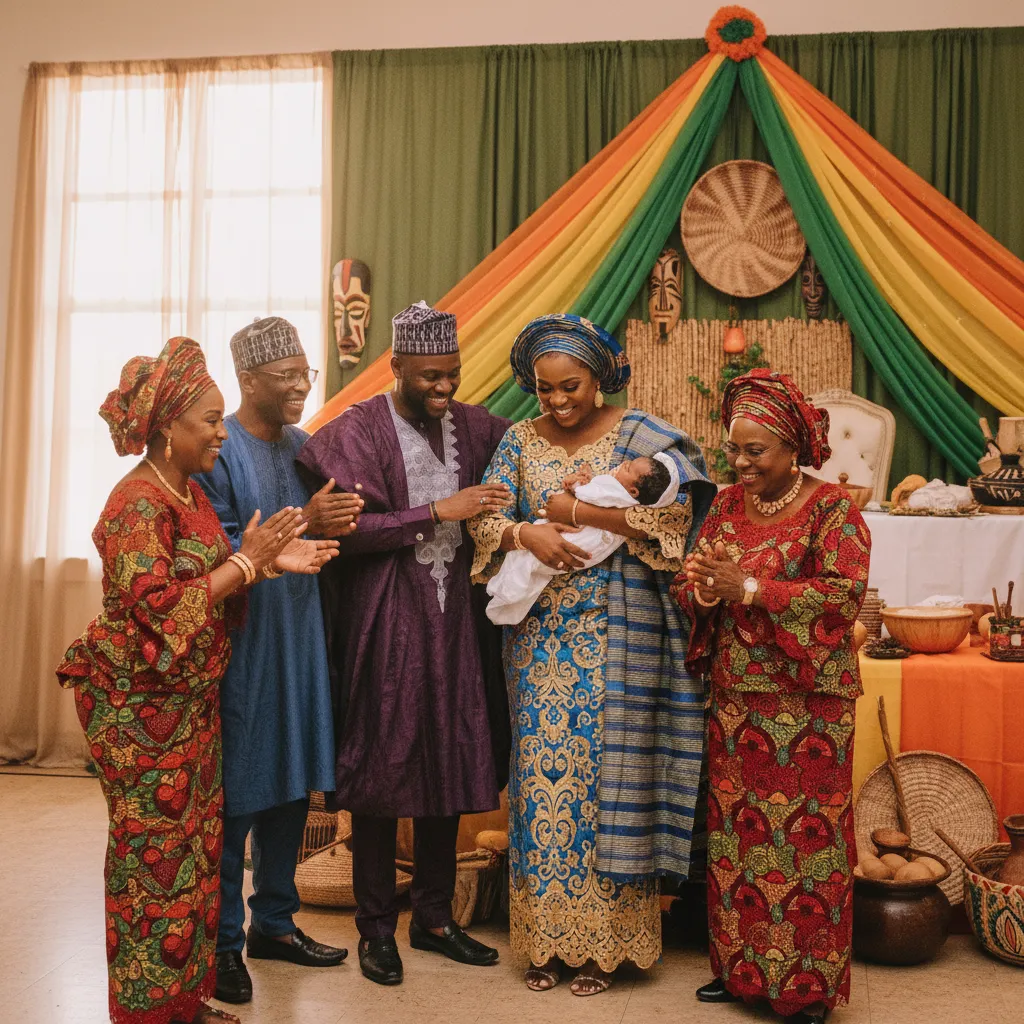
At the heart of the ceremony are symbolic items, each representing a facet of life: honey for sweetness, salt for a life of flavor, water for clarity, palm oil for peace, and kola nut for longevity. An elder, often a grandparent or a designated family head, leads the blessings, offering prayers and applying these items to the baby's lips. Music, particularly traditional drumming and praise singing (oriki), plays a vital role in setting the tone and invoking ancestral spirits. It's a vibrant affair, typically lasting a few hours, filled with prayers, joyous singing, dancing, and heartfelt speeches.
Understanding these elements is the first step in planning. Your event planner, especially one familiar with African cultural events, can help you integrate these rituals seamlessly, even in a modern setting. When seeking vendors, look for those who appreciate cultural nuance. You can browse vendors on Ajola who specialize in cultural events.
How do I choose the right venue for a Nigerian naming ceremony?
Choosing the right venue for a Nigerian naming ceremony involves balancing capacity, ambiance, and cultural appropriateness to ensure comfort and dignity for all guests and rituals. Given that these events often draw a significant number of family members and friends, a space that can comfortably accommodate between 100 to 300 guests is typically ideal, whether it’s a community hall, a banquet facility, or even a spacious private residence. The venue must also have adequate space for the ceremonial setup, including a designated area for the baby and parents, and room for dancing and mingling.
Consider venues that offer flexibility in decor and catering. While some prefer a grand ballroom, others might opt for a more intimate setting, such as a well-appointed restaurant event space or a community center. For those in Dallas seeking unique options, consider rooftop venues that offer both stunning views and a sophisticated ambiance, which can be adapted for a naming ceremony. Ensure the venue allows for any specific cultural requirements, such as an area for traditional musicians or space for a small altar if desired. Always inquire about their policies on outside catering, as you'll likely want to bring in Nigerian cuisine specialists.
Venue Considerations & Logistics
Capacity & Layout: Can it comfortably hold your guest count? Is there a separate area for the ceremony itself and then for the reception/dining?
Accessibility: Is it easily accessible for elderly guests and those with young children?
Catering Policy: Does the venue allow external caterers? This is critical for authentic Nigerian food.
Audiovisual: Does it have sound systems for music and speeches, and perhaps screens for photo montages?
Parking: Is there ample parking for all your guests?
Decor Flexibility: Can you customize the decor to reflect traditional Nigerian aesthetics, perhaps incorporating gold and earth-tone decor themes?
When you've shortlisted venues, schedule site visits. Pay attention to the lighting, acoustics, and overall atmosphere. Don't hesitate to ask detailed questions about their event coordination services. A good venue manager can be an invaluable asset in ensuring your day runs smoothly.
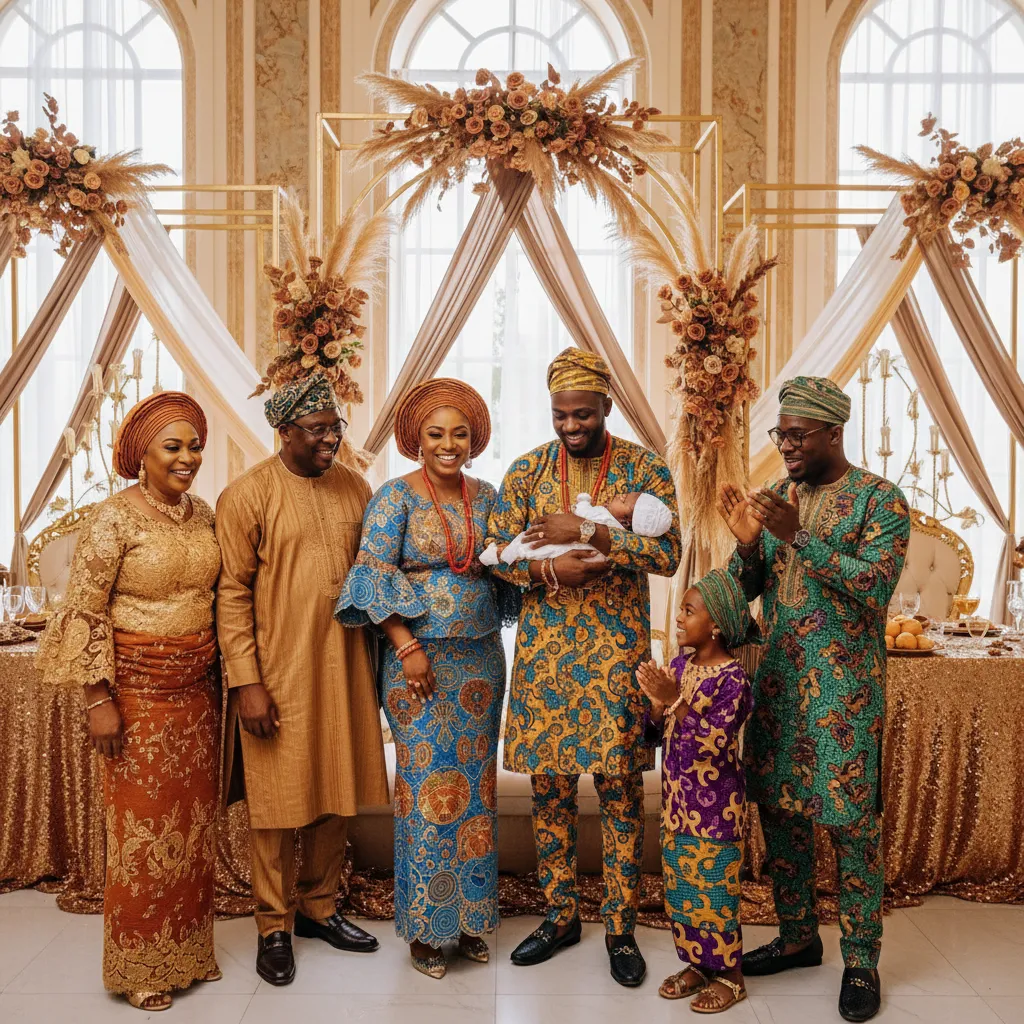
A joyful African American family, dressed in vibrant traditional Nigerian attire (aso-ebi), standing together at a beautifully decorated event space. The parents are cradling their newborn, surrounded by smiling grandparents and other family members, with intricate gold and earth-tone decorations in the background.
What vendors are essential for a Nigerian naming ceremony?
Essential vendors for a Nigerian naming ceremony include caterers specializing in authentic cuisine, experienced photographers and videographers to capture every moment, talented decorators to set the cultural ambiance, and a vibrant DJ or live band to provide the perfect soundtrack. These professionals ensure the event flows smoothly and truly embodies the celebratory spirit.
For catering, you'll need someone who can deliver an authentic Nigerian feast. Think Jollof rice, pounded yam with egusi soup, moi-moi, and an array of grilled meats. Expect catering costs for 150 guests to range from $3,000 to $8,000, depending on the menu complexity and service style. You can find caterers near you on Ajola who understand the nuances of Nigerian flavors. Photography and videography are non-negotiable; these moments are precious. A professional photographer for 6-8 hours might cost between $1,500 and $4,000, with videography often adding another $1,000-$3,500. Consider if you need both videography and photography to ensure comprehensive coverage. Decorators specializing in African aesthetics can transform any space, with budgets from $1,000 to $5,000 for a medium-sized event. Finally, music is the soul of any Nigerian celebration. A good DJ or live band, particularly one experienced with Afrobeats, Highlife, and traditional Nigerian music, is crucial. For guidance, read our post on live band vs DJ options. DJs typically charge $700-$2,000, while a live band can be $2,500-$7,000+.
Selecting Your Dream Team
When vetting vendors, always ask for portfolios that showcase previous cultural events. Look for reviews that speak to their understanding of specific traditions. For example, a photographer who knows to capture the blessing rituals respectfully or a decorator who understands the significance of certain color palettes (like rich gold and earthy tones) will be invaluable. Don't be afraid to ask for references.
Beyond the core vendors, you might consider an event planner, especially if you're navigating these traditions for the first time. They can offer invaluable guidance and coordination, potentially saving you stress and money in the long run. Find experienced event planners on Ajola who have a track record with cultural celebrations.
How do I plan the menu and refreshments for a Nigerian naming ceremony?
Planning the menu and refreshments for a Nigerian naming ceremony requires curating a diverse spread of authentic dishes that cater to various palates, celebrating the rich culinary heritage while ensuring there's something for everyone. The food is a central component of the celebration, symbolizing abundance and hospitality. A typical Nigerian naming ceremony features a mix of staple dishes, appetizers, and refreshing drinks.
Begin by selecting a few signature dishes that truly represent Nigerian cuisine. Jollof rice, a universally loved rice dish, is a must-have. Pair it with fried plantains, various protein options like grilled chicken, beef (suya), or fish. Other popular choices include pounded yam or eba with a choice of richly flavored soups like Egusi, Ogbono, or Afang. Consider offering a vegetarian option such as vegetable soup or rice and beans. For appetizers, puff-puff, meat pies, and spring rolls are always a hit. Ensure there's a good balance of spicy and milder options to accommodate all guests.
"The food at a Nigerian naming ceremony isn't just sustenance; it's a narrative of our culture, a taste of home, and an expression of profound joy. Every dish tells a story." - A seasoned Nigerian caterer.
Hydration is key, so offer a variety of soft drinks, bottled water, and perhaps traditional Nigerian beverages like Zobo (hibiscus tea) or Chapman. For adult guests, a selection of wines, beers, and spirits might also be appropriate. Work closely with your chosen caterer to finalize quantities, presentation, and service style (buffet is common and efficient for large crowds). If your ceremony coincides with specific cultural dates, like a Juneteenth celebration, you might find inspiration in how to plan a menu for a Juneteenth celebration to offer unique twists while maintaining cultural integrity.
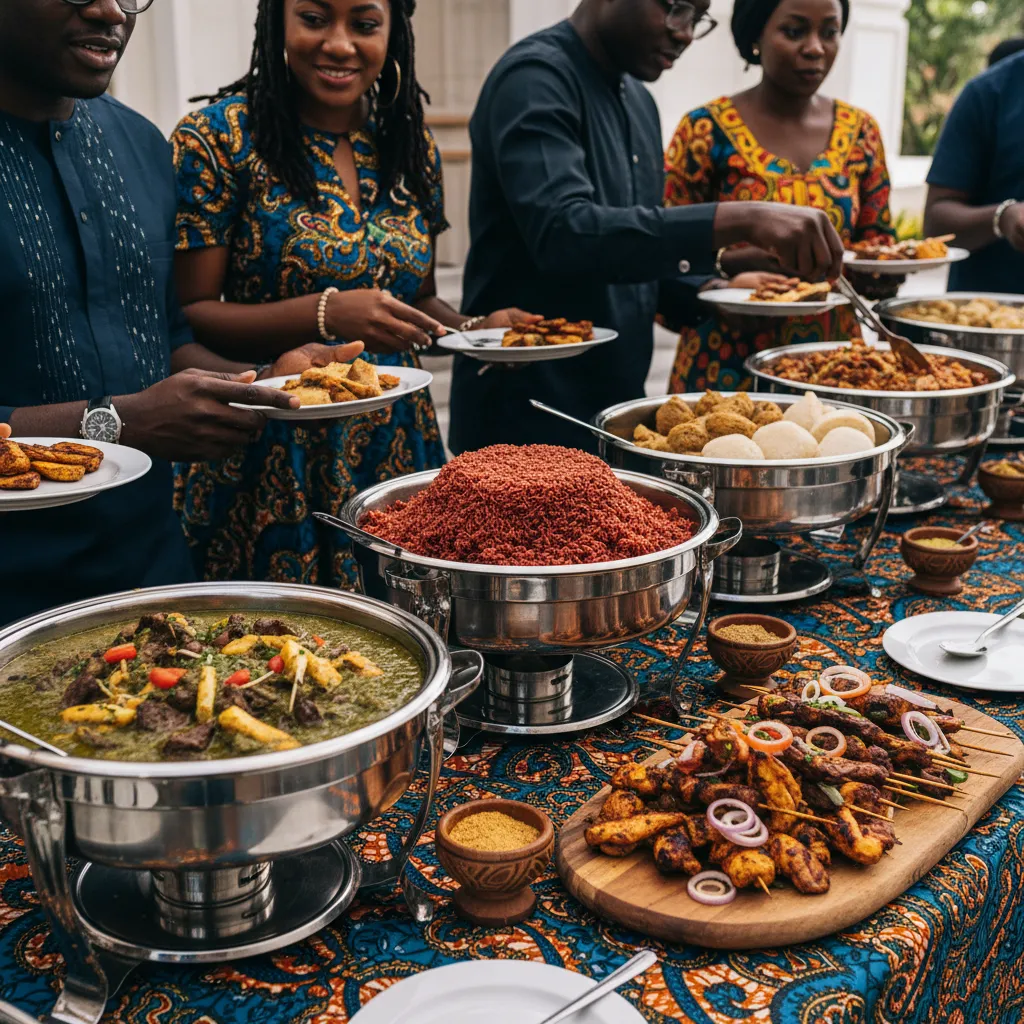
Golden fried plantains, rich Egusi soup, and various grilled meats.
What are common etiquette and attire for guests at a Nigerian naming ceremony?
Common etiquette for guests at a Nigerian naming ceremony centers on respectful participation, offering blessings to the child and family, and adhering to cultural norms, while attire typically involves vibrant, celebratory clothing, often including traditional Nigerian fabrics or a designated 'aso-ebi'. Punctuality is appreciated, though African time is sometimes acknowledged. Guests are encouraged to interact, dance, and celebrate joyfully, but always with respect for the elders and the sacred nature of the ceremony.
For attire, ‘aso-ebi’ (family uniform) is a significant tradition. The host family often selects a specific fabric or color scheme, which guests, particularly close family and friends, purchase and tailor into various styles. This creates a visually stunning and cohesive look, symbolizing unity and celebration. If no aso-ebi is provided, guests should opt for celebratory, semi-formal to formal wear. Bright colors and elegant traditional African attire are always appropriate and welcomed. Avoid overly revealing or casual clothing. When it comes to gifts, practical items like diapers, baby clothes, or monetary gifts are highly appreciated. During the ceremony, it's customary to spray money (naira or dollars) on dancers, including the parents and performers, as a sign of blessing and appreciation – this is done respectfully and sparingly. Remember to greet elders with respect, perhaps with a slight bow or by kneeling, depending on the specific sub-culture of the family.
Post-Ceremony Follow-Up
The celebration doesn't end when the last guest leaves. Following up with thank-you notes, either digital or physical, is a thoughtful touch. Sharing professional photos and videos with close family and friends allows them to relive the beautiful moments. Many families also choose to host a smaller, more intimate gathering a few weeks later for those who couldn't attend the main event. For vendors, a positive review on platforms like Ajola is a great way to show appreciation and help other planners find excellent service. Remember, the naming ceremony is just the beginning of a beautiful journey, and your thoughtful planning ensures a solid, celebrated foundation.
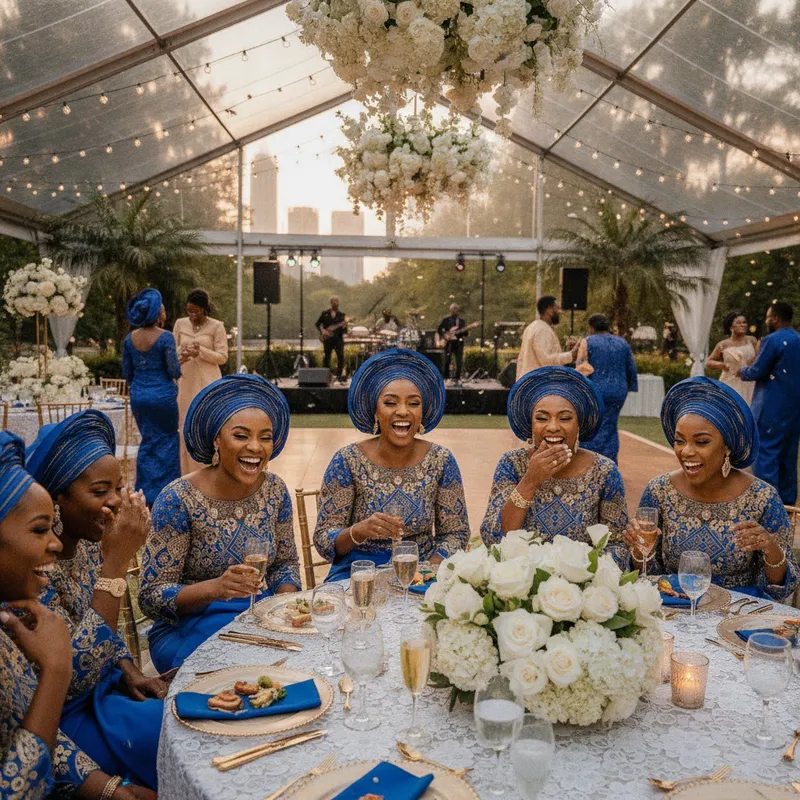
A vibrant Nigerian naming ceremony in full swing, featuring Black guests in colorful aso-ebi dancing joyfully. An elder gracefully sprays money (naira notes) on a jubilant mother holding her baby, while a live band plays traditional music in the background, all bathed in warm, festive lighting.
How can vendors connect with families planning Nigerian naming ceremonies?
Vendors can connect with families planning Nigerian naming ceremonies by actively marketing their expertise in cultural events, showcasing relevant portfolios, and building strong networks within the African American and Afro-Caribbean communities. Families specifically seek vendors who understand and respect the cultural nuances, rituals, and aesthetic preferences associated with these significant celebrations.
Start by optimizing your online presence. Ensure your website and social media highlight your experience with Nigerian or other African cultural events. Use keywords like “Nigerian naming ceremony caterer,” “Afro-Caribbean event photographer,” or “Yoruba traditional decorator.” Create dedicated sections in your portfolio featuring past naming ceremonies, showcasing your ability to capture authentic moments, prepare specific dishes, or design culturally appropriate decor. Consider offering packages tailored to naming ceremonies that include essential services like ceremonial item sourcing, traditional music integration, and custom decor. Participating in community events, cultural festivals, and local expos is also an excellent way to network directly with potential clients. Finally, listing your services on platforms like Ajola allows you to reach a targeted audience actively searching for culturally competent vendors. For those passionate about serving this vibrant community, signing up as a vendor on Ajola can significantly expand your reach and connect you with families who value your specialized skills.