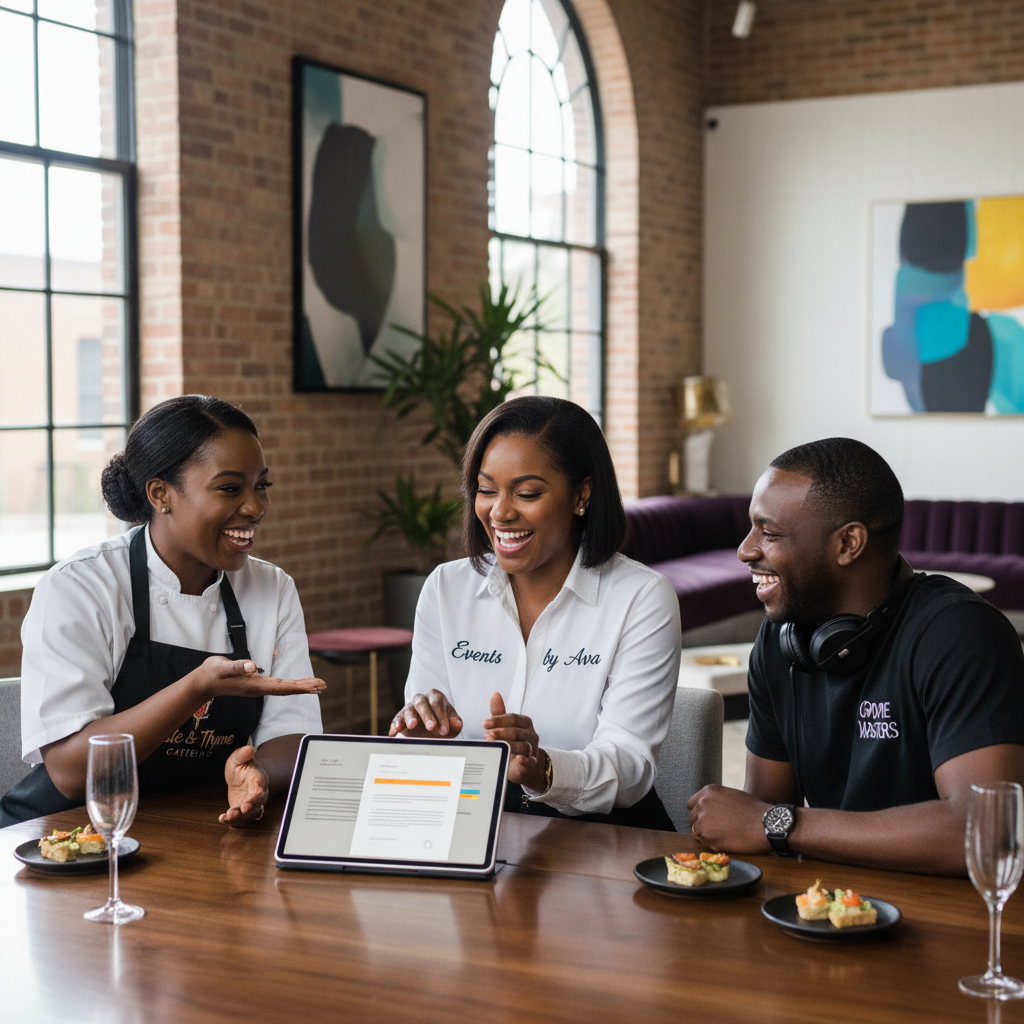
Recognize the signs of being overwhelmed or overbooked to determine the optimal time to hire.
Thoroughly calculate the potential return on investment (ROI) for new hires to ensure financial viability.
Clearly define the specific roles and skill sets needed, whether it's an assistant, specialist, or freelancer.
Leverage professional networks and platforms like Ajola to find culturally aligned and skilled talent.
Implement robust onboarding processes and establish clear quality control measures to maintain service standards as you grow.
Continuously evaluate your team's performance and adapt your hiring strategy to support sustainable growth.
Every successful event planner eventually hits a wall. That moment when the thrill of back-to-back bookings gives way to the dread of an overflowing inbox, missed calls, and the lingering scent of burnout. For many Black and Afro-Caribbean event entrepreneurs, particularly those meticulously crafting culturally rich experiences, this tipping point isn't just about workload; it's about preserving the very essence and quality that clients expect. Scaling your event business isn't a luxury; it's a strategic imperative to sustain growth and prevent exhaustion. The question isn't if you'll need help, but when, and what kind.
Recognizing the Tipping Point: Are You Overwhelmed or Overbooked?
The time to hire help isn't when you're drowning; it's when you see the tide rising. You're overwhelmed when administrative tasks consume more than 30% of your week, or when you find yourself consistently working 60+ hours just to keep up. Being overbooked, on the other hand, means you're turning down lucrative opportunities because your existing capacity is stretched thin. Recognize these signs: declining client communication quality, missed deadlines, a drop in your creative energy, or a palpable increase in stress that spills into your personal life.
For instance, if you're spending countless hours trying to source specific vendors for a large wedding – say, a Senegalese caterer or a Caribbean steel pan band – when that time could be better spent on client relations or creative design, that’s a clear signal. Your expertise lies in vision and execution, not necessarily in the minutiae of every single vendor search. If you find yourself consistently wishing for an extra pair of hands to manage the details, it's time to seriously consider expanding your team.
The Financial Reality: Calculating ROI on New Hires
Hiring isn't just an expense; it's an investment that should yield a return. Before you post that job description, calculate your potential ROI. Start by identifying tasks that can be delegated and estimate the hourly rate you currently spend on them. If you’re a seasoned planner charging $150-$250 per hour for your core services, yet you spend 10-15 hours a week on $30/hour administrative tasks, you’re losing significant revenue. Hiring an assistant for $20-$35/hour frees you to focus on high-value activities, effectively increasing your billable hours and overall profit margin.
Consider not just direct wages, but also potential payroll taxes, software access, and training time. A good rule of thumb is that a new hire should generate at least 2-3 times their total compensation in additional revenue or saved time. For example, if an assistant costs you $50,000 annually (salary + benefits), they should enable you to take on an additional $100,000-$150,000 in events or free up your time to significantly improve existing client experiences, leading to more referrals and repeat business.
A confident Black woman, an event business owner, sits at a modern desk reviewing financial projections on a laptop with a focused expression. A diverse team member is visible in the background, subtly indicating growth. Shot on Canon EOS R5, 35mm lens, natural lighting, editorial photography.
What Kind of Help Do You Actually Need?
Not all help is created equal. Your first hire might not be a full-time employee; it could be a highly specialized freelancer or a part-time administrative assistant. Evaluate your bottlenecks:
Administrative Assistant: Ideal for managing emails, scheduling, light bookkeeping, and data entry. This frees up your time from repetitive tasks.
Event Coordinator/Assistant Planner: Perfect for on-site support, vendor communication, timeline management, and handling day-of logistics. This is crucial for maintaining quality as event volume increases. Check out our guide on how to create an event timeline that keeps everything on track for tasks they can master.
Specialized Freelancer: If you consistently need help with specific aspects like graphic design for invitations, social media management, or content creation for your blog, a freelancer can be cost-effective.
Sales & Marketing Support: If lead generation and client acquisition are your weak points, consider someone dedicated to outreach, proposal writing, or managing your online presence.
Finding talent that aligns with your business values and understands the nuances of serving African American and Afro-Caribbean clientele is paramount. Beyond traditional job boards, consider:
Industry Networks: Tap into local Black professional organizations, event planning associations, and alumni networks. Word-of-mouth referrals from trusted colleagues often lead to the best candidates.
Specialized Platforms: Ajola isn't just for finding vendors; it's a community. Many talented individuals looking to grow their careers keep an eye on businesses like yours. You can connect with emerging talent or even post opportunities directly. If you're looking for specific skills, you might find freelancers who already list their services, for example, event photographers on Ajola looking for assistant roles.
Internship Programs: Partner with local colleges or universities with strong hospitality or business programs. This offers a pipeline of eager, teachable talent.
Social Media & Community Groups: Engage with relevant Facebook groups, LinkedIn communities, and Instagram pages where event professionals gather.
When interviewing, look beyond the resume. Assess their problem-solving skills, cultural sensitivity, communication style, and genuine passion for the event industry. A strong cultural fit can often outweigh a slight gap in experience, especially for roles where client interaction is key.
A diverse team of Black event planners, including a lead planner and two assistants, are engaged in a lively discussion around a mood board covered with fabrics, color swatches, and images for an Afro-Caribbean themed event. Their expressions are creative and collaborative. Shot on Canon EOS R5, 35mm lens, natural lighting, editorial photography.
Onboarding and Integrating New Talent into Your Vision
Hiring is only half the battle; effective onboarding is where success truly begins. A structured onboarding process ensures your new team member understands your business philosophy, operational procedures, and client expectations from day one. This is especially critical in an industry where reputation and precision are everything.
Clear Documentation: Provide a detailed employee handbook, standard operating procedures (SOPs), and access to all necessary tools and software. Document everything from client communication protocols to event setup checklists.
Mentorship & Training: Pair new hires with an experienced team member (even if that's you!) for initial training. Regular check-ins and constructive feedback are vital. For specialized roles, consider linking them to relevant resources, such as our blog post on hiring dancers for an Afro-Caribbean themed event if they need to manage entertainment.
Cultural Immersion: Ensure they understand the specific cultural nuances and client expectations unique to the African American and Afro-Caribbean communities you serve. This goes beyond generic event planning and speaks to the heart of your brand.
Gradual Responsibility: Don't overwhelm them. Start with smaller tasks and gradually increase their responsibilities as they gain confidence and demonstrate competence.
Remember, your new hire is an extension of your brand. If you're a vendor looking to grow your own team, consider how you present your business. Register your business on Ajola to showcase your professionalism and attract top talent who want to be part of a thriving, culturally-focused enterprise.
Maintaining Quality as You Scale
The fear of diluted quality is a common hurdle for entrepreneurs hesitant to scale. But with the right systems and people, you can grow without losing your touch. Implement robust quality control measures:
Standardized Checklists: For every event phase, from initial consultation to post-event follow-up, use checklists to ensure consistency.
Regular Performance Reviews: Provide ongoing feedback and conduct formal reviews to identify areas for improvement and acknowledge successes.
Client Feedback Mechanisms: Continuously solicit client feedback to gauge satisfaction and identify any service gaps that might arise with new team members.
Invest in Technology: Utilize project management software, CRM systems, and communication tools to streamline workflows and maintain oversight.
Scaling your event business isn't just about taking on more clients; it's about building a resilient, efficient, and dedicated team that shares your vision. It means transitioning from being the sole operator to a leader, empowering others to help you create even more memorable, culturally rich celebrations. By strategically hiring, you're not just expanding your capacity—you're securing your legacy.