Trinidadian wedding traditions: from bamboo to steel pan
April 16, 2026 8 min read Admin
Key Takeaways
Trinidadian weddings blend deep cultural traditions with modern flair, often incorporating elements from African, Indian, and European heritage.
Key pre-wedding customs include the 'formal asking' and 'sweet hand,' emphasizing community involvement and family blessings.
The reception is a vibrant affair, characterized by specific culinary delights like pelau and callaloo, lively music from steel pan and soca, and symbolic acts like bamboo bursting.
Event planners and hosts catering to the Afro-Caribbean diaspora must prioritize vendors who understand and can authentically execute these unique cultural nuances.
Utilizing platforms like Ajola can connect planners with experienced vendors specializing in culturally rich events, ensuring authentic Trinidadian elements are seamlessly integrated.
Embracing the Journey: Pre-Wedding Trinidadian Customs
Trinidadian wedding traditions are a rich tapestry woven from diverse cultural threads, creating celebrations that are as unique and vibrant as the islands themselves. Before the vows are exchanged, a series of cherished customs set the stage for the union, deeply involving families and communities.
The journey often begins with the 'formal asking', where the groom, accompanied by his parents and close relatives, formally visits the bride's family to request her hand in marriage. This isn't just a simple proposal; it's a profound cultural exchange where families meet, share intentions, and bless the impending union. Gifts are often exchanged, symbolizing respect and the blending of two families. This tradition, while rooted in respect and formality, is also a beautiful opportunity for families to forge bonds before the wedding day.
Another heartwarming pre-wedding custom is the 'sweet hand' or 'cook-up,' where female relatives and friends gather at the bride's home, often days before the wedding, to prepare traditional dishes and sweets for the reception. This communal cooking session is more than just meal prep; it's a joyous occasion filled with laughter, storytelling, and advice for the bride. It exemplifies the strong community spirit and the collective effort that goes into supporting a new couple. For planners, understanding these events means potentially coordinating a separate, more intimate gathering or incorporating these culinary traditions into a broader rehearsal dinner concept.
A group of African American and Afro-Caribbean women, dressed in vibrant patterned aprons, laughing joyfully as they prepare large pots of traditional Trinidadian food in a bustling home kitchen. Natural light streams in through a window.
The Heart of the Ceremony: Vows, Attire, and Blessings
The wedding ceremony itself, whether held in a church, temple, mosque, or an outdoor venue, is infused with a solemn beauty that respects both spiritual beliefs and cultural heritage. While many Trinidadian couples embrace Western white wedding gowns and tuxedos, elements of traditional attire and rituals often make an appearance, particularly for those deeply connected to their roots.
In Christian ceremonies, the blessings are paramount, often involving multiple faith leaders or respected elders. For couples with Indian heritage, a Hindu wedding ceremony might involve intricate rituals like the saptapadi (seven steps) and vibrant saris. Muslim weddings, while adhering to Islamic rites, will also often feature elements like the elaborate mehndi (henna) ceremony for the bride. The blending of these traditions is a testament to Trinidad and Tobago's diverse population. For event planners, this means a need for flexibility and a deep cultural understanding, perhaps even coordinating with multiple religious leaders or cultural consultants to ensure all traditions are honored respectfully. When seeking specialized vendors for these intricate details, Ajola's vendor search can be invaluable, allowing you to filter for those with specific cultural expertise.
The Grand Celebration: Music, Food, and Unforgettable Moments
The reception is where the true spirit of Trinidadian celebration bursts forth, a kaleidoscope of sound, flavor, and vibrant energy. This is often the most anticipated part of the wedding, designed to be a joyous occasion for everyone involved.
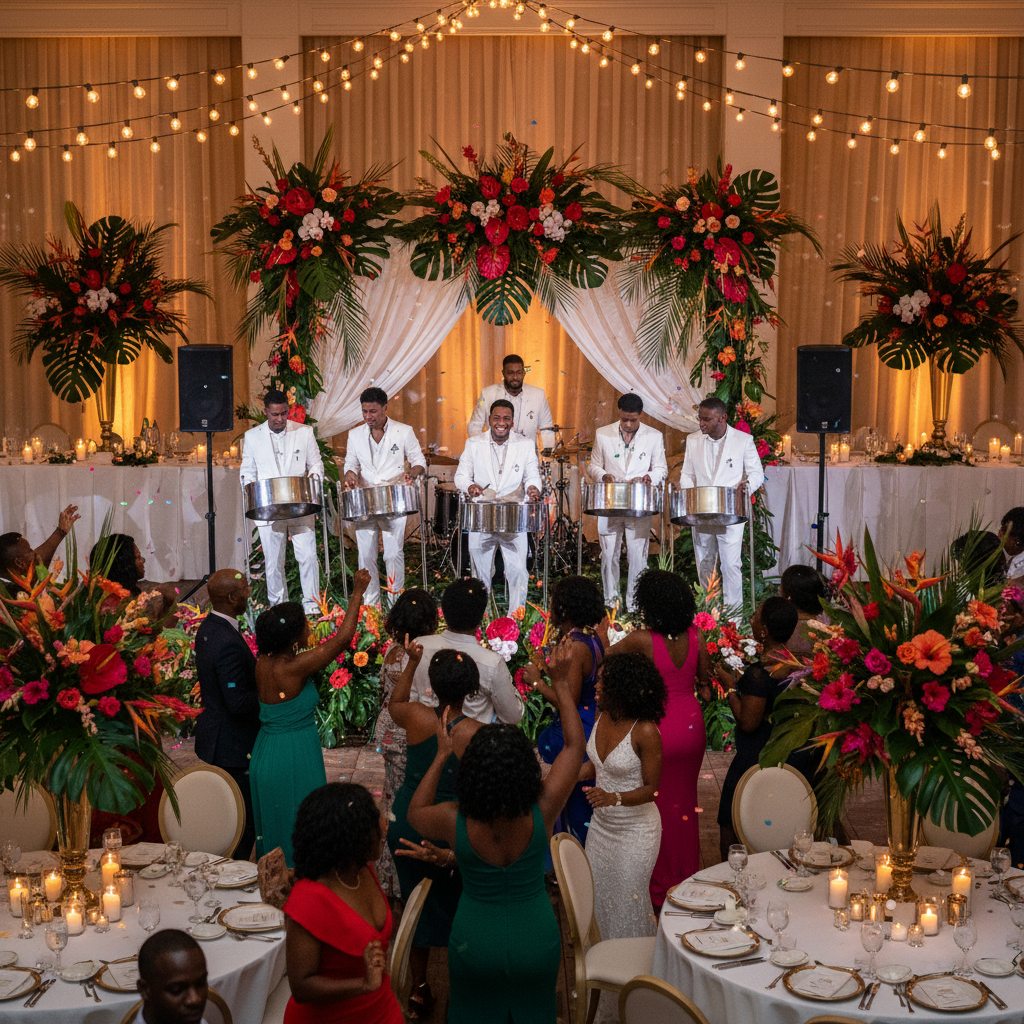
No Trinidadian wedding is complete without a soundtrack that moves the soul. The iconic steel pan orchestra is a staple, providing a melodic backdrop for cocktails and dinner before the party truly kicks off. Later, a DJ or live band will likely spin a mix of soca, calypso, chutney, and reggae, guaranteeing a packed dance floor. Finding a DJ or band that understands the nuances of these genres and can read the crowd is critical. You can find entertainment vendors on Ajola who specialize in Afro-Caribbean events.
The culinary experience is equally central. Guests anticipate a feast of traditional Trini dishes. Expect succulent roast pork, flavorful pelau (a one-pot rice dish with pigeon peas and meat), rich callaloo (dasheen leaves cooked with okra and coconut milk), and an array of curries and doubles. Drinks like refreshing sorrel and mauby are typically served alongside more conventional options. A successful caterer for a Trinidadian wedding needs to not only prepare these dishes authentically but also understand the significant portions and presentation expected. For event planners in major US cities, securing caterers who can deliver this authentic experience is paramount. Explore caterers on Ajola who are renowned for their Caribbean cuisine.
One of the most exciting and unique reception traditions is the 'bamboo bursting'. While less common in urban US settings due to regulations, this involves igniting lengths of bamboo packed with kerosene, creating loud, celebratory explosions. It's a symbolic act, signifying joy and ushering in good fortune for the couple. When this isn't feasible, modern alternatives like elaborate fireworks displays or special effects can evoke a similar sense of grandeur and excitement. Discussing these elements with your couple and local vendors is crucial to ensure a safe yet spectacular experience. For unique decor ideas that can complement such a vibrant atmosphere, check out our recent post on Best Event Florists in Houston for 2026, which might inspire creative ways to bring the island's flora to your event.
A vibrant wedding reception with Black guests dancing energetically to a live steel pan band on a decorated stage. The room is adorned with tropical flowers and warm lighting, creating a joyful, celebratory atmosphere.
Navigating Vendor Selection for Authenticity
For event planners and hosts, the key to executing a truly authentic Trinidadian wedding lies in meticulous vendor selection. It’s not enough for a vendor to be skilled; they must possess a deep understanding and appreciation for the cultural nuances that define these celebrations.
When interviewing potential vendors, ask specific questions about their experience with Afro-Caribbean events. Do they have a portfolio showcasing Trinidadian weddings? Can their caterers prepare specific dishes like pelau or black cake to an authentic standard? Does their DJ know how to seamlessly transition from traditional steel pan melodies to high-energy soca and chutney? This attention to detail will distinguish a good vendor from an exceptional one.
Consider photographers and videographers who understand how to capture the energy and emotion of a Trini celebration, from the intimate 'sweet hand' moments to the explosive joy of the reception. Their ability to tell the story of the day through a culturally sensitive lens is invaluable. Browse photographers on Ajola who specialize in cultural events.
“Authenticity isn't just about recreating traditions; it's about invoking the spirit and feeling of the culture. Every detail, from the spices in the food to the rhythm of the music, contributes to an unforgettable experience.” – A seasoned event planner specializing in Caribbean weddings.
Furthermore, don't overlook the importance of communication. A vendor who is open to learning, understands the significance of each tradition, and can collaborate effectively with your vision is essential. For vendors looking to expand their reach and connect with clients planning such culturally rich events, consider signing up on Ajola to showcase your expertise. Understanding your market and delivering on specific cultural expectations is part of creating a strong brand identity for your event business.
Bringing It All Together: A Celebration of Heritage
Planning a Trinidadian wedding, whether in Port of Spain or a diaspora hub like Brooklyn or Miami, is an opportunity to celebrate a rich and vibrant heritage. From the respectful 'formal asking' to the exuberant 'bamboo bursting' (or its modern equivalent), each tradition tells a story of community, family, and enduring love. For event planners, embracing these elements means not just organizing an event, but curating an experience that resonates deeply with the couple and their guests.
By partnering with culturally aware vendors found through platforms like Ajola, and by dedicating attention to every unique custom, you can create a Trinidadian wedding that is truly unforgettable. It's about honoring the past while celebrating the future, ensuring that the warmth, joy, and distinctive flavor of the twin-island republic shine brightly on this most special of days. Remember, even with a tight budget, thoughtful planning can achieve spectacular results, as highlighted in our guide on how to plan an event on a tight budget in Chicago.
A Black couple, the bride in a elegant white gown with subtle Trinidadian flag accents, and the groom in a sharp suit, sharing a tender moment under a canopy decorated with tropical flowers and fairy lights, as a distant steel pan melody plays.