How to create a wedding budget and actually stick to it
April 13, 2026 8 min read Admin
Key Takeaways
Establish a realistic budget early by assessing your total funds and identifying non-negotiable elements.
Prioritize spending on high-impact areas like venue, catering, and photography, which typically consume the largest portion of your budget.
Implement smart savings strategies such as choosing an off-peak date, negotiating with vendors, and selective DIY projects.
Track all expenses meticulously and allocate a 10-15% contingency fund to cover unforeseen costs.
Don't hesitate to negotiate vendor pricing and packages; many are open to customization, especially if you're prepared.
The dream wedding often feels within reach until the cost estimates start rolling in. For many African American and Afro-Caribbean couples, creating a wedding budget isn't just about numbers; it's about honoring cultural traditions, celebrating with community, and doing so without financial strain. The truth is, a thoughtful budget isn't a limitation; it's a powerful tool that ensures your celebration reflects your values and vision without leading to post-nuptial stress. The average wedding in major U.S. cities like Atlanta, Houston, or Washington D.C. can easily range from $25,000 to $40,000, making a structured approach essential.
Setting Your Foundation: The Initial Budget Blueprint
Establishing a solid wedding budget starts with a clear understanding of your financial capacity and what truly matters to you as a couple. Before you even think about venues or florists, sit down and determine your absolute maximum spend, considering any contributions from family members. This total figure will be your guiding star, preventing you from falling in love with elements that are simply out of reach.
Once you have your total, it's time to prioritize. What are the non-negotiables for your special day? Is it the perfect DJ, a specific cultural cuisine, or a particular photography style? List these in order of importance. This initial prioritization helps you allocate funds strategically from the outset, ensuring your most cherished elements are secured first. Remember, every dollar spent on one item is a dollar not available for another, so clarity here is paramount. For those just starting, it's helpful to review the top mistakes first-time event planners make to avoid common pitfalls.
The Big Ticket Items: Where Your Money Really Goes
In most wedding budgets, certain categories consistently consume the largest portion of funds: the venue, catering, and photography/videography. These three elements often account for 60-70% of the total wedding cost, making them critical areas for careful consideration and allocation.
The venue sets the stage for your entire event, influencing everything from guest capacity to aesthetic. Catering, especially for traditional African American and Afro-Caribbean celebrations, is often a central component, reflecting heritage and hospitality. Expect to allocate roughly 40-50% of your budget to the combination of venue and catering. Photography and videography, capturing those irreplaceable moments, typically command another 10-15%. Don't underestimate the power of a great visual storyteller; their work is what you'll cherish for years to come. You can find wedding photographers on Ajola who specialize in cultural events.
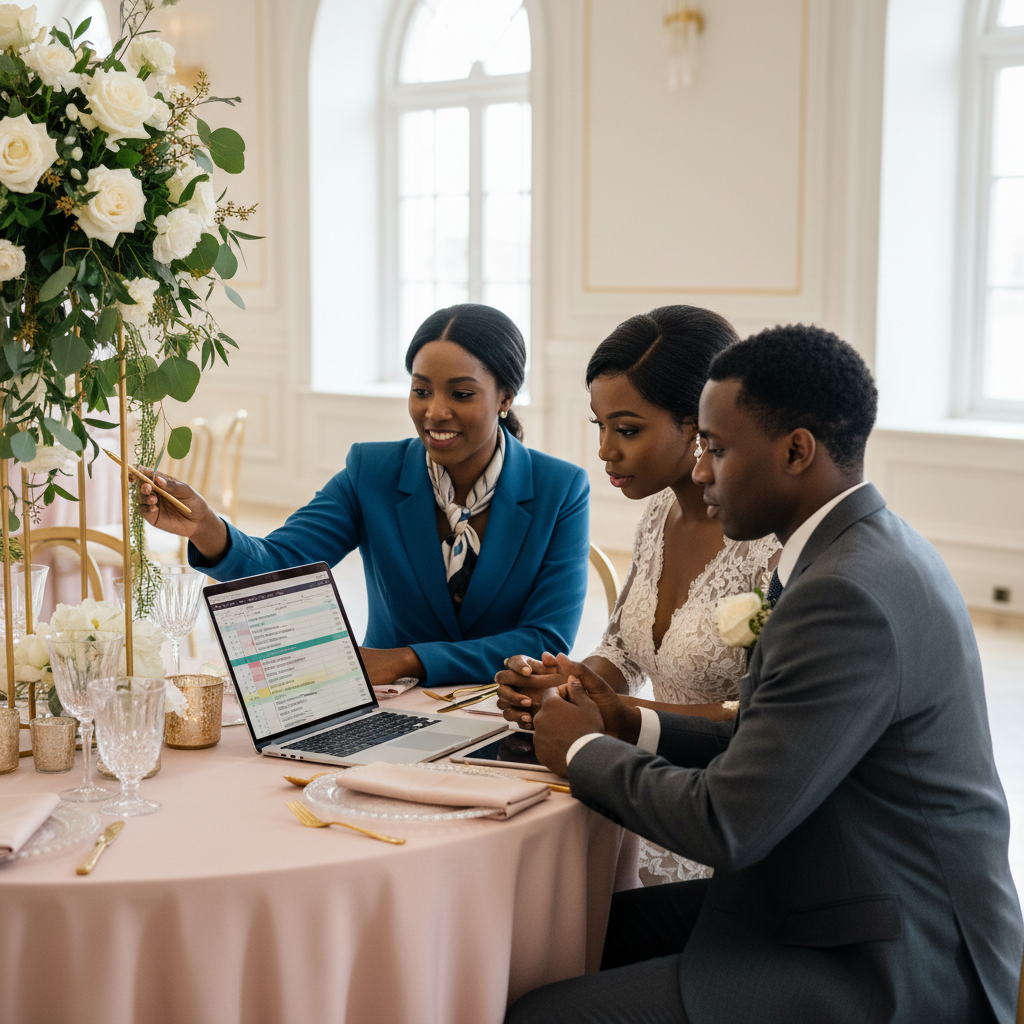
An elegant African American couple, dressed in sophisticated wedding attire, is seated at a beautifully adorned table, reviewing a detailed budget spreadsheet with a professional, smiling Black event planner. The planner points to a line item on the sheet, while the couple listens intently. Shot on Canon EOS R5, 35mm lens, natural lighting, editorial photography.
Smart Savings Strategies Without Sacrificing Style
You don't need an unlimited budget to have a stunning wedding. Creative cuts, strategic choices, and knowing where to invest versus where to save can significantly impact your bottom line without compromising your vision. One of the most impactful decisions you can make is selecting an off-peak wedding date. Opting for a weekday or a less popular month (like January, February, or March) can lead to substantial discounts on venues and vendors.
Consider your guest list size carefully. While it's tempting to invite everyone, each guest adds to the per-plate catering cost, favors, and even table linens. Reducing your guest count by just 20 people can save thousands. Also, explore multi-purpose venues that reduce the need for extensive additional décor. For instance, a historic ballroom or a vibrant cultural center might offer inherent beauty, minimizing your decoration budget. When you're ready to find top-rated vendors in your area on Ajola, remember to ask about off-peak rates and package customizations.
DIY Where It Makes Sense (and Where It Doesn't)
DIY projects can be a fantastic way to save money and inject personal touches, but choose wisely. Creating your own invitations or assembling welcome bags can be cost-effective. However, attempting complex floral arrangements or providing your own catering often leads to more stress and hidden costs than savings. Evaluate your skills, time, and the true cost of materials before committing to a DIY project. Focus on areas where your effort genuinely translates to savings without compromising quality or adding undue stress during an already busy time. For instance, crafting unique guest favors or designing your own signage can be rewarding and budget-friendly.
Tracking and Adjusting: Staying on Course
Even the most meticulously planned budget is useless if it's not consistently monitored. Regular tracking is the bedrock of sticking to your financial plan. Utilize a spreadsheet or a dedicated wedding budgeting app to record every single expense, from the engagement ring deposit to the postage for thank you notes. This real-time view allows you to see exactly where your money is going and identify potential overspending before it becomes a problem.
A critical component of any robust budget is a contingency fund, typically 10-15% of your total budget. Unexpected costs are almost guaranteed in wedding planning—a sudden need for extra lighting, a last-minute alteration, or an unforeseen vendor fee. Having this buffer prevents you from dipping into savings or going into debt. If you don't use it, that's extra money for your honeymoon or post-wedding life. If you do, you're prepared. For more on event aesthetics, consider reading about lighting design for indoor events, which can sometimes be an unexpected cost.
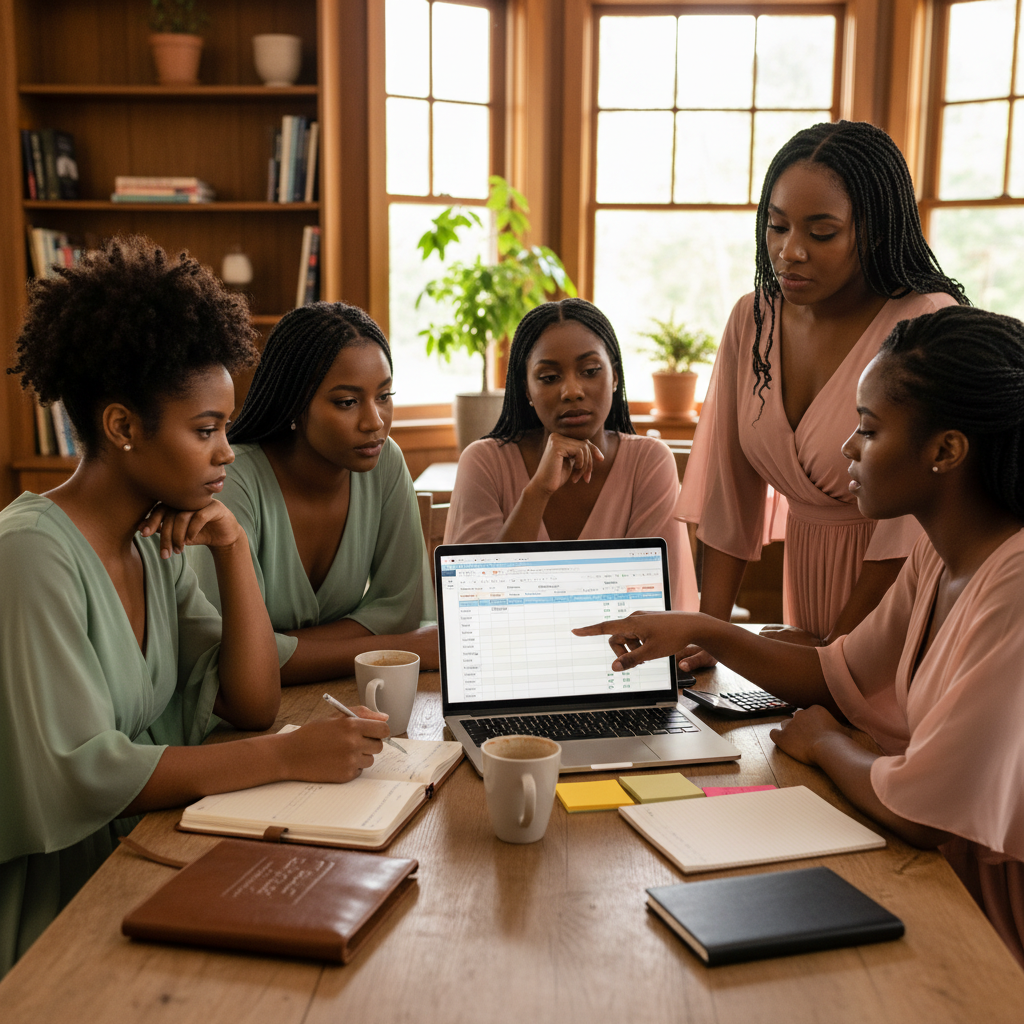
A diverse group of Black women, bridesmaids, are gathered around a laptop and a physical planner, diligently tracking wedding expenses on a spreadsheet. One woman holds a pen, another points to the screen, and a third looks on thoughtfully. The scene is bright and organized. Shot on Canon EOS R5, 35mm lens, natural lighting, editorial photography.
Negotiating Like a Pro: Getting the Best Value
Many couples shy away from negotiation, but in the event industry, it's a common and often expected practice. Don't be afraid to discuss pricing and package customization with your potential vendors. Most vendors, especially those you can browse caterers on Ajola or discover talented DJs on Ajola, are small business owners who value your business and are often willing to work within reason to earn it.
Start by clearly stating your budget for a particular service. Ask if they have any off-peak discounts, smaller packages, or ways to adjust their offerings to fit your needs. For example, instead of a full open bar for the entire reception, perhaps a limited bar during dinner and then a cash bar or signature cocktails later. Or, for a photographer, could you reduce the number of hours or opt for a digital-only package? Always get everything in writing once an agreement is reached.
"Having a clear budget in mind before contacting vendors empowers you to make confident decisions and avoid being swayed by unnecessary add-ons. It's about being prepared, not being cheap." - Shanice Reynolds, Lead Planner, Elegant Affairs DC.
Remember, vendors are experts in their field. Be respectful, but firm. They can often suggest creative solutions you hadn't considered. Building a relationship built on mutual respect and clear communication will not only help your budget but also ensure a smoother planning process. If you're a vendor looking to improve your client communication, check out email marketing tips for event vendors.
Post-Wedding Financial Health: The Long-Term View
Sticking to your wedding budget isn't just about the big day; it's about setting a healthy financial foundation for your marriage. Overspending can lead to debt, which can put a strain on your relationship from the very beginning. By being diligent and disciplined with your wedding finances, you're not only creating a beautiful event but also practicing sound financial habits that will serve you well as a married couple.
After the wedding, take time to review your actual expenses against your budgeted amounts. This exercise can be incredibly insightful, providing valuable lessons for future large purchases or event planning. Celebrate your success in managing this significant financial undertaking, and use that momentum to tackle other financial goals together. A well-budgeted wedding is a testament to teamwork and shared goals, qualities that are far more important than any single lavish detail.
A close-up of a Black couple's hands, intertwined, resting on a wedding budget spreadsheet open on a laptop screen. A small wedding band is visible on one finger. The scene is warm and intimate, emphasizing partnership. Shot on Canon EOS R5, 35mm lens, natural lighting, editorial photography.