Venue walkthrough checklist: what to look for before booking
April 4, 2026 4 min read Admin
Key Takeaways
Always conduct an in-person walkthrough, even for familiar venues, to confirm current conditions and policies.
Scrutinize all aspects from guest flow and accessibility to restroom capacity and emergency exits.
Understand vendor policies thoroughly – whether they allow outside vendors or have exclusive lists.
Clarify all pricing components, including service charges, taxes, and potential overtime fees, to avoid surprises.
Ensure the venue aligns with your cultural celebration needs, from decor flexibility to catering options.
Get every agreement, including special requests and services, documented in writing before signing.
Booking the perfect venue is arguably the most critical decision an event planner or host makes. It sets the stage, dictates the guest experience, and often consumes the largest portion of the budget. Yet, many overlook crucial details during the initial walkthrough, leading to costly surprises and logistical nightmares down the line. A thorough venue walkthrough isn't just about admiring the aesthetics; it's a deep dive into the practicalities, policies, and potential pitfalls that can make or break your celebration.
Beyond the Brochure: Initial Impressions & Practicalities
Your first walkthrough goes far beyond comparing online photos to reality; it's about evaluating the tangible experience for your guests and team. This initial visit allows you to gauge the venue's true capacity, assess its overall condition, and envision how your event will seamlessly unfold within the space. Don't hesitate to ask probing questions that dig deeper than surface-level appeal.
Space Layout & Flow
Consider how guests will navigate the space. Is there a natural progression from the entrance to the ceremony area, cocktail hour, and reception? For large events like a Nigerian wedding reception expecting 300+ guests, you need ample space for dining, a dance floor, and possibly a stage. Think about bottlenecks, especially around bars or buffet lines. Are there separate areas for coat check, a prayer room, or a quiet lounge for elderly guests? This is particularly important for multi-generational African American and Afro-Caribbean celebrations where different age groups have distinct needs. Visualize the placement of your DJ, dessert tables, and photo booths.
Accessibility
Accessibility is non-negotiable for inclusive events. Are there ramps or elevators for guests using wheelchairs or strollers? Are restrooms ADA-compliant? Consider parking lot accessibility and the distance from parking to the entrance. For outdoor events, are pathways paved or easily navigable? Confirm that all areas your guests will access meet accessibility standards. A venue that prioritizes accessibility sends a clear message of welcome to all attendees.
Parking & Transportation
How will your guests arrive and depart? Evaluate available parking spaces, valet services, and proximity to public transportation. If parking is limited, what are the recommended overflow options, and do they come with additional costs? For urban venues, ride-sharing drop-off and pick-up zones are crucial. Confirm if the venue can accommodate vendor vehicles for load-in and load-out, especially for large deliveries like catering equipment or elaborate decorations.
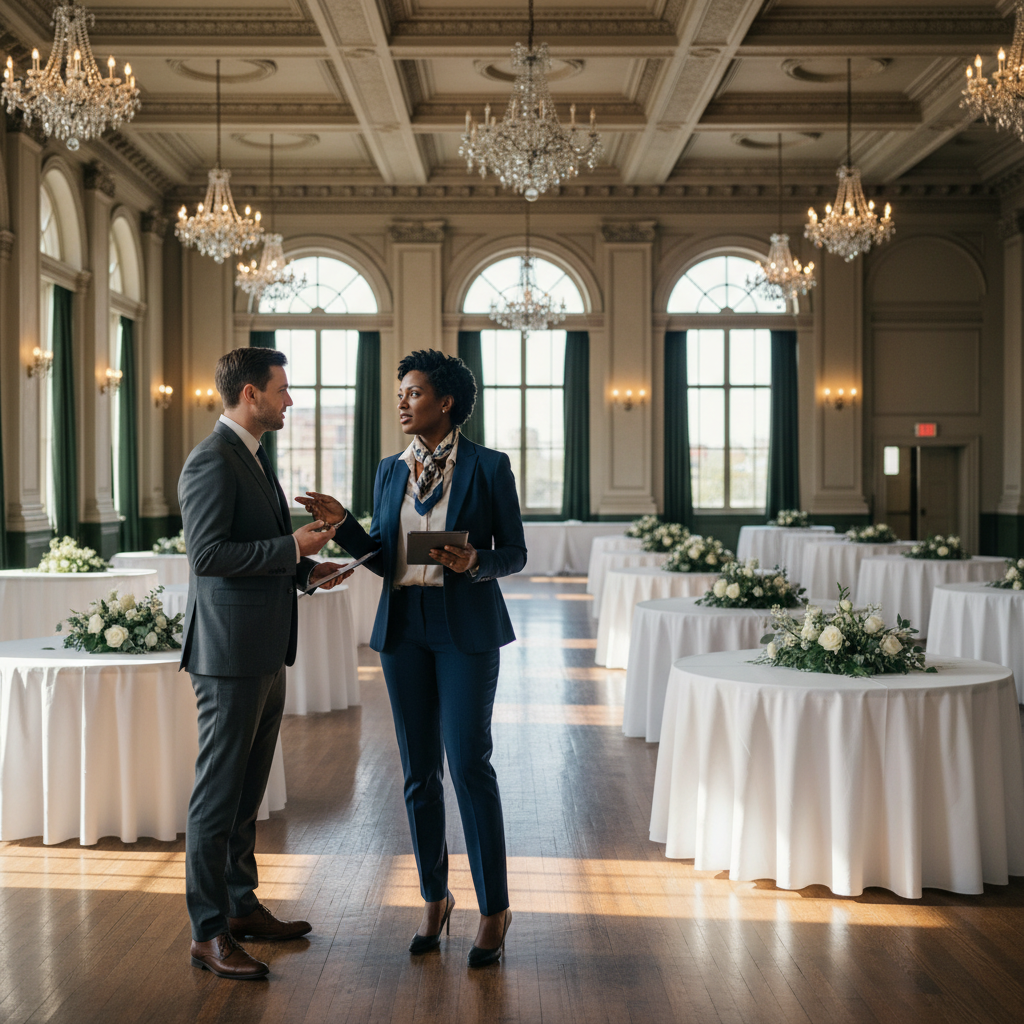
An African American event planner, impeccably dressed, holds a tablet and gestures towards a spacious, elegant banquet hall with high ceilings, talking to a venue manager. Sunlight streams through large windows, illuminating crisp white tablecloths and subtle floral arrangements. shot on Canon EOS R5, 35mm lens, natural lighting, editorial photography.
The Nitty-Gritty: Understanding Venue Logistics
Logistics are the backbone of any successful event, and a thorough walkthrough provides the opportunity to dissect the operational aspects of your chosen venue. Ignoring these details can lead to unexpected challenges on event day, impacting everything from sound quality to food service.
Equipment & A/V
Don't assume all venues come with top-tier sound systems or projectors. Ask about included audio-visual equipment: microphones, speakers, projectors, screens, and lighting. Is there an in-house A/V technician, or will you need to bring your own? For a lively R&B and soul-filled wedding reception, sound quality is paramount. Test the Wi-Fi connectivity and inquire about power outlets, especially for areas where a band, DJ, or caterer might need dedicated circuits. Confirming these details early can save you significant rental costs and setup headaches.
Restroom Facilities
This often-overlooked detail is critical for guest comfort. Inspect the number of stalls, cleanliness, and overall condition of the restrooms. For an event with 200+ guests, inadequate facilities can lead to long lines and discomfort. Ask about the frequency of cleaning during an event and if there's a dedicated attendant. Consider if there are family restrooms or private spaces for nursing mothers.
Vendor Policies
This is where many planners get tripped up. Does the venue have an exclusive vendor list, or can you bring your own trusted event professionals found on Ajola? If they allow outside vendors, are there any additional fees or insurance requirements? Some venues charge a