Ethiopian wedding traditions: coffee ceremony and beyond
March 29, 2026 7 min read Admin
Key Takeaways
Ethiopian weddings are a multi-day celebration deeply rooted in cultural and religious traditions, often spanning several events beyond just the wedding day.
The coffee ceremony (Buna Tetu) is a pivotal post-wedding event, symbolizing hospitality, community, and the couple's integration.
Key stages include the Keleb/Mekedem (engagement), Melse/Kaba (pre-wedding celebrations), Serg (church ceremony), and the reception.
Culturally sensitive vendors are essential for honoring specific traditions, from traditional attire to authentic catering and music.
Planning requires understanding the sequence of events and the significance of each ritual to ensure a truly authentic celebration.
An Ethiopian wedding is not merely a single event; it's a vibrant tapestry woven from rich history, deep religious devotion, and profound community bonds. For African American and Afro-Caribbean event planners looking to honor this heritage, understanding the nuances beyond the familiar coffee ceremony is paramount. These celebrations are a multi-day journey, each step imbued with symbolism and joy, reflecting centuries-old customs that are still cherished today across the diaspora, from Washington D.C. to Atlanta.
What are the initial steps in planning an Ethiopian wedding?
The initial steps in planning an Ethiopian wedding typically begin with the Keleb or Mekedem, which signifies the formal engagement and the coming together of families. This phase is crucial as it involves traditional negotiations and agreements between the bride's and groom's families regarding the dowry, gifts, and the future support for the couple.
This is where the families formally meet, often over an elaborate meal, to discuss the union. The groom's family usually presents gifts, traditionally including gold jewelry, money, and sometimes livestock in Ethiopia, though in the diaspora, this translates to significant monetary contributions or valuable heirlooms. These discussions are less about bartering and more about demonstrating respect, commitment, and the financial stability of the groom's family to care for the bride. A successful Keleb lays the groundwork for a harmonious relationship between the two families, which is considered just as important as the union of the couple themselves. Savvy planners will ensure both families feel heard and respected during this sensitive, yet joyous, pre-wedding ritual.
Following the Keleb, attention turns to securing the primary vendors. This includes the venue, caterer, and often a traditional Ethiopian band or DJ who specializes in Amharic music. While many couples opt for a fusion of Western and Ethiopian elements, the core cultural components remain non-negotiable for most. When browsing vendors on Ajola, look for those with experience in multicultural events or specific Ethiopian celebrations, as their expertise can be invaluable.
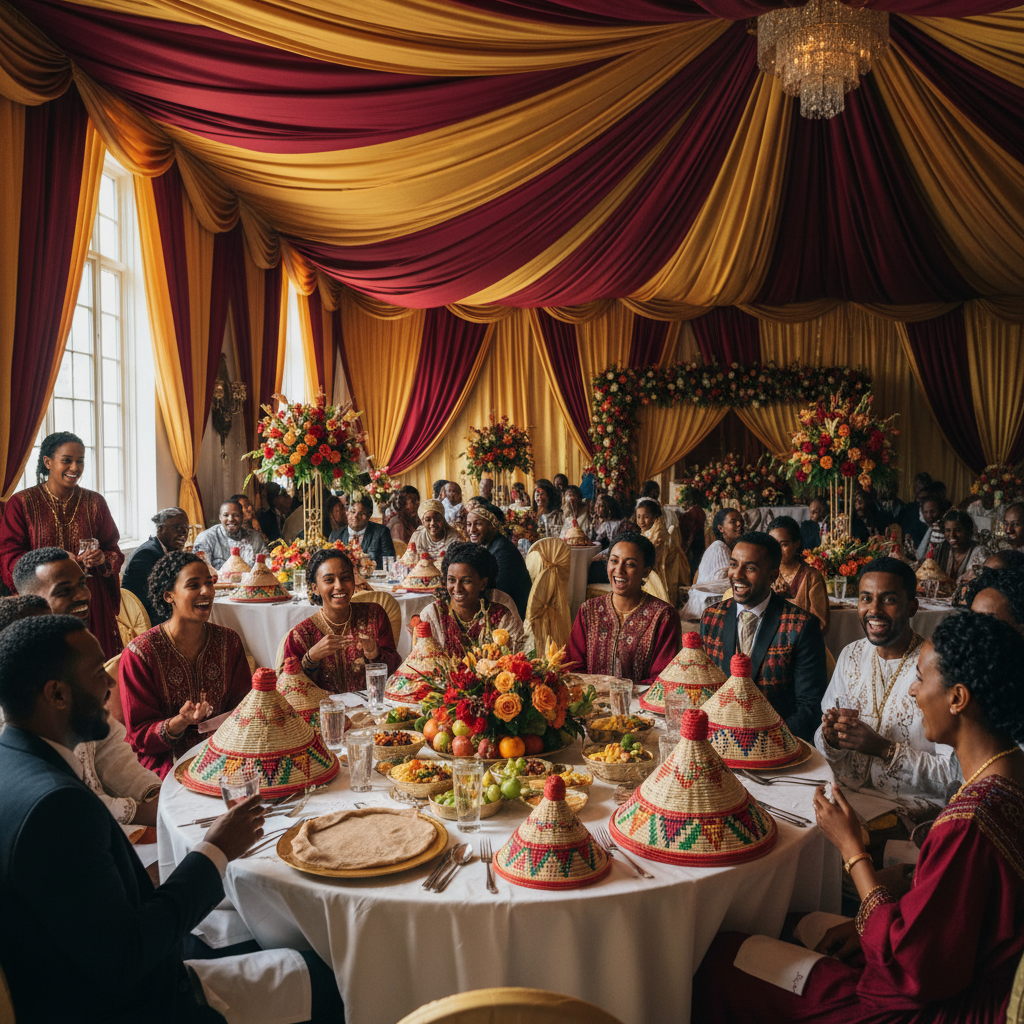
A beautifully decorated Ethiopian wedding reception hall with vibrant red and gold fabrics, intricate floral arrangements, and traditional Mesob baskets on tables, filled with guests in elegant Black cultural attire, captured with natural lighting. shot on Canon EOS R5, 35mm lens, natural lighting, editorial photography.
What pre-wedding celebrations are central to Ethiopian tradition?
Pre-wedding celebrations in Ethiopian tradition are vibrant and essential, primarily centered around the Melse and Kaba ceremonies, which are distinct events designed to honor the bride and groom separately and together before the main church ceremony. These events are characterized by elaborate traditional attire, feasting, and joyful dancing, building anticipation for the big day.
The Melse, often held a day or two before the wedding, is a lively celebration at the bride's family home or a rented hall, where close family and friends gather. It's a feast of traditional Ethiopian dishes like Doro Wot and Injera, accompanied by lively music and dancing to Eskista. The bride typically wears a stunning traditional dress, often a white or cream-colored Habesha Kemis with intricate embroidery, and sometimes changes into multiple outfits throughout the evening. The Kaba is another significant pre-wedding event, sometimes integrated into the Melse or held separately, where the couple is presented with a traditional cloak (Kaba) symbolizing their new status and unity. During these celebrations, the ritual of Gursha – lovingly hand-feeding each other choice morsels of food – is often performed, signifying affection and commitment. For event planners, coordinating the intricate decor, traditional musicians, and ensuring authentic catering for these events means working with caterers on Ajola who understand the nuances of Ethiopian cuisine and presentation. Understanding vendor red flags is particularly important here to ensure you're getting authentic and reliable service.
How does the Ethiopian Orthodox Tewahedo Church ceremony unite the couple?
The Ethiopian Orthodox Tewahedo Church ceremony, known as Serg, is the spiritual cornerstone of an Ethiopian wedding, where the couple's union is sanctified before God according to ancient religious rites and traditions. This solemn yet joyous service involves specific blessings, vows, and rituals that bind the couple spiritually and culturally for life.
Held in a church, often lasting several hours, the Serg is deeply symbolic. The couple, dressed in formal attire (the groom in a suit, the bride often in a white gown and sometimes a traditional dress for parts of the ceremony), stands before the priest. Key elements include the exchange of rings, the crowning of the bride and groom with crowns (symbolizing their royalty as king and queen of their new household), and the sharing of a sacred drink. The priest offers prayers and blessings, emphasizing the sanctity of marriage and the couple's commitment to each other and to God. This ceremony is not just about legalizing the marriage; it's about spiritual covenant and receiving divine grace. Many couples also choose to have their wedding ceremony align with a significant feast day or saint's day, adding another layer of religious importance. Securing a photographer from Ajola who is familiar with Orthodox church ceremonies is vital to capture these sacred moments discreetly and respectfully.
What is the significance of the Ethiopian coffee ceremony (Buna Tetu) in a wedding?
The Ethiopian coffee ceremony, or Buna Tetu, holds profound cultural significance in a wedding, serving as a symbolic ritual that welcomes the bride into her new family and formally integrates the couple into the community. It is a deeply cherished tradition that embodies hospitality, respect, and communal bonding, often marking the official conclusion of the wedding festivities.
Typically performed the day after the main wedding ceremony, or sometimes at the reception, the Buna Tetu is an elaborate and lengthy process, traditionally led by the bride or a respected elder woman. Green coffee beans are roasted over an open flame, filling the air with an intoxicating aroma. Guests watch as the beans are ground, brewed in a traditional clay pot called a jebena, and then served in small, handle-less cups called sini. Frankincense is often burned simultaneously, adding to the sensory experience. This ritual symbolizes the warmth and hospitality of the home the couple will build together. For the newly married couple, it's a moment of shared tradition, reinforcing their cultural identity and their commitment to their heritage. It’s also a time for storytelling, laughter, and strengthening bonds between families. Planners often incorporate a dedicated space for this ceremony, ensuring all the traditional elements are present. If you're planning an African Heritage Night or a wedding with significant cultural elements, this ceremony is a must-have.
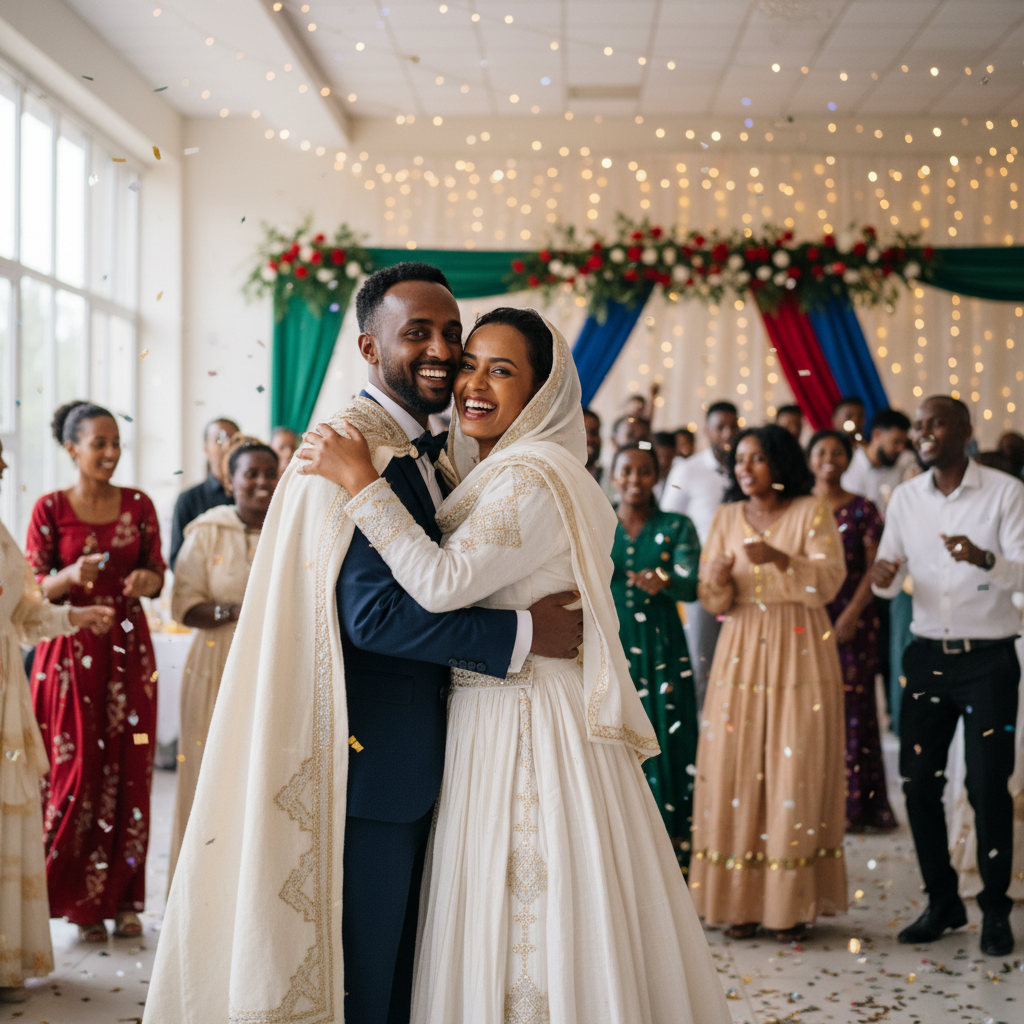
A Black Ethiopian bride, dressed in a white embroidered Habesha Kemis, gracefully performing a traditional coffee ceremony for her groom and family members in a warmly lit living room, with roasted coffee beans and a jebena pot. shot on Canon EOS R5, 35mm lens, natural lighting, editorial photography.
How do Ethiopian weddings integrate the couple into the community post-ceremony?
Ethiopian weddings integrate the couple into the community post-ceremony through continued family gatherings, reciprocal visits, and the ongoing support system that characterizes Ethiopian communal life, solidifying their new status as a married unit within their social fabric. These interactions ensure the couple feels embraced and supported as they begin their journey together.
After the main celebrations, the couple embarks on a series of visits to relatives and close friends, often bringing small gifts or sharing traditional foods. These visits are reciprocated, fostering a network of support that is vital in Ethiopian culture. The community often hosts smaller events or dinners to celebrate the newlyweds, offering advice, blessings, and practical assistance. This period is less about grand parties and more about intimate connections, ensuring the couple is well-integrated and feels the strength of their community. For many couples in the diaspora, this means balancing traditional expectations with modern living, but the essence of community support remains strong. Event planners can assist by suggesting ways to gracefully manage these post-wedding obligations, perhaps by scheduling specific