Haitian cuisine catering: a guide for event planners
April 6, 2026 9 min read Admin
Key Takeaways
Haitian cuisine offers a vibrant, flavorful experience rooted in rich history, making it perfect for diverse events.
Key dishes like Griot, Pikliz, Riz Collé, and Soup Joumou are essential for an authentic menu.
Selecting a caterer with genuine expertise in Haitian culinary traditions is crucial for authenticity and quality.
Presentation and understanding guest dietary needs are vital for a successful Haitian-themed catering experience.
Budgeting for traditional ingredients and skilled preparation ensures a memorable cultural celebration.
When planning an event for the African American and Afro-Caribbean community, the food isn't just sustenance; it's a centerpiece of culture, celebration, and connection. Haitian cuisine, with its bold flavors, aromatic spices, and deep historical roots, offers an unparalleled culinary journey that can elevate any gathering, from an intimate family reunion to a grand wedding reception. It's a culinary heritage forged through resilience and creativity, blending African, French, Spanish, and Taíno influences into a uniquely delicious tapestry.
What are the essential dishes for an authentic Haitian catering menu?
For an authentic Haitian catering menu, you must include several cornerstone dishes that showcase the breadth and depth of the cuisine. These are not merely popular choices; they are cultural touchstones that resonate deeply with anyone familiar with Haitian culinary traditions. A truly representative spread will feature a balance of rich meats, flavorful rice dishes, and vibrant, fresh accompaniments.
First and foremost, Griot (fried pork) is non-negotiable. Marinated in a citrus blend, boiled until tender, then fried to a crispy perfection, it's the quintessential Haitian comfort food. Alongside Griot, Tassot de Dinde (fried turkey) offers a delicious poultry alternative, prepared with similar care. For seafood lovers, Poisson Gros Sel (whole fried fish seasoned with coarse salt and spices) or a savory conch stew (Lambi) are excellent additions. No Haitian plate is complete without a generous serving of Riz Collé (rice and beans), often cooked with a rich stock and epis (a foundational blend of herbs and spices) that gives it its distinctive flavor and color. Another staple is Banann Peze (fried plantains), twice-fried to a golden crisp, offering a sweet and savory counterpoint to the main dishes. And for those seeking a vegetarian option, or simply a refreshing side, a vibrant salad with avocado and pikliz – a spicy, pickled cabbage relish – is indispensable. Pikliz, in particular, provides a crucial acidic and spicy kick that cuts through the richness of the fried meats, balancing the entire meal.
How do I find a reputable Haitian caterer for my event?
Finding a reputable Haitian caterer requires more than a quick online search; it demands a focused approach to ensure authenticity, quality, and cultural understanding. Begin by leveraging community networks and asking for recommendations from trusted friends, family, or local community leaders who have hosted similar events. Word-of-mouth referrals are often the most reliable way to discover caterers who genuinely understand and excel in Haitian cuisine.
Once you have a list of potential candidates, thoroughly vet each one. Check their online presence for reviews, testimonials, and a portfolio of their past work. Pay close attention to how long they've been operating and their experience catering events of your specific size and style. An experienced caterer will be able to discuss menu options beyond the basics, offer insights into traditional presentation, and accommodate various dietary restrictions while maintaining cultural integrity. Don't hesitate to request a tasting session; this is the most critical step to evaluate the quality of their food, consistency of flavors, and their overall professionalism. A caterer who is passionate about their craft will be eager to showcase their offerings. You can also browse caterers on Ajola, filtering specifically for those specializing in Caribbean or Haitian cuisine. Look for detailed profiles that highlight their specific expertise and culinary philosophy.
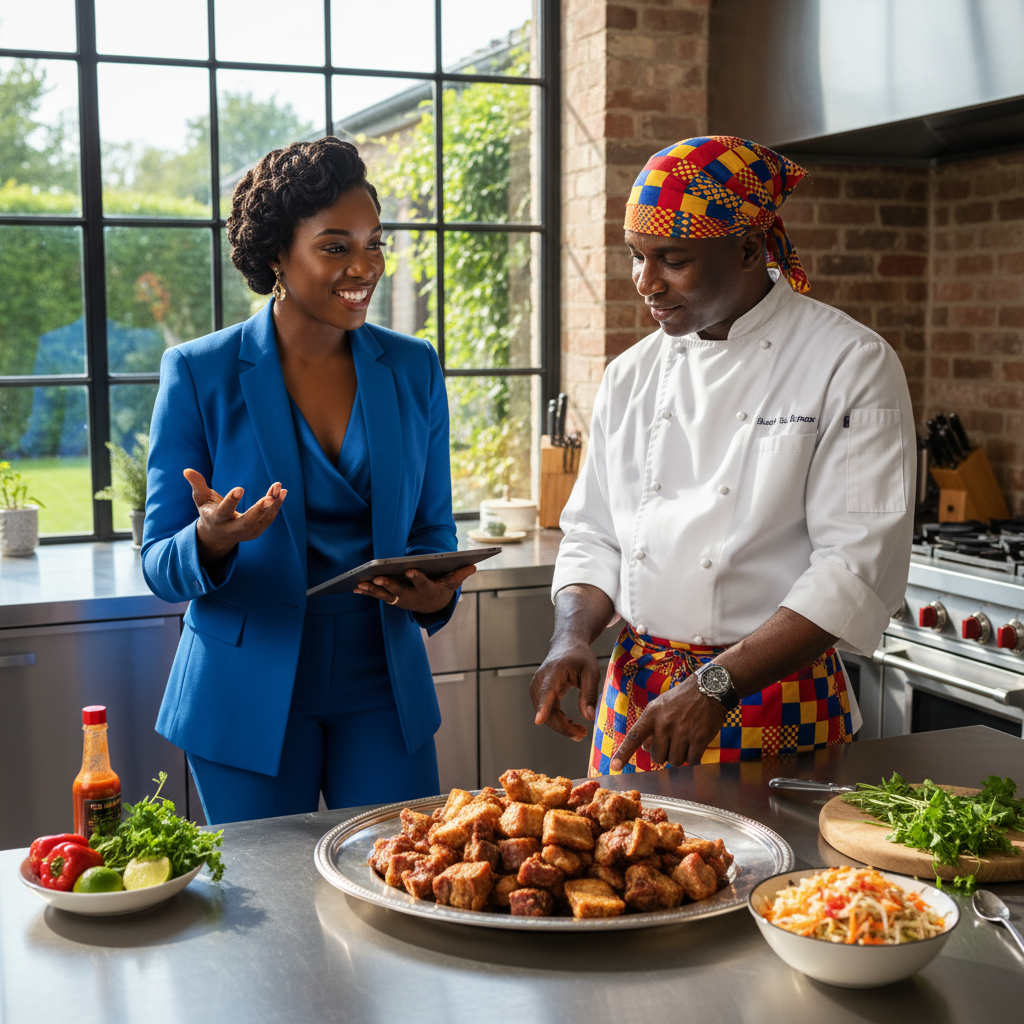
A Black event planner, smartly dressed in a vibrant blue suit, stands in a brightly lit kitchen, deeply engaged in conversation with a Haitian chef. The chef, wearing a crisp white chef's coat and a traditional 'madras' patterned bandana, gestures towards a beautifully arranged platter of Griot and Pikliz on a stainless steel counter. Sunlight streams through a large window, highlighting the rich colors of the food.
When interviewing potential caterers, inquire about their sourcing for specific ingredients. Authentic Haitian cooking often relies on unique spices and produce that can be challenging to find outside of specialized markets. A caterer who prioritizes authentic ingredients demonstrates a commitment to preserving the true flavors of the cuisine. Discuss their logistical capabilities, including staffing, transportation, and setup/cleanup. For large events, ensuring they have the capacity to deliver hot, fresh food to all guests efficiently is paramount. Finally, confirm their licensing and insurance to protect yourself and your guests. A professional caterer will readily provide these credentials.
What cultural considerations should I keep in mind when planning a Haitian menu?
Incorporating Haitian cuisine into your event goes beyond just serving delicious food; it's about honoring a rich cultural heritage. Understanding these nuances ensures your event feels authentic and respectful. The concept of konbit, or community collaboration, is often reflected in Haitian gatherings, where food is shared generously and joyously. Consider the historical significance of dishes like Soup Joumou (Pumpkin Soup), traditionally eaten on January 1st to celebrate Haitian Independence. While typically a New Year's dish, its inclusion can be a powerful nod to freedom and resilience, especially for events around that time or those celebrating significant milestones.
Presentation is key. Traditional Haitian meals are often served family-style or in abundant buffets, encouraging guests to share and connect. Think about vibrant table settings, perhaps incorporating elements of African fabric and decor, to enhance the visual appeal. For beverages, consider offerings like Kremas (a sweet, spiced coconut rum cream) or Jus de Corossol (soursop juice), which are popular traditional drinks. Also, be mindful of spice levels. While Haitian food is known for its robust flavors, some guests may prefer milder options. A good caterer will offer a range, perhaps with Pikliz served on the side, allowing guests to customize their heat preference. Engaging with your caterer about these cultural details will not only demonstrate your thoughtfulness but also allow them to showcase their expertise fully.
How can I accommodate dietary restrictions with Haitian cuisine?
Accommodating dietary restrictions within Haitian cuisine is entirely feasible with careful planning and a knowledgeable caterer. While many traditional dishes feature meat, a skilled Haitian caterer can adapt or create new options without sacrificing flavor or authenticity. The key is clear communication with your caterer from the outset.
For vegetarian and vegan guests, focus on dishes like Riz Collé (ensure it's prepared with vegetable broth and no meat products), various vegetable stews (Legumes), and plenty of fresh salads and fried plantains. Black bean sauce (Sauce Pois Noir) is another flavorful vegan staple that pairs beautifully with rice. Gluten-free options are often naturally abundant, as many dishes rely on rice, plantains, and root vegetables rather than wheat-based ingredients. For guests with nut allergies, it's crucial to confirm ingredients, as some sauces or desserts might contain nuts, though it's less common in savory main dishes. Always ask your caterer for a detailed ingredient list for each dish, and clearly label all food items on the buffet with allergen information. This proactive approach ensures all your guests can enjoy the rich flavors of Haitian cuisine safely and comfortably. Many caterers on Ajola are adept at customizing menus for various dietary needs; don't hesitate to specify your requirements when you search for vendors.
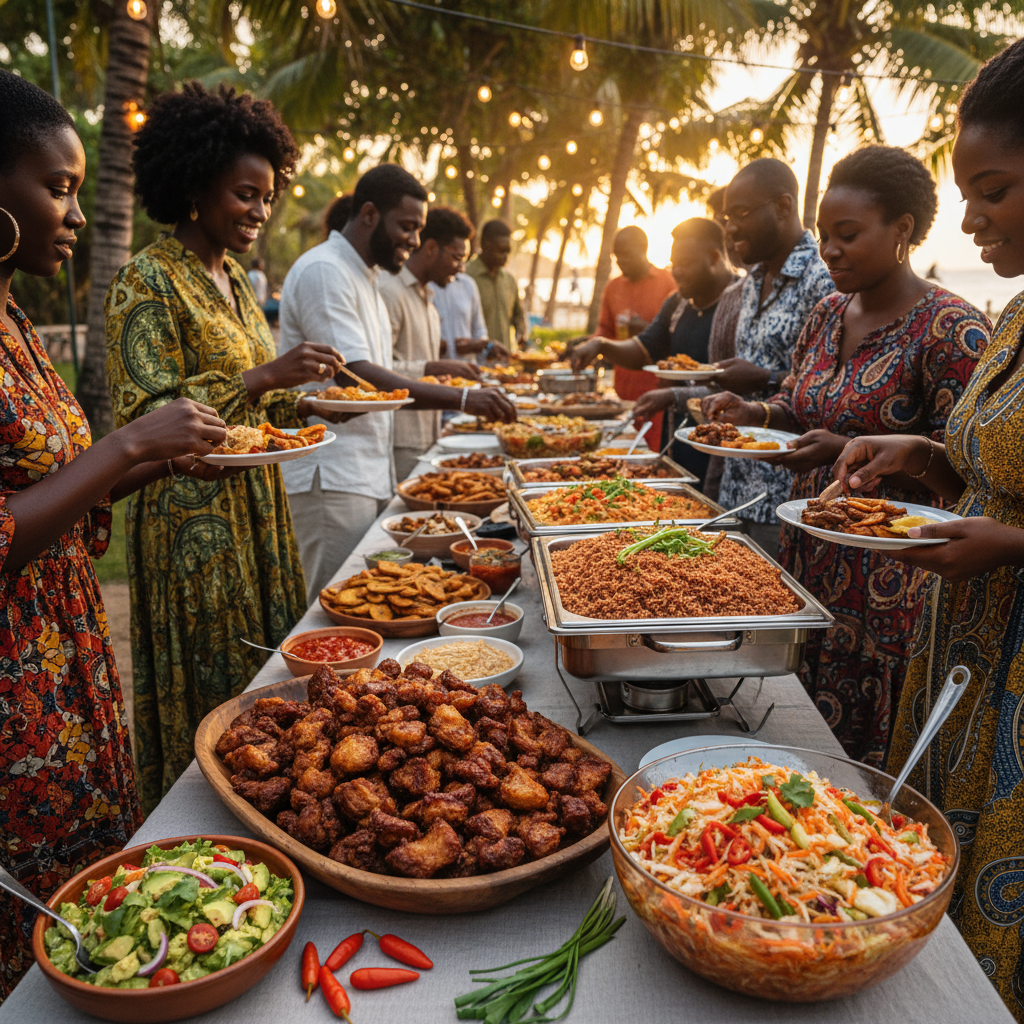
A vibrant buffet spread of Haitian food at an outdoor event. Platters of golden Griot, steaming Riz Collé, colorful Pikliz, and fresh avocado salad are beautifully arranged on a linen-draped table. Guests, a mix of African American and Afro-Caribbean individuals dressed in festive attire, are mingling and serving themselves. The scene is set under strung lights, with a joyful, relaxed atmosphere.
Beyond the main dishes, consider offering a variety of fresh fruit platters, which are naturally vegan, gluten-free, and refreshing. Desserts like Pain Patate (sweet potato pudding) or various fruit tarts can often be adapted to be gluten-free or dairy-free. Work closely with your caterer to develop a menu that provides delicious choices for everyone, ensuring no guest feels overlooked. This level of consideration speaks volumes about the care you put into your event planning and reflects the inclusive spirit of Haitian hospitality.
What are typical costs for Haitian catering and how can I budget effectively?
Typical costs for Haitian catering can vary significantly based on location, menu complexity, guest count, and the caterer's experience level, but generally range from $35 to $75 per person for a buffet-style meal, with plated service potentially costing more. For a mid-range event with 100 guests, you might expect to budget between $3,500 and $7,500 for food alone, not including additional services like rentals or staffing. High-end caterers, especially in major U.S. cities like Miami, New York, or Boston with large Haitian communities, might charge upwards of $100 per person for premium ingredients and elaborate presentations.
To budget effectively, start by defining your guest count accurately. This is the single biggest factor influencing cost. Next, prioritize your menu. Do you need a full multi-course meal, or would a selection of key dishes suffice? Opting for buffet service over plated meals can often reduce costs related to staffing. Negotiate package deals with caterers; many offer tiered options that include appetizers, main courses, sides, and non-alcoholic beverages. Be transparent about your budget from the initial consultation. A good caterer can help you craft a delicious and authentic menu that aligns with your financial parameters, perhaps suggesting more cost-effective cuts of meat or seasonal vegetables without compromising flavor. Consider simplifying dessert options or bringing in a separate vendor for a special cake to manage costs. Remember to account for taxes, service charges (often 18-22%), and potential delivery fees in your overall budget. Don't forget to factor in other elements like music from a talented DJ or a skilled photographer to capture the moments.
Finally, remember that investing in quality Haitian catering is an investment in an unforgettable cultural experience for your guests. It’s not just about feeding people; it’s about sharing a piece of history, celebrating identity, and creating lasting memories. Whether you're planning a small gathering or a large celebration, partnering with an expert Haitian caterer through Ajola ensures your culinary vision comes to life with authenticity and flair. Vendors looking to connect with event planners seeking specialized services like yours can always sign up on Ajola to showcase their offerings.