Kwanzaa feast menu planning: traditional dishes and modern twists
April 16, 2026 9 min read Admin
Key Takeaways
The Kwanzaa Karamu (feast) is central to celebrating Umoja (unity) and Kujichagulia (self-determination), focusing on communal dining and shared heritage.
Traditional dishes like Jollof Rice, Collard Greens, Black-Eyed Peas, and Sweet Potato Pie are staples, rich in symbolism and flavor from the African diaspora.
Modernizing Kwanzaa menus involves infusing global influences, offering plant-based alternatives, and elevating presentation while honoring cultural roots.
Selecting a culturally competent caterer is crucial for authenticity, ensuring they understand both the culinary traditions and the spiritual significance of the Karamu.
Effective budgeting and thoughtful vendor selection, especially through platforms like Ajola, ensure a seamless and memorable Kwanzaa celebration.
Planning a Kwanzaa feast, known as the Karamu, is more than just preparing a meal; it's an act of communal celebration, a tribute to heritage, and a powerful expression of the Nguzo Saba (Seven Principles). For African American and Afro-Caribbean event planners, understanding the depth of this culinary tradition—from its symbolic dishes to the logistics of serving a meaningful spread—is paramount. The Karamu is typically held on December 31st, bringing families and communities together to reflect on the year and reaffirm cultural bonds.
Understanding the Kwanzaa Feast (Karamu): Principles and Significance
The Kwanzaa Karamu is a pivotal event, embodying the principles of Kwanzaa, particularly Umoja (unity) and Kujichagulia (self-determination), through shared food and fellowship. It is a time for coming together, breaking bread, and celebrating the good in life, the fruits of labor, and the collective spirit of the community. Every dish served at a Kwanzaa Karamu carries a story, connecting attendees to generations of resilience, creativity, and love within the African diaspora.
This feast isn't merely about consumption; it's a ceremonial meal where food becomes a medium for teaching, sharing, and remembering. The communal aspect reinforces the idea that we are stronger together, a core tenet of Umoja. By preparing and sharing dishes rooted in our history, we actively practice Kujichagulia, defining ourselves and our culture through our own traditions and culinary expressions.
Traditional Kwanzaa Dishes: Staples from the Diaspora
The heart of any Kwanzaa Karamu lies in its traditional dishes, which draw heavily from African, Caribbean, and Southern American culinary traditions. These aren't just recipes; they are historical markers, each telling a piece of our story and symbolizing hope, prosperity, and connection.
The Enduring Classics:
Jollof Rice: A vibrant, savory rice dish, often considered the cornerstone of West African cuisine. Its rich red hue comes from tomatoes, peppers, and spices, symbolizing the warmth and vitality of the continent. Depending on the region, it might feature chicken, beef, or fish, and can be spiced to perfection.
Collard Greens: A staple of Southern American cooking, these leafy greens are often slow-cooked with smoked turkey, ham hocks, or seasoned with spices. They symbolize money and prosperity, a wish for abundance in the coming year.
Black-Eyed Peas: Often served as Hoppin' John, especially in the Southern U.S., these legumes are traditionally eaten on New Year's Day for good luck and prosperity. They represent coins and a wish for financial blessings.
Macaroni and Cheese: The ultimate comfort food, this creamy, baked dish is a beloved side in many African American households. It signifies the richness of shared experiences and the joy of coming together.
Fried Fish or Stewed Fish: Reflecting the bounty of the sea and rivers, particularly in coastal regions and the Caribbean, fish dishes are a common and versatile protein choice.
Sweet Potato Pie/Pudding: A quintessential dessert, offering a taste of home and heritage. Sweet potatoes, native to the Americas, became a significant crop and culinary ingredient for enslaved Africans, and this dessert embodies resilience and ingenuity.
Cornbread: Simple yet profound, cornbread symbolizes the golden harvest and the sustenance provided by the land.
When selecting a caterer for your Karamu, it's essential to find one who understands the nuances of these dishes. Browse caterers on Ajola who specialize in authentic African American and Afro-Caribbean cuisine to ensure your feast is both delicious and culturally resonant.
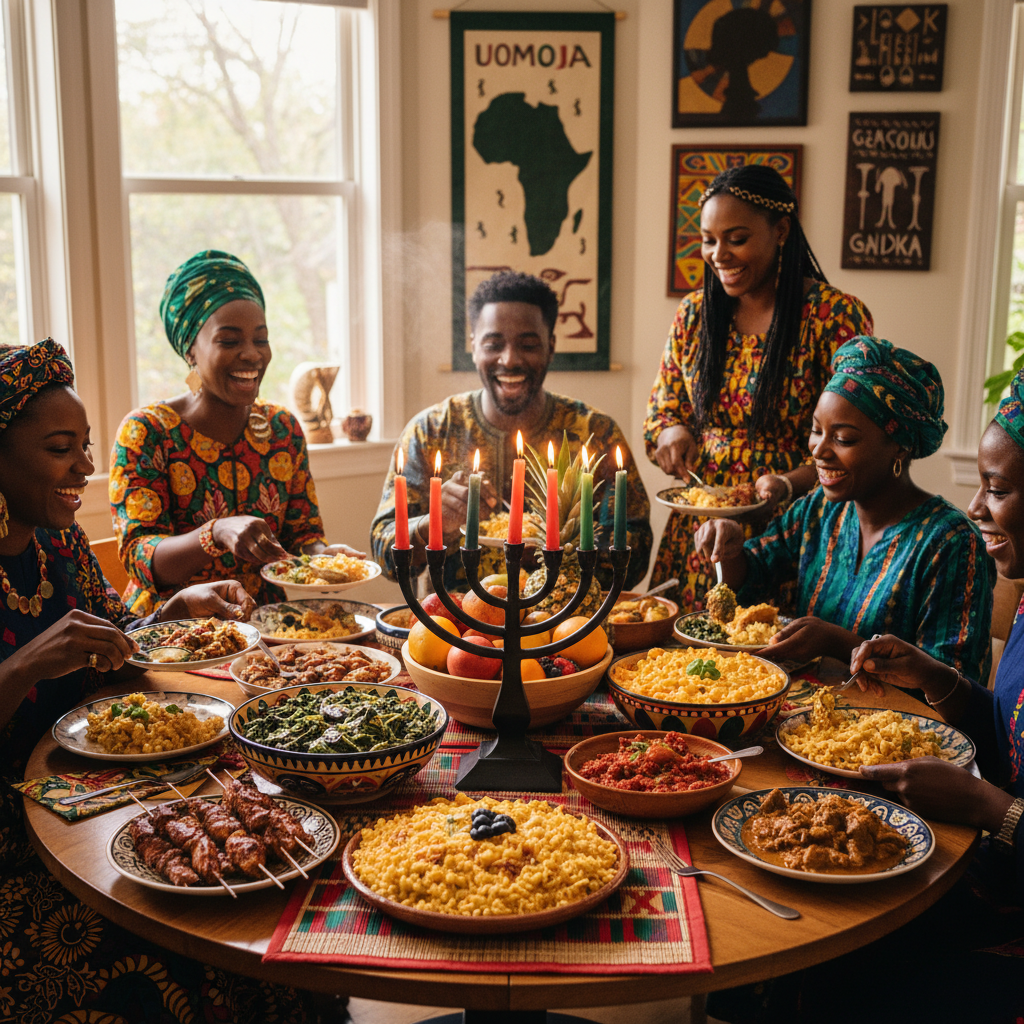
A diverse group of African American families and friends gathered around a beautifully decorated Kwanzaa Karamu table, laden with traditional and modern dishes. The scene is vibrant with red, green, and black decor, and people are laughing and sharing food, showcasing unity and joy. Shot on Canon EOS R5, 35mm lens, natural lighting, editorial photography.
Modern Twists: Infusing Contemporary Flavors
While honoring tradition is key, there's ample room to infuse modern culinary techniques and global influences into your Kwanzaa feast. This approach allows for dietary accommodations and introduces exciting new dimensions to classic flavors, making the Karamu accessible and appealing to a broader audience, especially younger generations.
Elevating the Classics:
Gourmet Jollof Rice: Consider a healthier version using brown rice or quinoa, or adding roasted seasonal vegetables like asparagus and bell peppers for enhanced texture and nutrition. A drizzle of infused olive oil (e.g., habanero-lime) can add a contemporary kick.
Smoked Turkey Collard Greens: Move beyond pork products by using smoked turkey or even a fully plant-based approach with smoked paprika and liquid smoke to achieve that deep, savory flavor. Adding a splash of apple cider vinegar brightens the dish.
Black-Eyed Pea & Kale Salad: Transform Hoppin' John into a vibrant salad with fresh herbs, cherry tomatoes, and a light vinaigrette. This offers a lighter, yet equally symbolic, option.
Artisanal Mac and Cheese: Elevate this comfort food with a blend of gourmet cheeses like smoked gouda, fontina, or Gruyère. Consider adding caramelized onions or roasted garlic for depth, or a gluten-free pasta option.
Caribbean Fusion Fish Tacos: Instead of traditional fried fish, consider flaky white fish seasoned with jerk spices, served in warm tortillas with mango salsa and a cilantro-lime crema.
Deconstructed Sweet Potato Pie: Offer individual servings of sweet potato mousse topped with a spiced pecan crumble and a dollop of whipped coconut cream for a sophisticated dessert.
Integrating these modern twists demonstrates creativity and adaptability while maintaining respect for the cultural foundations of the feast. It's about evolving the tradition to meet contemporary tastes and dietary needs, ensuring everyone at the table feels included and delighted.
Catering for Kwanzaa: Logistics and Cultural Nuances
Planning a Kwanzaa feast requires meticulous attention to both culinary excellence and cultural sensitivity. Whether you're hosting an intimate family gathering or a large community event, the logistics can be complex, and selecting the right catering partner is critical.
Key Catering Considerations:
Cultural Competency: Ensure your caterer understands the significance of Kwanzaa and is familiar with African American and Afro-Caribbean culinary traditions. Ask about their experience with similar events and their ability to source authentic ingredients.
Menu Planning & Customization: Work closely with your caterer to design a menu that balances traditional dishes with any modern twists you desire. Discuss dietary restrictions (vegan, gluten-free, nut allergies) early in the process.
Budgeting: Catering costs can vary widely. For a Kwanzaa Karamu serving 50 guests, expect to budget anywhere from $1,500 to $5,000, depending on the menu's complexity, service style (buffet vs. plated), and location. For advice on managing costs, you might find tips in resources like how to plan an event on a tight budget in Chicago.
Service Style: A buffet is often preferred for Karamu, encouraging communal interaction. Ensure there are enough serving stations to prevent long lines and that food is kept at appropriate temperatures.
Presentation: The visual appeal of the Karamu table is vital. Discuss how the food will be displayed, incorporating Kwanzaa colors (red, green, black) and elements like the mkeka (mat) and kinara (candle holder) into the overall aesthetic.
Staffing: Confirm the number of servers, bartenders, and kitchen staff needed for your guest count to ensure smooth service.
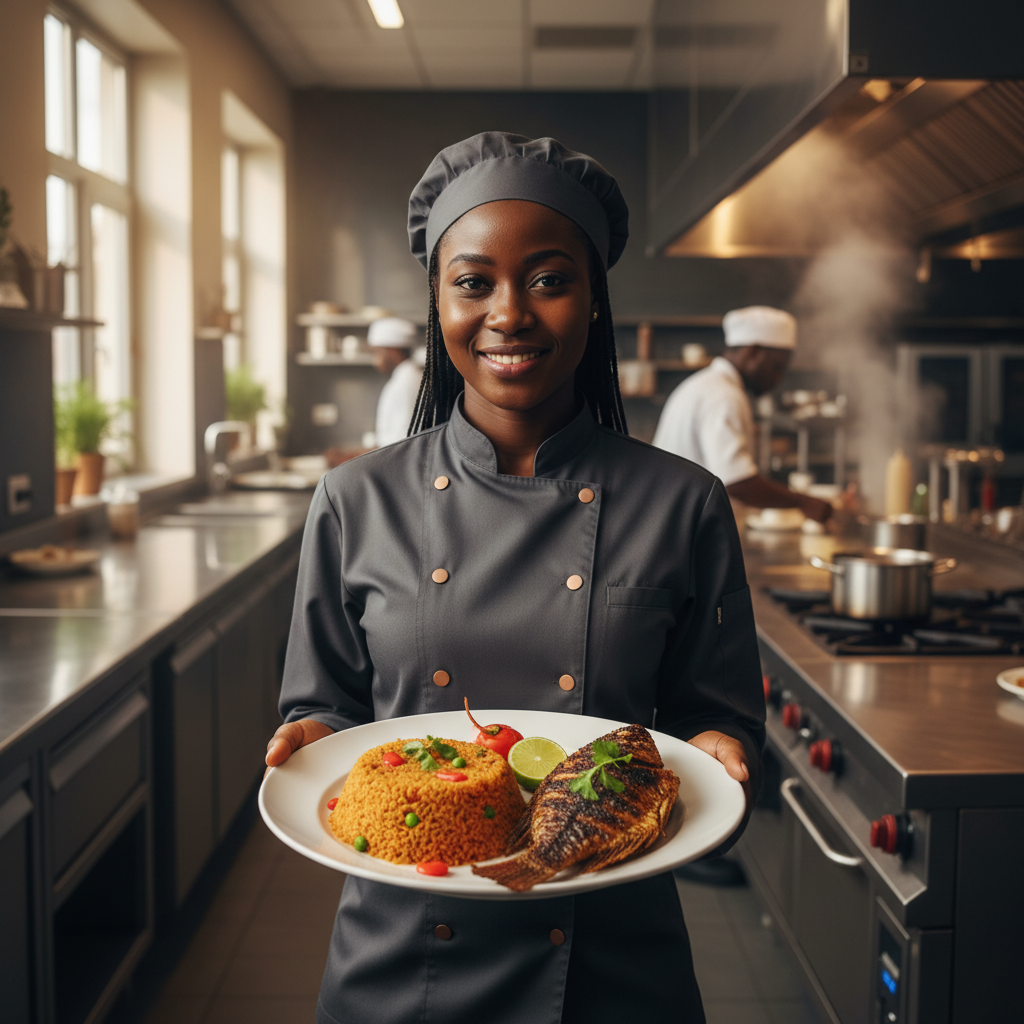
A professional African American caterer, dressed in a clean chef's coat, meticulously arranging a platter of vibrant, modern Jollof rice with roasted vegetables on a buffet table set for a Kwanzaa celebration. The background shows other elegant dishes and Kwanzaa decorations. Shot on Canon EOS R5, 35mm lens, natural lighting, editorial photography.
Vendor Selection for Your Kwanzaa Karamu
Building a team of culturally sensitive and skilled vendors is paramount for a successful Kwanzaa celebration. Beyond catering, consider other aspects that enhance the atmosphere and experience.
Finding the Right Partners:
Caterers: As discussed, finding a caterer with expertise in African American and Afro-Caribbean cuisine is non-negotiable. Use Ajola's catering search to filter for specialists in your area who can deliver both taste and tradition. Ask for tasting sessions to ensure their flavors align with your vision.
Decorators: For a Karamu, the decor should reflect the Nguzo Saba. Look for decorators who understand the symbolism of the colors, the importance of African art, and can create an inviting, celebratory atmosphere.
Entertainment: While not always a primary focus of the Karamu itself, if your Kwanzaa celebration extends beyond the feast, consider DJs or live musicians who can play traditional African music, jazz, gospel, or R&B. If you're hiring a DJ, make sure to provide a clear brief; insights from how to write a DJ brief can be helpful.
Photographers: Capturing the joy and unity of your Karamu is essential. Seek out photographers who specialize in cultural events and can authentically portray the spirit of Kwanzaa. You can find many talented professionals when you browse photographers on Ajola.
When interviewing potential vendors, don't hesitate to ask about their experience with Kwanzaa or other cultural events. Their understanding and respect for the tradition will shine through. For vendors looking to expand their reach and connect with event planners focused on cultural celebrations, signing up on Ajola is an excellent opportunity to showcase their expertise.
A close-up shot of hands, a mix of adult and child, reaching for various dishes on a Kwanzaa Karamu buffet. Plates are filled with colorful, delicious food, and the background is slightly blurred, showing joyful faces. The focus is on the communal sharing of food. Shot on Canon EOS R5, 35mm lens, natural lighting, editorial photography.
Crafting a Memorable Kwanzaa Experience
Ultimately, a successful Kwanzaa feast is a harmonious blend of delicious food, rich cultural symbolism, and heartfelt community. By carefully planning your menu, whether you lean towards time-honored traditions or infuse modern twists, you create an experience that nourishes both body and soul. The Karamu is a powerful reminder of our shared journey, our resilience, and the vibrant tapestry of African American and Afro-Caribbean culture.
Embrace the spirit of Umoja as you gather your loved ones around a table laden with history and hope. Let each dish tell a story, and let the flavors resonate with the principles of Kwanzaa, fostering unity, self-determination, collective work, and cooperative economics within your community. Your thoughtful planning ensures that the Kwanzaa feast remains a cherished and meaningful celebration for all.