Questions to ask day-of coordinators in Atlanta before you book
November 12, 2026 7 min read Ajola Team
Key Takeaways
Day-of coordinators are essential for executing your event vision seamlessly, especially in a bustling city like Atlanta.
Crucial questions to ask include their experience with culturally specific events, their communication style, vendor management approach, and emergency protocols.
Understand their exact services, pricing structure, and what happens in unforeseen circumstances to avoid last-minute stress.
Leverage Ajola to find and compare experienced day-of coordinators in Atlanta who understand the nuances of Black and Afro-Caribbean celebrations.
The success of an event often hinges on the details, and for many African American and Afro-Caribbean event planners, hosts, and vendors in Atlanta, those details can be intricate. While you might be a master planner yourself, the day of the event demands an entirely different level of presence and execution. This is where professional day-of coordinators in Atlanta become indispensable. They are the maestros who orchestrate the symphony you've carefully composed, ensuring every note is played perfectly while you enjoy the music.
But not all coordinators are created equal, and finding the right fit, particularly one who understands the cultural nuances of your celebration, requires asking precise questions. This guide will equip you with the essential inquiries to make before you book, ensuring your Atlanta event runs without a hitch.
What Exactly Does a Day-of Coordinator Do for Your Atlanta Event?
A day-of coordinator primarily steps in during the final weeks leading up to your event and is responsible for its flawless execution on the actual day. They are the on-site problem solvers, timeline enforcers, and vendor managers, allowing you, your family, and your close friends to fully immerse yourselves in the celebration. Their role is to transform your meticulous plans into a tangible, memorable experience, handling everything from setup logistics to managing unexpected hiccups.
Think of them as the conductor for your event's orchestra. You've selected the musicians (vendors), chosen the score (your vision), and rehearsed extensively. The day-of coordinator ensures everyone plays in harmony, starting on time, transitioning smoothly, and delivering a performance worthy of applause. This includes everything from confirming vendor arrivals and managing deliveries to directing guests, troubleshooting minor issues, and overseeing tear-down.
Why a Day-of Coordinator is Crucial for Atlanta Events
Hiring a day-of coordinator is vital for any significant event, but it becomes especially crucial when planning in a dynamic metropolis like Atlanta. The city's unique blend of diverse venues, bustling traffic, and often unpredictable weather—from scorching summer heat to sudden thunderstorms—adds layers of complexity that require an experienced hand. An Atlanta-based coordinator will have local knowledge, understanding the best routes to avoid I-285 snarls, knowing which venues have specific parking challenges near areas like Midtown or Buckhead, and being familiar with local vendor networks.
Furthermore, many African American and Afro-Caribbean celebrations often involve multiple cultural elements, intricate timelines, and a large number of guests. A coordinator who understands these specific needs—from managing a traditional Aso Ebi parade to coordinating multiple catering services for diverse palates—can make all the difference. They navigate logistical challenges like ensuring timely setup across different locations, such as a ceremony in Decatur and a reception in Stone Mountain, or coordinating guest shuttles efficiently. Their local expertise and ability to manage cultural nuances are invaluable assets.
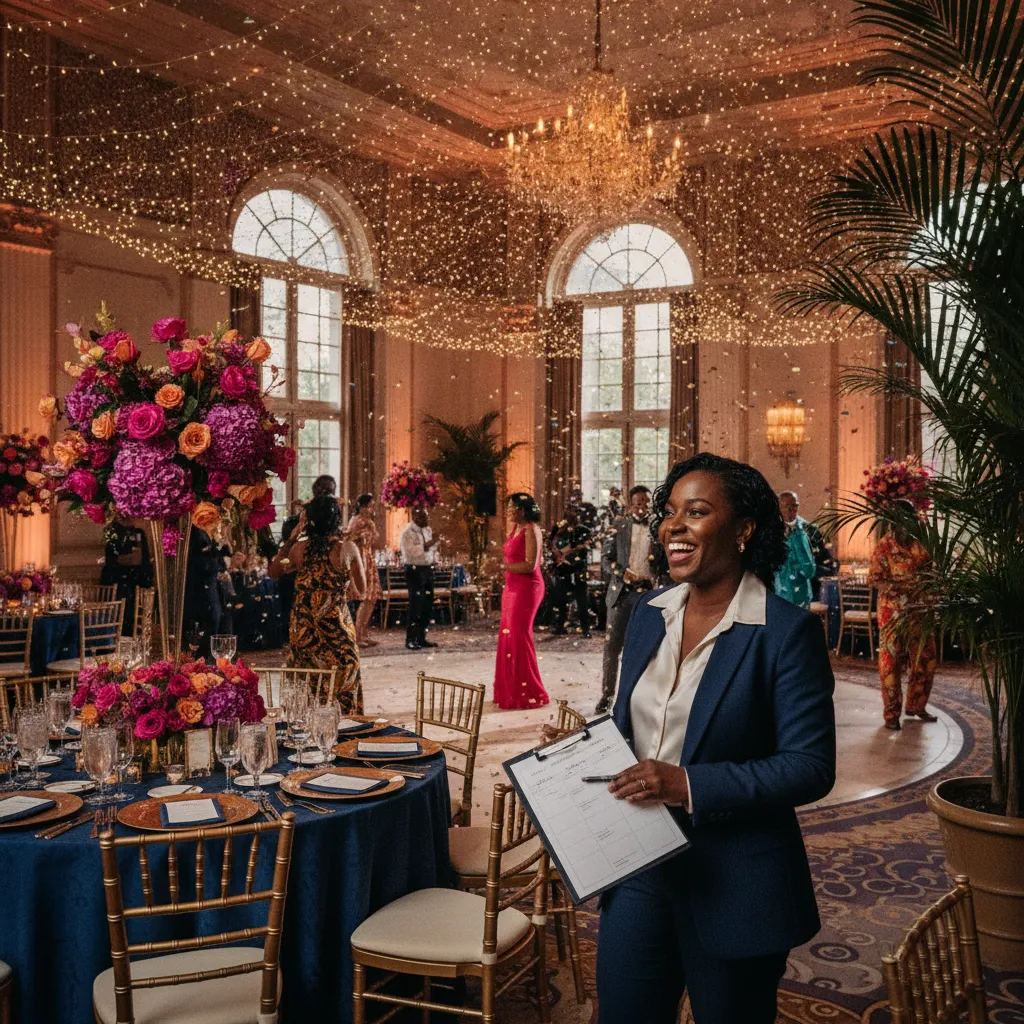
A day-of coordinator ensures every detail is perfect.
Key Questions to Ask About Experience and Style
When interviewing potential day-of coordinators in Atlanta, delving into their experience, specific skill sets, and working style is paramount. You need someone who not only has the technical know-how but also the personality and cultural sensitivity to align with your vision. Begin by exploring their background and approach to ensure they are the right fit for your unique celebration.
What is your experience with events specifically for African American or Afro-Caribbean communities in Atlanta? This is crucial for understanding their cultural competence. Ask for examples of past events, how they handled specific cultural traditions (e.g., jumping the broom, Nigerian money spray, Caribbean carnival elements), and if they have a network of culturally relevant vendors.
How many events do you typically coordinate in a month, and what is your team size? This helps gauge their capacity and ensures they won't be overbooked or stretched too thin on your event day. A larger team might offer more comprehensive support, while a smaller, dedicated team might provide a more personalized touch.
Can you describe your communication style and how you prefer to interact with clients and vendors? Understanding their communication frequency and methods (e.g., email, phone, in-person meetings) will help you determine if it aligns with your preferences and expectations for responsiveness.
How do you handle unexpected challenges or emergencies on the event day? Can you provide an example? Life happens, and events are no exception. Their ability to think on their feet, problem-solve calmly, and have contingency plans is a hallmark of a great coordinator.
Key Questions to Ask About Services and Logistics
Once you've assessed their experience and working style, it's time to dive into the practicalities of their services. A clear understanding of what's included in their package, their logistical approach, and how they interact with your chosen vendors is essential for a smooth event.
What exactly is included in your day-of coordination package? Are there any services that are not included but can be added? Get a detailed breakdown of their responsibilities, from timeline creation and vendor communication to on-site management and breakdown. Clarify what constitutes "day-of" versus "partial" or "full" planning to avoid misunderstandings.
How far in advance do you typically begin working with clients for day-of coordination? Some coordinators start a few weeks out, others a month or two. Knowing this timeframe will help you plan your final preparations accordingly and understand when to expect their full involvement.
How do you manage vendor communication and coordination leading up to and on the event day? A good coordinator acts as the central point of contact for all vendors, confirming arrival times, setup needs, and ensuring everyone adheres to the timeline. Ask about their process for sharing final details and troubleshooting any vendor-related issues.
Will you be present for the entire event, from setup to tear-down? If not, who will be? Ensure there's continuous, professional oversight. If they have an assistant or team member, confirm their experience and role.
What is your approach to creating and managing the event timeline? The timeline is the backbone of your event. Discuss how they collaborate with you to build it, how they communicate it to vendors, and how strictly they enforce it on the day.
Do you have a preferred vendor list, and are we required to use vendors from it? While a preferred list can be helpful, ensure you have the flexibility to choose your own vendors, especially those who specialize in culturally specific services.
Questions About Pricing, Contracts, and Contingencies
Finally, understanding the financial aspects, contractual agreements, and their policies for unforeseen circumstances is vital before making any commitments. Transparency in these areas ensures there are no surprises down the line.
What is your fee structure, and what payment schedule do you follow? Get a clear quote and understand if it's a flat fee, hourly, or based on a percentage of the total event cost. Ask about deposit requirements and final payment due dates.
Are there any additional fees we should be aware of (e.g., travel expenses, assistant fees, overtime)? Ensure the quoted price is comprehensive and ask for a list of potential extra charges to budget accurately.
What is your cancellation or postponement policy? In today's unpredictable world, understanding how they handle cancellations or rescheduling is more important than ever. Ask about refunds, retainer policies, and options for moving your date.
Can I see a sample contract? Reviewing their contract beforehand allows you to understand their terms and conditions, liabilities, and what's expected of both parties.
Do you have liability insurance? This is a non-negotiable. Professional coordinators should carry liability insurance to protect themselves and their clients in case of accidents or unforeseen issues.
By asking these comprehensive questions, you'll be well-equipped to select a day-of coordinator in Atlanta who not only possesses the logistical prowess but also the cultural understanding to make your African American or Afro-Caribbean celebration truly unforgettable. Remember, the right coordinator is an investment in your peace of mind, allowing you to savor every moment of your meticulously planned event.